+506 2216 0222
opsaa@iica.int





Investments and Public Expenditure
(1793 records
- USD 286,981,341,758.00
)
Government of Peru Interventions to Strengthen Preparedness for the 2026-2027 El Niño Phenomenon
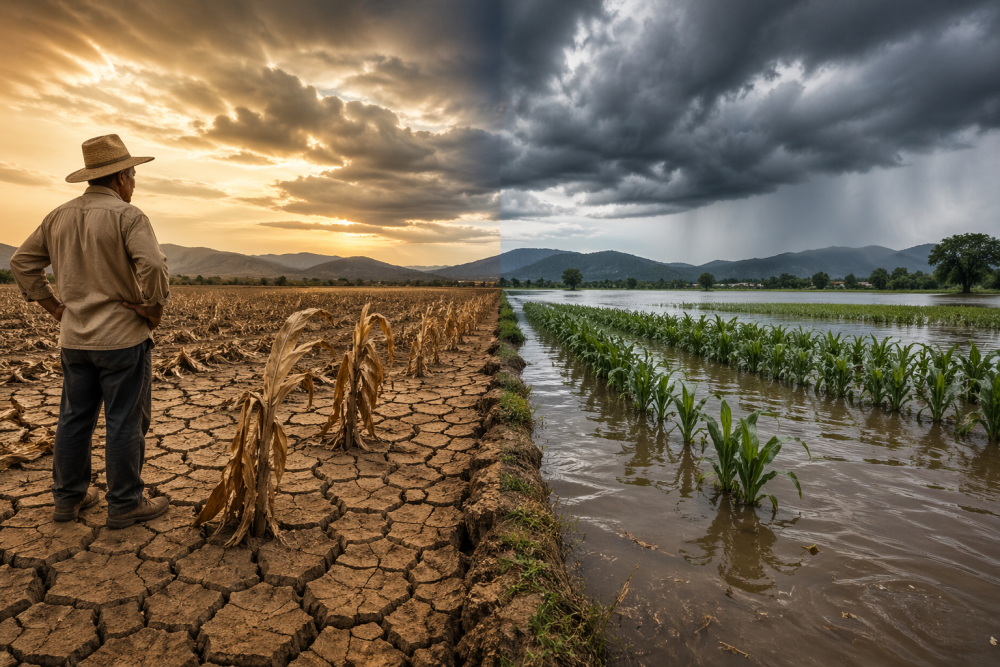
Set of interventions to strengthen the country's preparedness for the intense rains, droughts and water scarcity associated with the 2026-2027 El Niño phenomenon, in three stages: preparation, emergency and rehabilitation. It funds riverbank defense works and channel dredging at critical points of rivers and ravines, actions against drought and water scarcity, cleaning and maintenance of irrigation canals through executing units of water users and a mechanism for private-sector participation through services-for-taxes. It responds to the identification of nearly 1,700 critical points in the country, of which a first stage of 536 is prioritized according to risk level.
Government of Jamaica Drought Mitigation Measures
Set of measures by the Government of Jamaica to expand the response to the drought affecting the country. It includes a drought mitigation programme approved by Cabinet to supply schools, health centres, police stations and other critical facilities); installation of wayside water tanks in partnership with UNICEF (30 installed and about 100 expected across eastern Jamaica); 12 additional truck loading bays in Kingston, St Andrew, St Catherine and St Thomas; supply of 4 million gallons of water per day to Portmore through a partnership with the private operator Can-Cara Limited; emergency procurement of 5,000 water tanks for early-childhood facilities, farmers, households with persons with disabilities and water-scarce communities; and an increase in the truck fleet and assessment of additional water sources.
Budget Program 0040: Improvement and Maintenance of Plant Health
Budget program that seeks to ensure that producers have adequate sanitary conditions for the production and marketing of plants and plant products and access to markets, given the inadequate sanitary conditions that limit such access. It serves agricultural producers nationwide. It includes control and eradication of priority pests (among them the fruit fly and the locust), phytosanitary diagnosis and surveillance, awareness-raising, training and technical assistance on integrated pest management; pest risk analysis, response to phytosanitary alerts or emergencies, and inspection and control of the entry of plants and plant products to protect crops from the introduction and spread of pests; and phytosanitary certification, management of market access for new products and phytosanitary studies to meet phytosanitary restrictions.
Policy frameworks
(3473 records
)
Emergency Decree No. 008-2026: Measures for Interventions in Response to Imminent Danger from Intense Rainfall Associated with the 2026-2027 El Niño Phenomenon (Peru)
Sets urgent measures in response to the imminent danger of intense rainfall associated with the 2026-2027 El Niño phenomenon. It is based on forecasts that the Coastal El Niño will continue until April 2027, probably of strong magnitude, with above-normal rainfall on the northern and central coast and a 63% probability of exceeding a +2.0 °C anomaly (very strong category). It warns of serious effects on northern coastal agricultural valleys (pests, diseases and food security risks) and identifies 70 highly vulnerable critical points on rivers and ravines. It authorizes the cleaning and dredging of riverbeds, the construction of levees and the installation of dynamic barriers in ravines of Lima and Huarochirí, with transfers of S/ 129.4 million and S/ 50.1 million, and enables budget modifications in 2026 to protect public infrastructure and essential operations, with georeferenced progress reports.
Supreme Decree No. 097-2026-PCM: Declaration of a State of Emergency due to Imminent Danger from Intense Rainfall Associated with the 2026-2027 El Niño Phenomenon (Peru)
Declares a State of Emergency in districts of 22 departments and Callao due to imminent danger from intense rainfall associated with the 2026-2027 El Niño phenomenon. It is grounded in the continuation of the Coastal El Niño, technical studies anticipating flood and mass-movement scenarios, and the fact that the areas already face very high risk with regional and local response capacity exceeded. It seeks to carry out immediate and necessary exceptional measures to reduce that risk and address response and rehabilitation, with a direct link to the hazard. It allows the continuation of actions begun under earlier declarations.
Resolution No. SNGR-238-2026: Nationwide Red Alert Declaration for the El Niño Phenomenon (Ecuador)
Resolution of Ecuador's National Secretariat for Risk Management (SNGR), issued on 29 August 2026, declaring a Red Alert across the entire national territory due to the presence of the El Niño phenomenon, as confirmed by the National ERFEN Committee. It raises the orange alert level set by Resolution SNGR-193-2026, which covered 17 provinces, 143 cantons and 491 prioritized parishes. It calls on decentralized autonomous governments and system institutions to activate the Emergency Operations Committees, prepare preventive evacuation and response procedures, apply the El Niño guidelines and action plans, coordinate with the Ministry of Infrastructure and Transport the deployment of machinery at critical road points, and carry out preventive communication campaigns. It also orders continuous monitoring and the updating of risk scenarios, and takes effect upon signing, with no end date.
Good practices
(1793 records
)
Government of Peru Interventions to Strengthen Preparedness for the 2026-2027 El Niño Phenomenon
Set of interventions to strengthen the country's preparedness for the intense rains, droughts and water scarcity associated with the 2026-2027 El Niño phenomenon, in three stages: preparation, emergency and rehabilitation. It funds riverbank defense works and channel dredging at critical points of rivers and ravines, actions against drought and water scarcity, cleaning and maintenance of irrigation canals through executing units of water users and a mechanism for private-sector participation through services-for-taxes. It responds to the identification of nearly 1,700 critical points in the country, of which a first stage of 536 is prioritized according to risk level.
Government of Jamaica Drought Mitigation Measures
Set of measures by the Government of Jamaica to expand the response to the drought affecting the country. It includes a drought mitigation programme approved by Cabinet to supply schools, health centres, police stations and other critical facilities); installation of wayside water tanks in partnership with UNICEF (30 installed and about 100 expected across eastern Jamaica); 12 additional truck loading bays in Kingston, St Andrew, St Catherine and St Thomas; supply of 4 million gallons of water per day to Portmore through a partnership with the private operator Can-Cara Limited; emergency procurement of 5,000 water tanks for early-childhood facilities, farmers, households with persons with disabilities and water-scarce communities; and an increase in the truck fleet and assessment of additional water sources.
Budget Program 0040: Improvement and Maintenance of Plant Health
Budget program that seeks to ensure that producers have adequate sanitary conditions for the production and marketing of plants and plant products and access to markets, given the inadequate sanitary conditions that limit such access. It serves agricultural producers nationwide. It includes control and eradication of priority pests (among them the fruit fly and the locust), phytosanitary diagnosis and surveillance, awareness-raising, training and technical assistance on integrated pest management; pest risk analysis, response to phytosanitary alerts or emergencies, and inspection and control of the entry of plants and plant products to protect crops from the introduction and spread of pests; and phytosanitary certification, management of market access for new products and phytosanitary studies to meet phytosanitary restrictions.
Resources
(2121 records
)
Events
(661 records
)

Dialogue rooms
(12 records
)