

Description
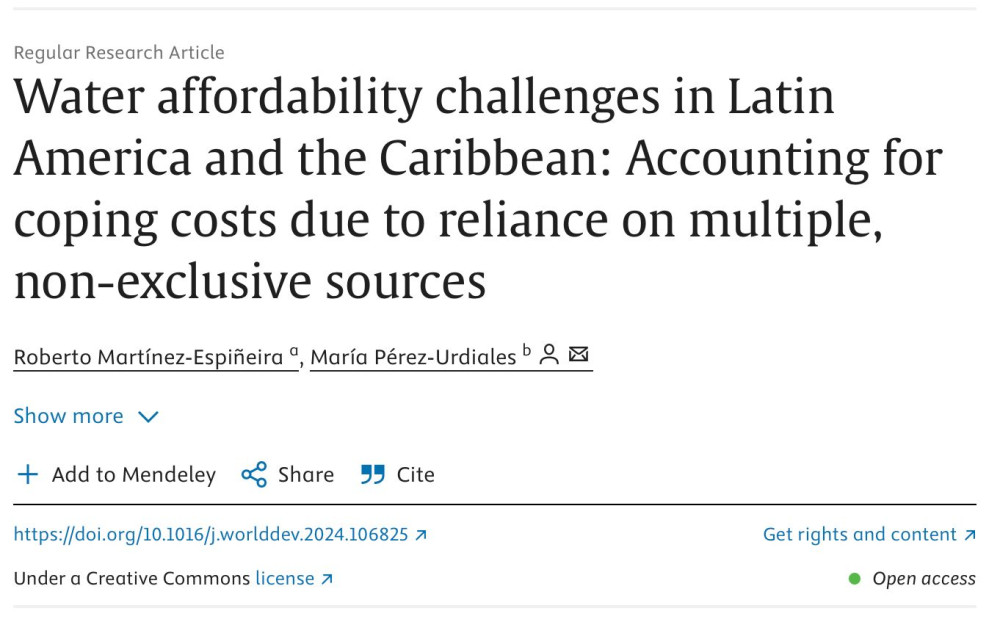
Standard water affordability measures that only account for expenditure on piped water are unlikely to adequately capture the situation of all users in developing countries, who often experience water service quality issues and must rely on coping strategies. Our analysis establishes a foundational framework for systematically incorporating coping costs into assessing affordability metrics. Moreover, we propose adjusting these metrics based on normative judgments regarding the necessity of these coping strategies. We exploit nationally representative household-level data from 18 countries in Latin America and the Caribbean, providing, for the first time, a regional perspective on water affordability We show that when coping costs, which disproportionately impact individuals in the lowest 20% income bracket, are considered, the share of income spent on water significantly exceeds conventionally accepted benchmarks. While our analysis does not reveal substantial differences between adjusted and unadjusted water affordability, our approach may yield more pronounced disparities in other developing countries. These findings, complemented by our identification of characteristics associated with water affordability challenges, provide relevant information for shaping policies aimed at guaranteeing safe and affordable access to water for all.
Resultados:
Thematic Areas:
Languages:
- English
Beneficiaries:
- Researchers
Countries:
- Latin America and the Caribbean (aggregate)
ÚNETE A LA CONVERSACIÓN:
Si quieres unirte y participar presiona "Quiero Colaborar"; si aún no tienes tu cuenta presiona "Registrarme".