

Description
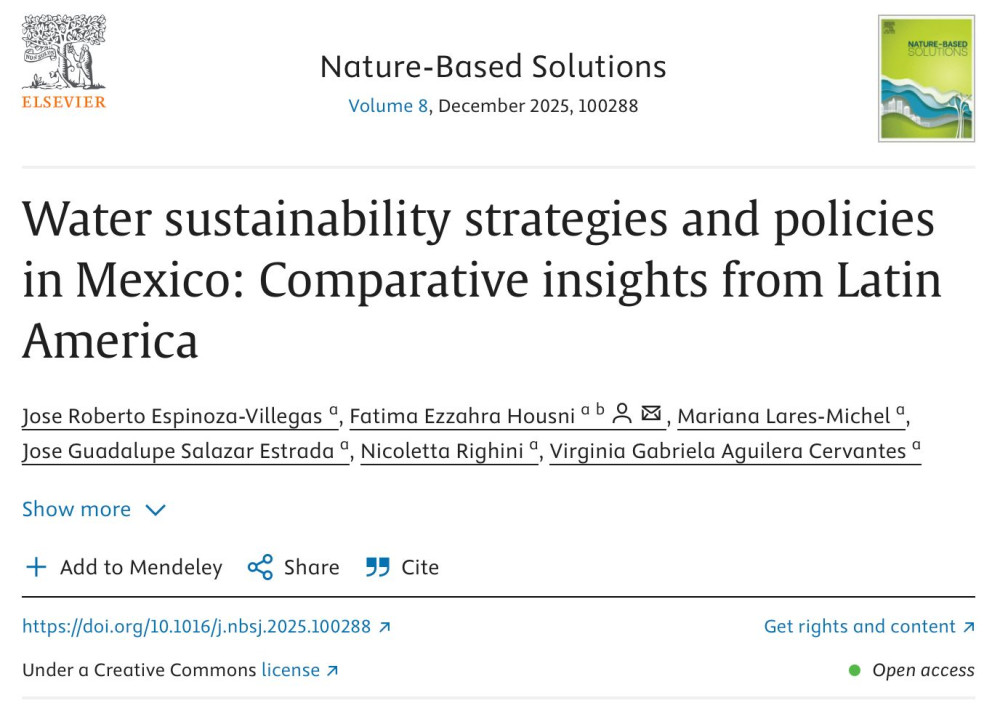
Unsustainable agricultural practices and climate change are exacerbating water insecurity in Latin America and Mexico. Although the region retains significant freshwater resources, unequal access to safe water and sanitation remains a persistent issue. Moreover, water governance is often fragmented, reactive, and constrained by institutional weaknesses. This review analyzes water management strategies and policy frameworks in Latin America—with a special focus on Mexico—through the lenses of governance, legal instruments, citizen participation, nature-based solutions, and the circular economy. It assesses both achievements and unresolved challenges in implementing sustainable water policies, applying a multidimensional perspective that integrates social, ecological, economic, and institutional factors. Case studies highlight the potential of participatory models—such as community-managed systems and basin councils—and examine barriers including privatization, regulatory gaps, and limited local capacity. Based on a comprehensive review of academic and institutional literature published up to March 2025, the article offers recommendations to align national water legislation with human rights and the Sustainable Development Goals, strengthen local water operators, and promote multisectoral policy integration. The findings underscore the urgency of adopting science-based, inclusive, and context-sensitive policies to build resilient and equitable water governance systems under increasing climate and socio-political pressure.
Resultados:
Sectors:
Thematic Areas:
Languages:
- English
Beneficiaries:
- Researchers
Countries:
- Latin America (aggregate)
- Mexico
ÚNETE A LA CONVERSACIÓN:
Si quieres unirte y participar presiona "Quiero Colaborar"; si aún no tienes tu cuenta presiona "Registrarme".