+506 2216 0222
opsaa@iica.int


DID YOU KNOW?
-
IMN forecasts rain deficit in CR until Nov 8
The IMN forecasts below-normal rainfall across Costa Rica from October 12 to November 8, 2026; from October 26 the deficit intensifies in the Central Pacific, North Pacific, and Central Valley (North Pacific: 1 to 70 mm per week). -
Saskatchewan: only 31% of wheat is grade 1 CW
In Saskatchewan (Canada), 31% of 2026 hard red spring wheat graded 1 CW, versus 52% on the five-year average and 61% on the 10-year average, due to variable rainfall, wet conditions, and pests. -
Saskatchewan: harvest at 82% vs 97% average
As of October 5, 2026, 82% of Saskatchewan (Canada) crops were harvested, versus 97% on the five-year average, 88% on the 10-year average, and 93% a year earlier.
Family agriculture
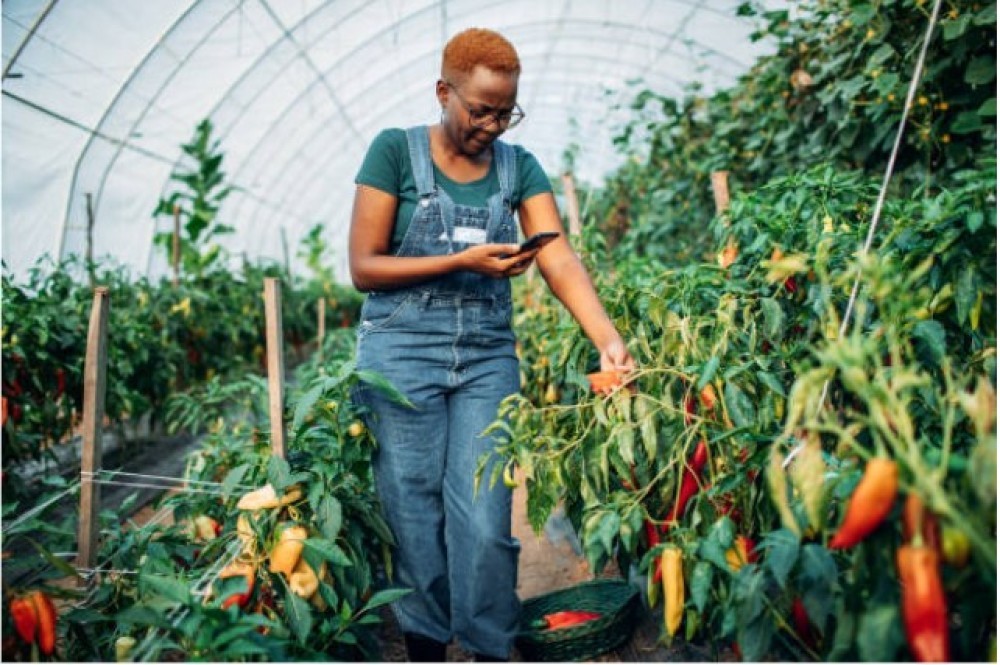
A beneficiary's view of the FAMILY FARMING policy by components, countries, funding sources, beneficiaries, instruments, economic sectors and good practices.
Resources
(326 records
)
Events
(75 records
)
Evidences
(2714 records
)
IMN forecasts rain deficit in CR until Nov 8
The IMN forecasts below-normal rainfall across Costa Rica from October 12 to November 8, 2026; from October 26 the deficit intensifies in the Central Pacific, North Pacific, and Central Valley (North Pacific: 1 to 70 mm per week).
Saskatchewan: only 31% of wheat is grade 1 CW
In Saskatchewan (Canada), 31% of 2026 hard red spring wheat graded 1 CW, versus 52% on the five-year average and 61% on the 10-year average, due to variable rainfall, wet conditions, and pests.
Saskatchewan: harvest at 82% vs 97% average
As of October 5, 2026, 82% of Saskatchewan (Canada) crops were harvested, versus 97% on the five-year average, 88% on the 10-year average, and 93% a year earlier.
More recent in politics
Investments and Public Expenditure
(586 records
- USD 70,197,983,111.00
)
Promotion of agricultural production through parcel irrigation systems and agricultural and beekeeping modernization for small and medium-sized producers
Government of Ecuador project implemented by the Ministry of Agriculture, Livestock and Fisheries to expand access by small and medium-sized agricultural and beekeeping producers to productive assets and technological innovation. It includes micro-reservoirs, parcel and pressurized irrigation systems, drones, walking tractors, combine harvesters, agricultural implements and 1,670 beekeeping kits. The intervention is expected to reach 23 provinces; its irrigation component covers 3,288.22 hectares and directly benefits 2,420 farming families.
Irrigation Grants under the Women's Call No. 206-2025 for Small-Scale Women Farmers in Mulchén
Grants awarded by Chile's National Irrigation Commission to five small-scale women farmers in Mulchén for irrigation works and locally appropriate irrigation solutions. The investments aim to strengthen their production systems and access to irrigation.
Transfer of BOB 3.8 million for 21 community-based resilient agricultural production projects
The Government of Bolivia, through the Ministry of Productive Development, Rural Affairs and Water, the APROCAM Implementing Unit and the ACCESOS RURAL programme, transferred BOB 3.8 million for 21 community projects in Chuquisaca, Tarija and Potosí. The intervention directly benefits 757 farming families and seeks to improve yields of maize, potatoes, broad beans and peaches through certified seeds and seedlings, modernized irrigation systems, anti-hail nets, thermal covers with temperature sensors and other climate-response measures.
Policy frameworks
(604 records
)
Ministerial Agreement No. 0009 - AGROPROTEGE Project Management Guidelines
Ecuadorian ministerial agreement issuing the management guidelines for the AGROPROTEGE Project for sustainable productive development through agricultural insurance. It regulates partial government subsidies for the purchase of crop and livestock insurance policies covering climatic, biological and other adverse risks. It establishes eligible activities, subsidy percentages and limits, affirmative-action incentives, insurance coverage, policy duration, responsibilities of MAGP, insurers, channels, facilitators and beneficiaries, and procedures for selecting insurance operators and entering into cooperation and resource-transfer agreements.
National Development Plan “Ecuador Does Not Stop” 2025-2029
Ecuador's national planning instrument for the 2025-2029 period, prepared by the National Planning Secretariat and approved by the National Planning Council through Resolution No. 012-2025-CNP. The Plan guides public action through objectives, policies, strategies, targets and indicators organized around the social; economic, productive and employment; environment, water, energy and connectivity; institutional; and risk axes. Its agri-food provisions promote national production, agricultural productivity, technological innovation, sustainable practices, the inclusion of small producers, women and young people, and food and environmental security.
Bill No. 224/2025-2026: Financing Agreement for the Programme for the Development of Sustainable and Resilient Agriculture (AGROSUSTENTAR)
Bill approving the financing agreement between the Plurinational State of Bolivia and the International Fund for Agricultural Development (IFAD) for the Programme for the Development of Sustainable and Resilient Agriculture (AGROSUSTENTAR). The agreement provides EUR 21,120,000 in external financing and a total budget of EUR 24,270,000 including local counterpart contributions. It is intended to strengthen the productive capacities of farming families, mitigate the effects of climate change and contribute to food security. It was approved by the Chamber of Deputies and referred to the Senate for consideration and enactment.
Good practices
(42 records
)
Conservation and Sustainable Use of Agro-biodiversity to Improve Human Nutrition in Five Macro Eco-regions (Bolivia)
Project aimed at conserving agro-biodiversity in situ across five macro eco-regions and improving the livelihoods of local populations. It seeks to mainstream the valuation, conservation and sustainable use of agro-biodiversity into national policies, regulatory frameworks, and health, education, rural development and food security programmes. It includes the generation of market incentives and awareness-raising and training processes for the sustainable management of natural resources.
Public Services Improvement Project for Sustainable Territorial Development in the Apurímac, Ene and Mantaro Rivers Area of Influence
Project aimed at reducing rural poverty through the social and productive inclusion of families in the VRAEM area. It seeks to increase beneficiaries' human, social, natural, physical, and financial assets. It combines strengthening of territorial governance, development of local economic initiatives, and improved connectivity and community infrastructure.
Buen Vivir in Rural Territories Programme
The programme aims to improve food security and livelihoods of food-insecure rural households in poverty, largely dependent on small-scale agriculture and vulnerable to climate change. It promotes an endogenous territorial development model centred on family-scale agroecological production, organizational and community capacity strengthening, and investment in territorial economic initiatives. It supports the implementation of national food sovereignty policy within a complementarity framework across government levels, with attention to sustainable water and natural resource management.
Dialogue rooms
(6 records
)


Partners