+506 2216 0222
opsaa@iica.int


Description
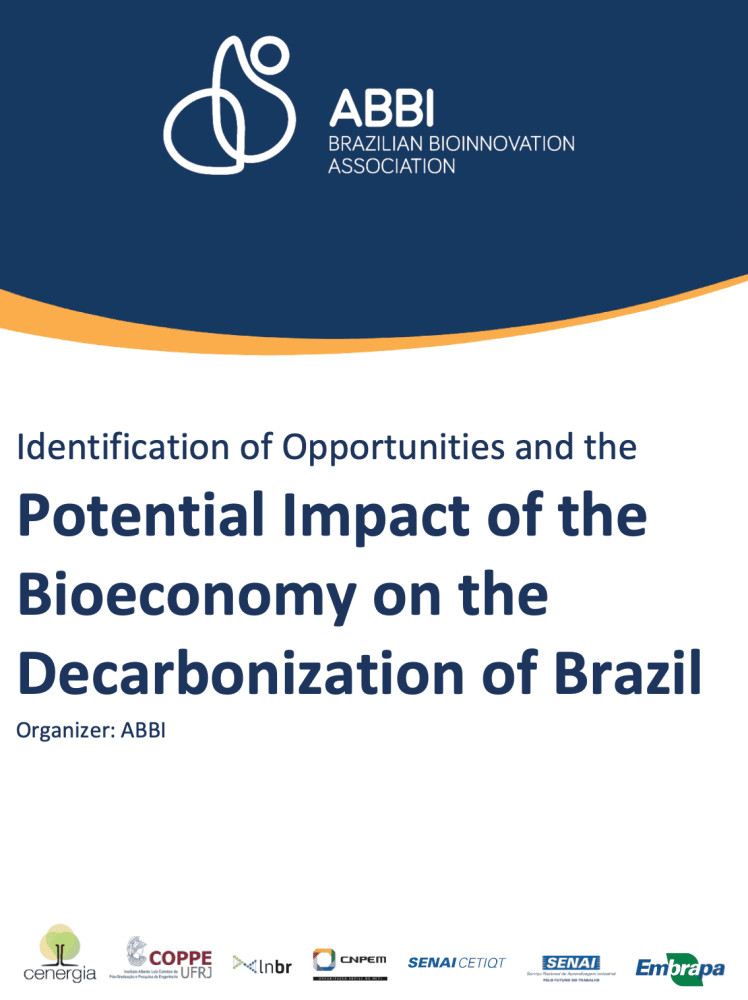
Conducted in partnership with the Brazilian Association of Bioinnovation (ABBI), Embrapa Agroenergia, the National Laboratory for Renewable Energy (LNBR/CNPEM), the Center for Chemical and Textile Industry Technology (Senai/CETIQT), and the Cenergia Laboratory at the Federal University of Rio de Janeiro (Cenergia/UFRJ), the study explores the potential of the bioeconomy in Brazil and its impact on the country's decarbonization efforts. It projects that full implementation of the bioeconomy in Brazil could generate an annual industrial revenue of up to $284 billion by 2050. It proposes three potential scenarios for the bioeconomy's role in Brazil's energy transition: current policies, biomass as the primary energy source, and the integration of promising biorenewable technologies. Key findings include the identification of solutions to enhance agricultural productivity, reduce GHG emissions, and convert biomass into low-carbon energy products and high-value bioproducts. The study highlights the potential for Brazil to significantly reduce carbon emissions, particularly through the growth of biofuels and biobased products. To realize the bioeconomy's full potential, coordinated public policies that leverage Brazil's competitive advantages and support the transition to a low-carbon economy are essential. This study represents a collaborative effort among leading research and bioinnovation organizations in Brazil. It provides valuable insights for policymakers and stakeholders to shape green economy policies in the country.
You can access the Portuguese version here: https://lnkd.in/dxzi6fyE
Institutions:
Thematic Areas:
Instruments:
Languages:
- English
- Português
Beneficiaries:
- Public institutions
- Researchers
Countries:
- Brazil
Join to conversation
If you want to join and participate, press "I want to collaborate"; if you dont yet have an account, press "Register".