+506 2216 0222
opsaa@iica.int


Description
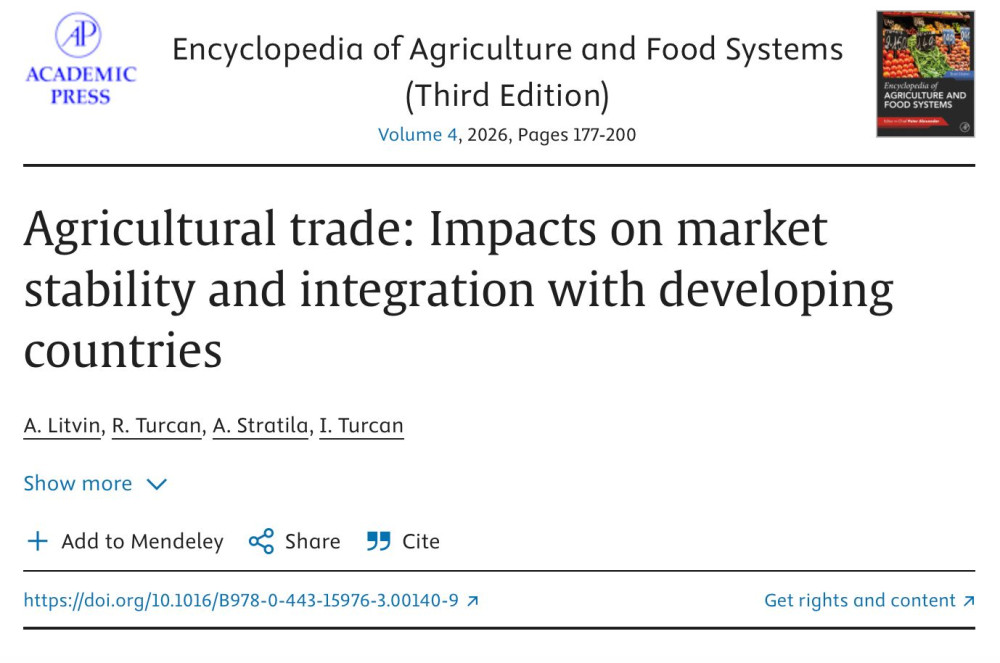
Agricultural markets and their mechanisms have a major impact in shaping the efficiency and sustainability of the agri-food sector at regional and global levels. This chapter analyzes the role of agri-food trade in ensuring market stability and the integration of developing countries into the global economy. Starting from the main theories of international trade that address absolute and comparative advantage, as well as production factor models, this chapter highlights how trade policies influence the structure and dynamics of agri-food exchanges. A particularly important emphasis is placed on the impact of the Common Agricultural Policy (CAP), regional economic integration and market liberalization on the competitiveness and diversification of exports. In the applied part, a qualitative analysis of the trade behavior of European countries is carried out, using per capita normalization methods and clustering algorithms. The results obtained and the conclusions reflect a clear trend of convergence between Eastern and Western Europe and underline the importance of agri-food trade as a tool for sustainable development, food security and economic resilience in a global context marked by instability and structural changes. At the same time, the case of the Republic of Moldova is analyzed as an example of how a transition economy uses agri-food trade as a tool for integration into European trade networks, illustrating the application of economic theories and trade policies in an emerging context.
Resultados:
Sectors:
Thematic Areas:
Languages:
- English
Beneficiaries:
- Researchers
Countries:
- Latin America and the Caribbean (aggregate)
Join to conversation
If you want to join and participate, press "I want to collaborate"; if you dont yet have an account, press "Register".