+506 2216 0222
opsaa@iica.int


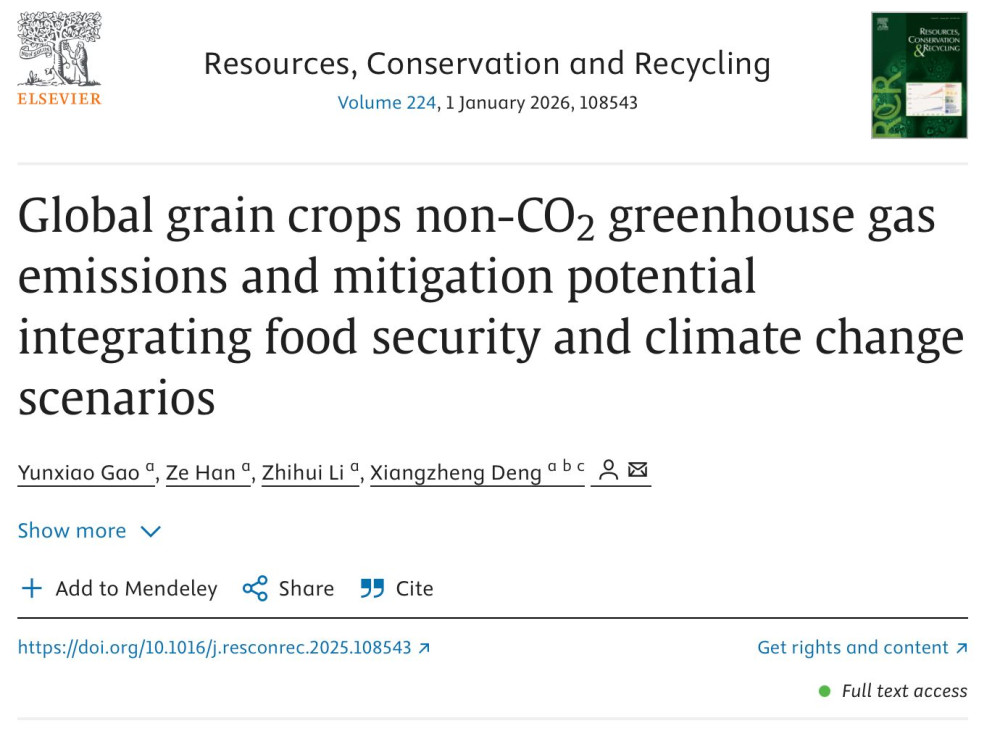
Description
Mitigating agricultural non-CO2 emissions requires understanding component-specific pathways, particularly crop-derived N2O emissions that threaten climate goals and food security. This study assesses historical (2000–2021) and projected (to 2050) N2O emissions from five major grain crops by combining life-cycle assessment, Tapio decoupling analysis, and SSP-RCP–based scenario modeling. Global emissions rose from 469.1 Kt to 691.9 Kt, with strong regional disparities. While emissions and production were generally coupled, decoupling intensities varied across crops and regions. Under scenarios of 400 kg per capita grain possession, projected 2050 emissions range from 746.8 to 848.6 Kt, implying a 13.6% uncertainty. East Asia and North America show the highest mitigation potentials (84.1 Kt and 42.2 Kt), with maize, rice, wheat, and potatoes dominant in East Asia and soybean in North America. Africa and South Asia remain growth hotspots. Our findings highlight the need for region- and crop-specific mitigation strategies that balance productivity, equity, and emission goals.
Resultados:
Thematic Areas:
Languages:
- English
Beneficiaries:
- Researchers
Countries:
- Latin America and the Caribbean (aggregate)
Join to conversation
If you want to join and participate, press "I want to collaborate"; if you dont yet have an account, press "Register".