

Description
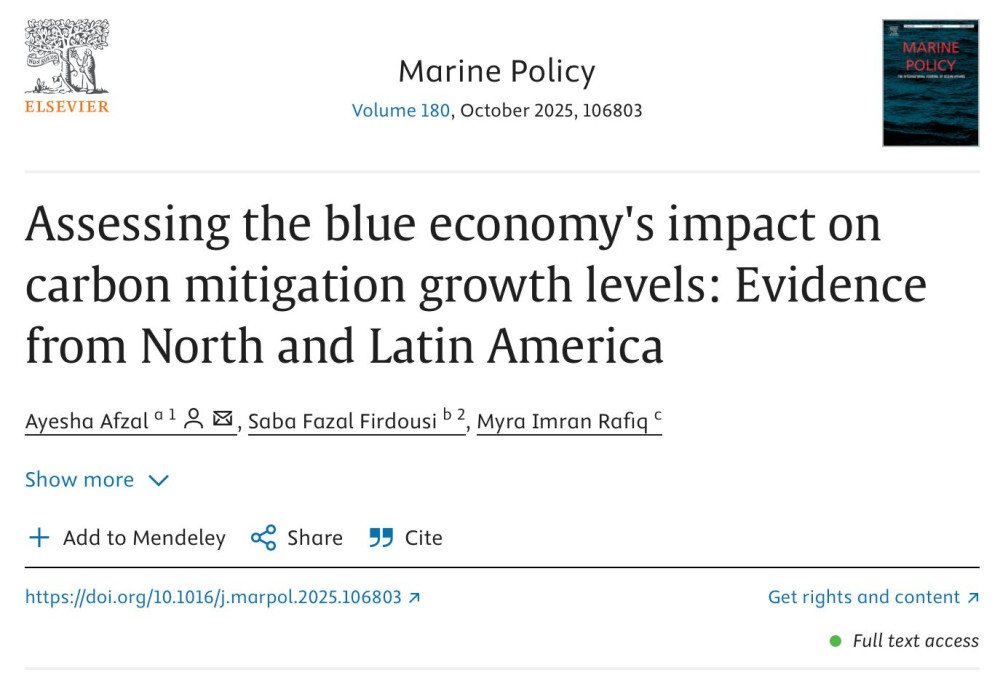
This study examines the impact of the blue economy on dynamic relationships between the economic, trade, and carbon emissions indicators for 14 countries from 1990 – 2021 across North and Latin America. The blue sector is measured through aquaculture production, capture fisheries production, renewable energy consumption, and container port traffic. The study analyzes the long-run relationship between maritime and economic variables by constructing the Fully Modified Ordinary Least Squares (FMOLS) model and then comparing it with the Dynamic Ordinary Least Squares (DOLS) framework to assess the robustness of the estimates. The results of the empirical analysis reveal that in the long run, carbon emissions tend to decrease in both North, and Latin America as the blue economy expands. In contrast, economic growth, and trade depict a statistically positive relationship with the blue sector. These findings have instituted key policy implications: the blue sector is a viable option to promote carbon mitigation strategies vis-à-vis a stable growth and trade rate. However, for regional trade to increase over the long-run trajectory, there needs to be a collaborative effort for the improvement of existing trade initiatives such as NAFTA, and MERCOSUR along with effective policy mechanisms to integrate blue sector reforms. Specifically, the paper advocates for investment in carbon capture technologies, the deployment of clean energy resources, and legislation enforcement to promote responsible allocation of the ocean’s resources while bolstering economic growth and trade prospects.
Resultados:
Sectors:
Thematic Areas:
Languages:
- English
Beneficiaries:
- Researchers
Countries:
- America, North (aggregate)
- Latin America (countries)
ÚNETE A LA CONVERSACIÓN:
Si quieres unirte y participar presiona "Quiero Colaborar"; si aún no tienes tu cuenta presiona "Registrarme".