

Description
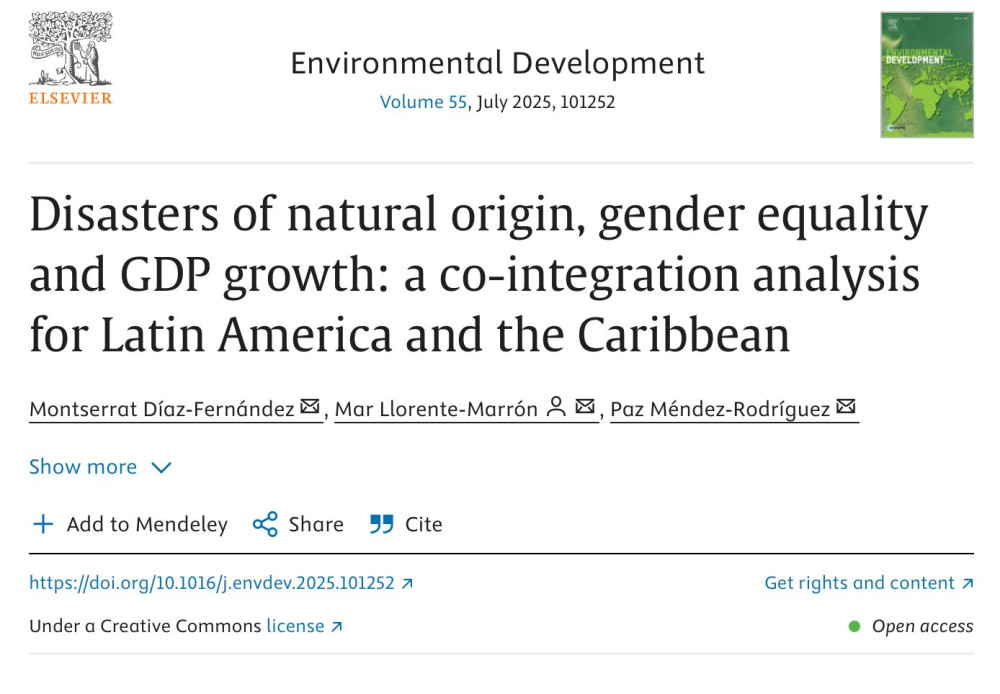
Natural disasters, increasingly frequent and severe, not only cause material and economic damage but also exacerbate pre-existing social inequalities, especially those affecting women and vulnerable groups. The objective of this study is to analyse the dynamic relations between disasters of natural origin (NDs), gross domestic product per capita (GDP) and the gender inequality index (GII) in Latin American and Caribbean countries over the period 2000–2021 using fully modified least squares (FMOLS) estimation of panel models with non-stationary and co-integrated variables. We aim to analyse the short- and long-term relations between variables as well as their causality and dynamics to shed light on these interconnected relations and their implications for the region. A significant bidirectional relation between NDs and gender inequality is identified: disasters exacerbate inequality, disproportionately affecting women, while higher levels of inequality increase vulnerability to such events. Additionally, there is evidence of a unidirectional relation between economic growth and GII. In several Latin American and Caribbean countries, the speed of adjustment indicates that gender inequality tends to persist or even worsen. These findings underscore the importance of addressing gender inequality as a critical element in disaster management and sustainable economic development in Latin America and the Caribbean. An approach that recognizes and addresses gender disparities can facilitate a more inclusive and effective recovery from disasters.
Resultados:
Thematic Areas:
Languages:
- English
Beneficiaries:
- Women
- Researchers
Countries:
- Latin America and the Caribbean (aggregate)
ÚNETE A LA CONVERSACIÓN:
Si quieres unirte y participar presiona "Quiero Colaborar"; si aún no tienes tu cuenta presiona "Registrarme".