+506 2216 0222
opsaa@iica.int


Description
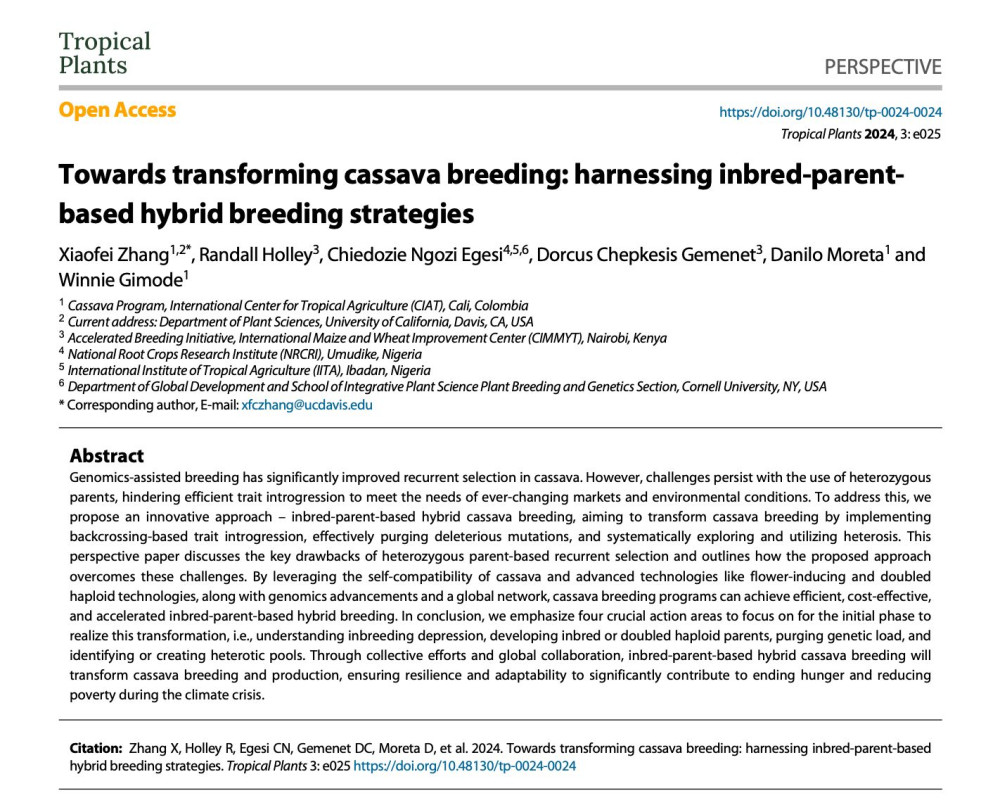
This perspective article introduces an innovative transformation in cassava breeding by implementing inbred-parent-based hybrid breeding, as opposed to conventional heterozygous-parent-based recurrent selection. It highlights the genomic, physiological, and technological foundations enabling this shift — self-compatibility in cassava, flower-induction technologies, doubled haploids, genomic selection, and global collaboration frameworks. The approach aims to purge deleterious mutations, accelerate trait introgression through backcrossing, enhance selection precision, and systematically exploit heterosis to produce resilient, high-performing hybrid varieties. The authors identify four key priority areas — understanding inbreeding depression, developing inbred or DH parents, purging genetic load, and creating heterotic pools — to achieve faster, cost-effective cassava improvement contributing to food security and climate adaptation.
Resultados:
Sectors:
Thematic Areas:
Instruments:
Languages:
- English
Beneficiaries:
- Private enterprises
- Public institutions
- Researchers
- Agricultural producers
Countries:
- World (aggregate)
Join to conversation
If you want to join and participate, press "I want to collaborate"; if you dont yet have an account, press "Register".