+506 2216 0222
opsaa@iica.int


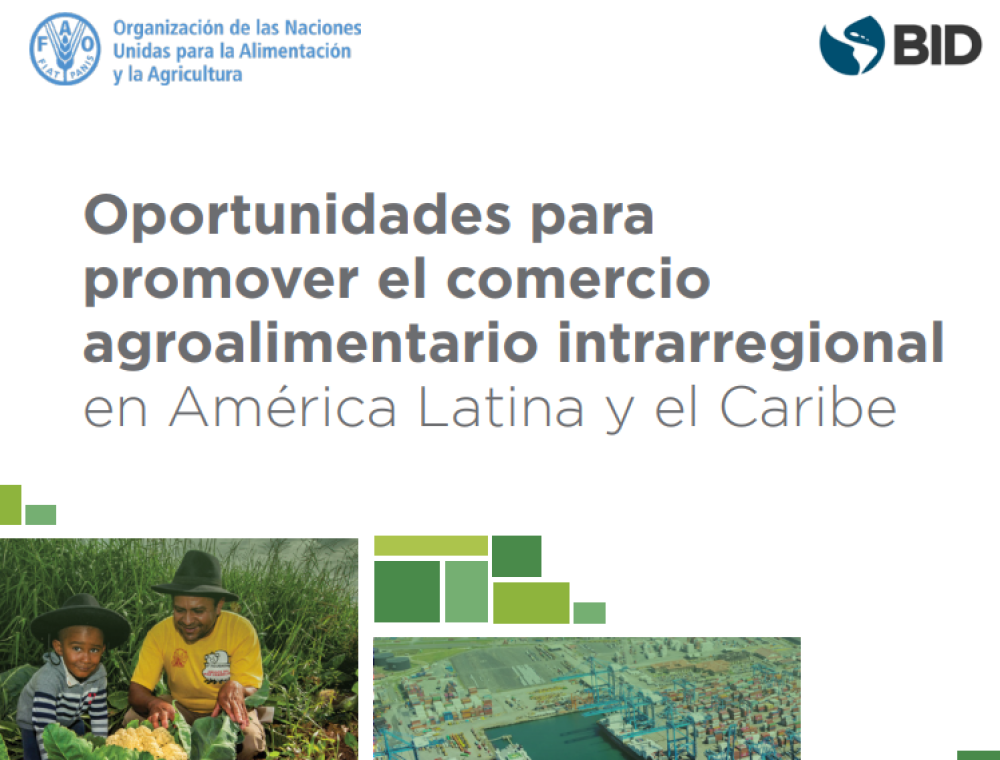
Description
The document analyzes global agri-food trade trends and determinants, highlighting its key role in food security. It underscores the importance of rules-based trade and the growing share of processed products. It examines how factors such as distance, trade agreements, and non-tariff measures affect agricultural trade, and how Latin America and the Caribbean (LAC) show significant differences among subregions: South American countries and some Mesoamerican nations are net exporters, while the Caribbean is a net importer.
There is a high concentration of agri-food exports in a few products and countries. About 14.8% of these exports are directed to the region itself, accounting for 40% of LAC's total agri-food imports. The document also highlights the uneven trade liberalization within the region, with differences in agreements and tariff coverage.
Finally, it identifies 67 tariff subheadings with intraregional potential, particularly in cereals, meats, oils, and beverages, and highlights the structural and logistical challenges that hinder greater trade integration. It presents country-level opportunities, with Mexico and MERCOSUR as key players, although facing competition from the U.S. and other extraregional suppliers. It concludes that intraregional trade holds potential, but depends on multiple factors beyond public policy.
Sectors:
Languages:
Beneficiaries:
Countries:
Join to conversation
If you want to join and participate, press "I want to collaborate"; if you dont yet have an account, press "Register".