

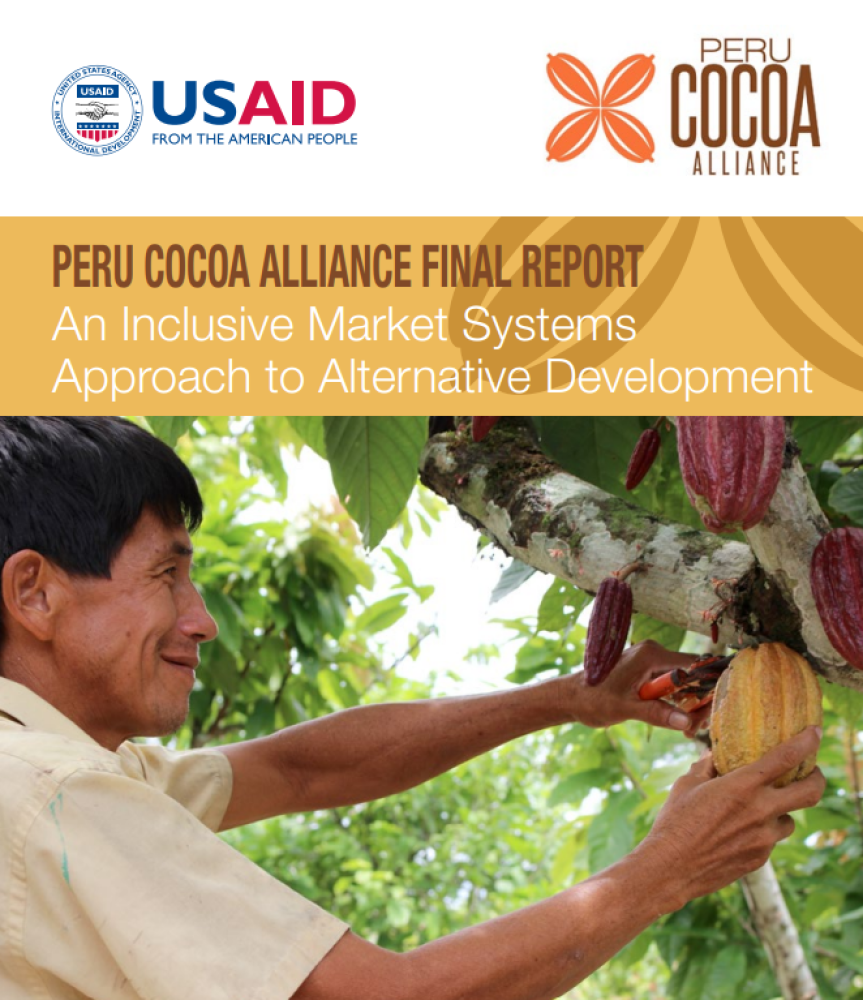
Description
The success of alternative development programs is often measured in hectares cultivated and eradicated, inputs delivered and export value. However, these programs face the challenge of competing with the efficient and profitable coca supply chain. Without a similar approach for alternative crops, increased production does not guarantee a sustainable market for sale and processing, leaving farmers without viable options.
The Cacao Peru Alliance took an innovative approach, integrating the development of the cocoa supply chain in the Peruvian Amazon to generate sustainable income for former coca farmers. In 2011, CARANA Corporation (now Palladium) proposed the Global Development Alliance model to USAID, leveraging $36 million from USAID to attract $49 million in private investment from companies such as ECOM and Romex, as well as the Peruvian government. The initiative sought to improve the quality and specialization of Peruvian cocoa to bring it in line with international market standards and offer a sustainable economic alternative to illicit cultivation.
Institutions:
Authors:
- Alianza Cacao Perú
Resultados:
Sectors:
Thematic Areas:
Instruments:
Languages:
- English
Beneficiaries:
- Family agriculture
- Value Chains
- Exporters
- Public institutions
- Agricultural producers
- Land owners or users
Countries:
- Peru
ÚNETE A LA CONVERSACIÓN:
Si quieres unirte y participar presiona "Quiero Colaborar"; si aún no tienes tu cuenta presiona "Registrarme".