+506 2216 0222
opsaa@iica.int


Description
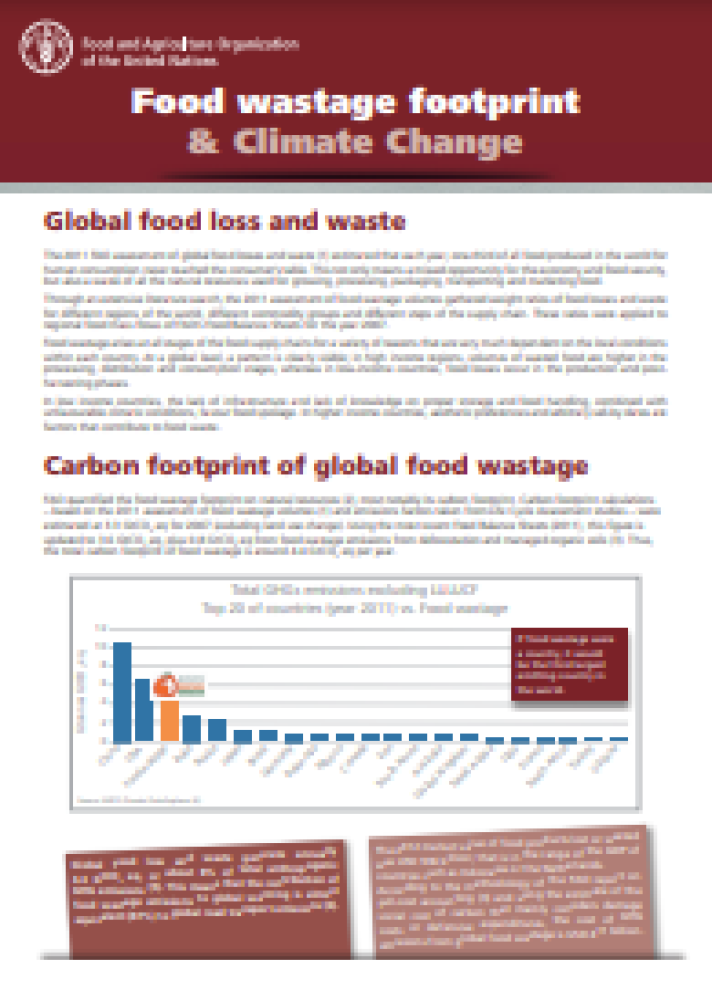
The Food Waste Footprint and Climate Change report highlights that food loss and waste generate 4.4 gigatonnes of CO2eq annually, accounting for approximately 8% of global greenhouse gas emissions. If food waste were a country, it would be the third-largest emitter of greenhouse gases globally. Food waste at later stages of the supply chain, such as processing and consumption, contributes significantly to the carbon footprint. The study suggests that reducing food waste could have a major impact on mitigating climate change. For example, meeting UN Sustainable Development Goal 12, which seeks to halve food waste by 2030, could reduce the carbon footprint by 38%, equivalent to Japan’s annual emissions. Reducing post-harvest losses in developing countries through technological and management improvements represents a key opportunity to mitigate climate change.
Institutions:
Authors:
- FAO
Thematic Areas:
Instruments:
Languages:
- English
Beneficiaries:
Countries:
- Indonesia
- Japan
- World (aggregate)
- Netherlands
Join to conversation
If you want to join and participate, press "I want to collaborate"; if you dont yet have an account, press "Register".