- Julian Parfitt
- Mark Barthel
- Sarah Macnaughton


Description
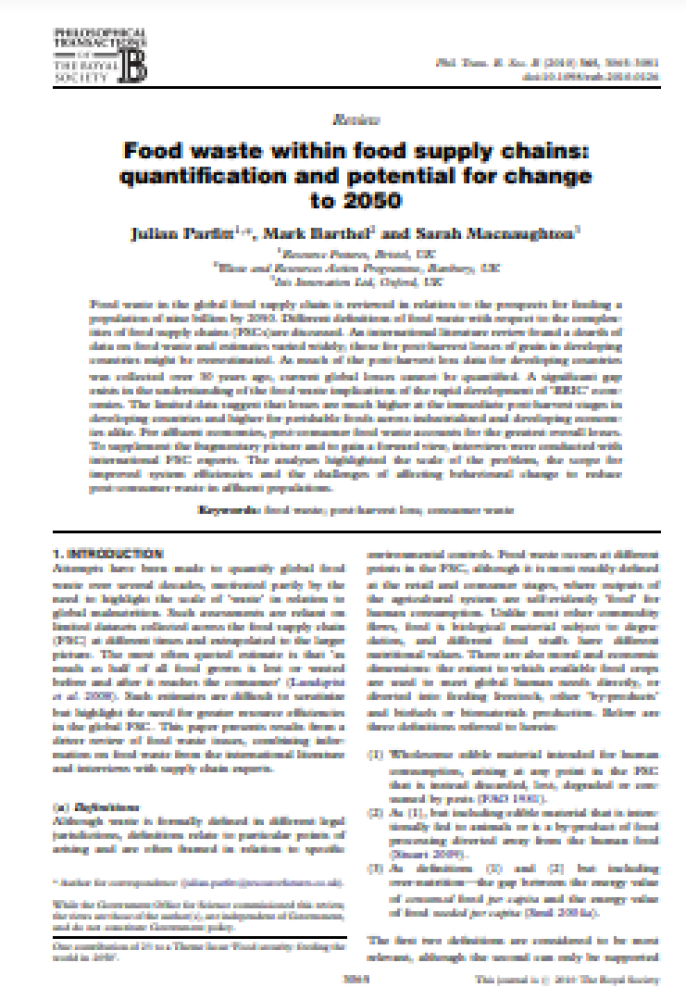
The paper analyses food waste in global supply chains and its impact on the ability to feed an estimated nine billion people by 2050. The authors review different definitions of food waste and highlight the lack of reliable data, particularly in developing countries, where post-harvest losses may be overestimated. In developing countries, the greatest losses occur during the early stages of the supply chain, such as harvesting and storage, while in industrialised countries the biggest waste problem occurs at the consumer level. The study also highlights differences in food supply chains between developing, intermediate and industrialised countries. In poorer countries, the lack of adequate infrastructure and post-harvest handling techniques lead to considerable losses, especially in perishable foods. In contrast, industrialised countries face greater losses in domestic consumption due to high consumer expectations and poor connection to food production. Globalisation and changing diets, especially in the BRIC countries (Brazil, Russia, India and China), are also affecting food waste, with demand for fresh and perishable foods increasing. The authors conclude that reducing food waste requires a comprehensive approach that includes investments in infrastructure in developing countries and changes in consumer behaviour in industrialised countries.
Authors:
Resultados:
Thematic Areas:
Instruments:
Languages:
- English
Beneficiaries:
Countries:
- Brazil
- China
- India
- World (aggregate)
- Russia
- South Africa
ÚNETE A LA CONVERSACIÓN:
Si quieres unirte y participar presiona "Quiero Colaborar"; si aún no tienes tu cuenta presiona "Registrarme".