+506 2216 0222
opsaa@iica.int


Description
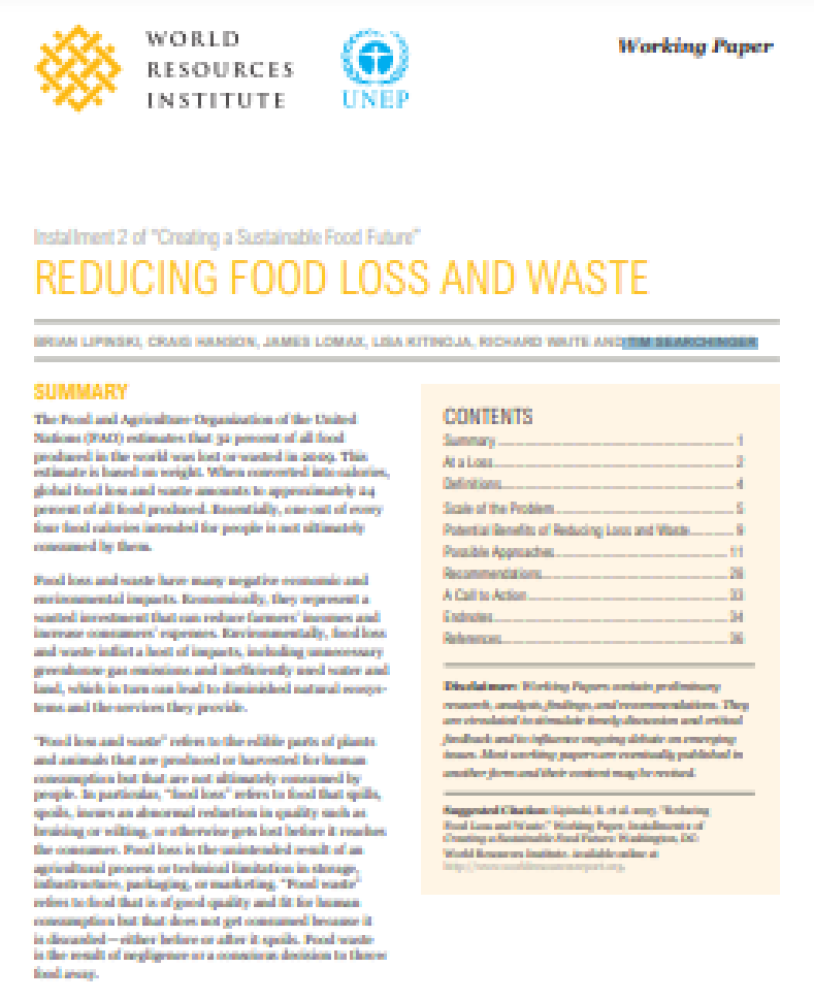
The report analyses the global impact of food loss and waste, estimating that around 32% of the food produced worldwide in 2009 was lost or wasted, equivalent to 24% when measured in calories. This inefficiency affects both the economy and the environment, wasting natural resources such as water and land, and contributing to unnecessary greenhouse gas emissions. The report details how food loss typically occurs at the early stages of the value chain, from production to distribution, while waste occurs mainly at the final stages, such as consumption, due to factors such as confusing expiration dates and poor consumer habits. To address this problem, the report suggests a set of practical and cost-effective solutions, such as improving food storage and handling in developing countries, promoting the redistribution of unsold food and launching awareness campaigns to reduce household waste. Recommendations include the development of protocols for measuring food loss and waste, the establishment of reduction targets, and the creation of entities dedicated to this purpose in developed countries.
Institutions:
Authors:
- Brian Lipinski
- Craig Hanson
- James Lomax
- Lisa Kitinoja
- Richard Waite
- Tim Searchinger
Resultados:
Instruments:
Languages:
- English
Beneficiaries:
Countries:
- Mundo (agg. 92 países)
Join to conversation
If you want to join and participate, press "I want to collaborate"; if you dont yet have an account, press "Register".