+506 2216 0222
opsaa@iica.int


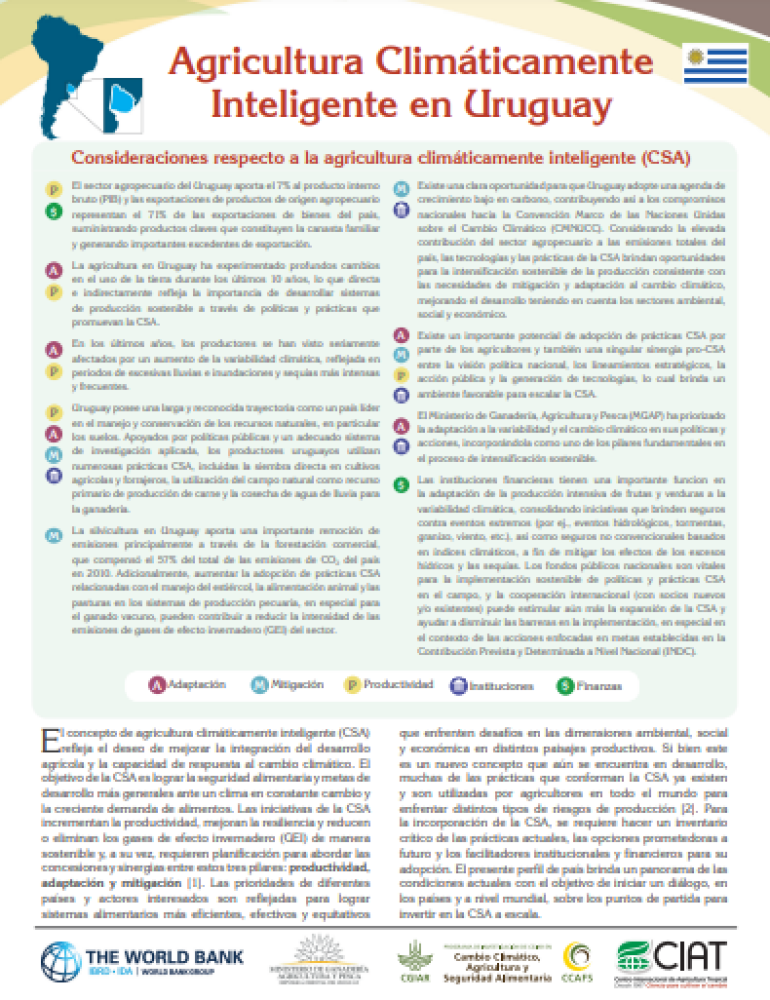
Description
In Uruguay, several Climate-Smart Agriculture (CSA) practices are already being implemented in different productive sectors. In livestock farming, producers use integrated pasture management, especially in natural fields, to improve forage availability and ensure access to water in times of water stress. In the agricultural sector, direct sowing in crops such as soybeans and corn is a common practice, reducing soil degradation and increasing water availability. In addition, in fruit and vegetable farming, techniques such as drip irrigation and integrated pest management are used, which has allowed reducing the use of agrochemicals and stabilizing production. In dairy farming, Uruguayan producers have begun to incorporate practices such as strategic water management and the use of feed concentrates to cope with adverse weather conditions. Forestry also plays an important role, contributing to the reduction of emissions through commercial forestry, which in 2010 offset 57% of the country's total CO2 emissions.
Institutions:
Authors:
- BM: Banco Mundial
Resultados:
Sectors:
Thematic Areas:
Instruments:
Languages:
- English
- Español
Beneficiaries:
- Family agriculture
- Private enterprises
- Public institutions
- Agricultural producers
Countries:
- Uruguay
Join to conversation
If you want to join and participate, press "I want to collaborate"; if you dont yet have an account, press "Register".