

Description
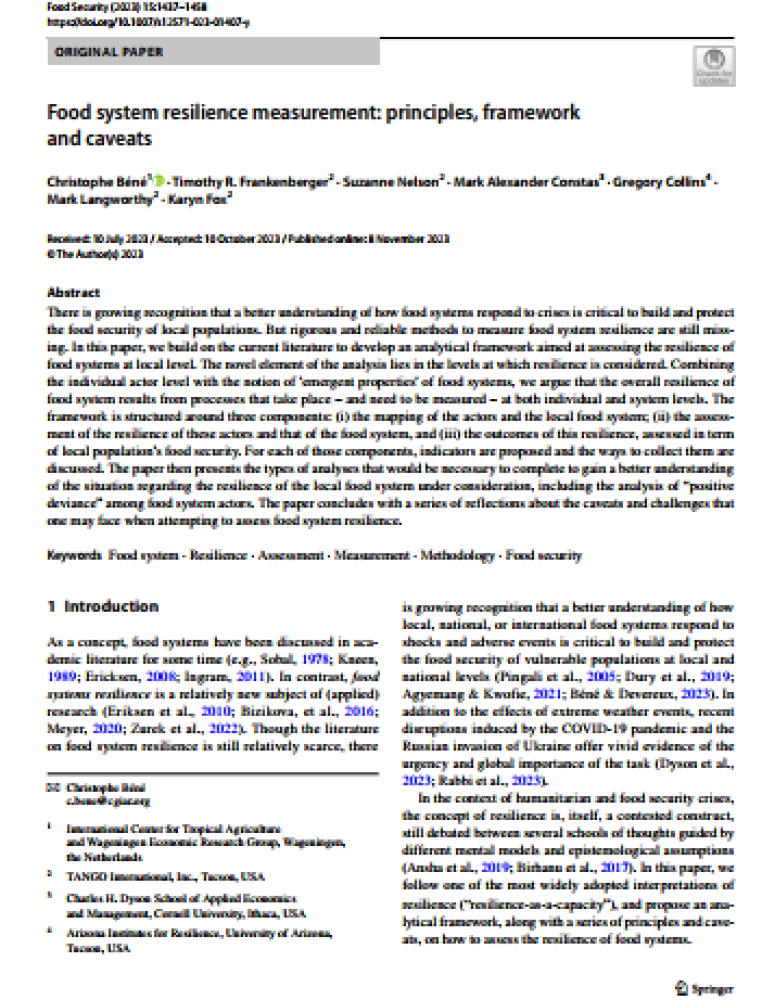
The study addresses the growing importance of understanding how food systems respond to crises and their impact on food security. The authors present an analytical framework for measuring food system resilience at the local level, considering both the individual level of actors and the emergent properties of the system as a whole. They propose three main components: mapping food system actors, assessing the resilience of these actors and their systems, and outcomes in terms of food security. Indicators for each component and how to collect these data are discussed, as well as the importance of analyzing actors’ responses to crises, including adaptation and mitigation strategies. The framework also notes that food system resilience is formed at both the individual and system level and highlights the importance of measuring emergent properties such as connectivity and diversity. While providing a sound methodological foundation, the study also acknowledges challenges and limitations, such as the difficulty in assessing long-term impacts and in measuring resilience at the national or global level. The authors conclude that this framework can help guide interventions and policies to improve food resilience, although they emphasize that each context will require specific adjustments.
Institutions:
Authors:
- Christophe Béné
- Gregory Collins
- Karyn Fox
- Mark Alexander Constas
- Mark Langworthy
- Suzanne Nelson
Resultados:
Sectors:
Instruments:
Languages:
- English
Beneficiaries:
Countries:
- Burkina Faso
- Solomon Islands
- Nigeria
ÚNETE A LA CONVERSACIÓN:
Si quieres unirte y participar presiona "Quiero Colaborar"; si aún no tienes tu cuenta presiona "Registrarme".