

Description
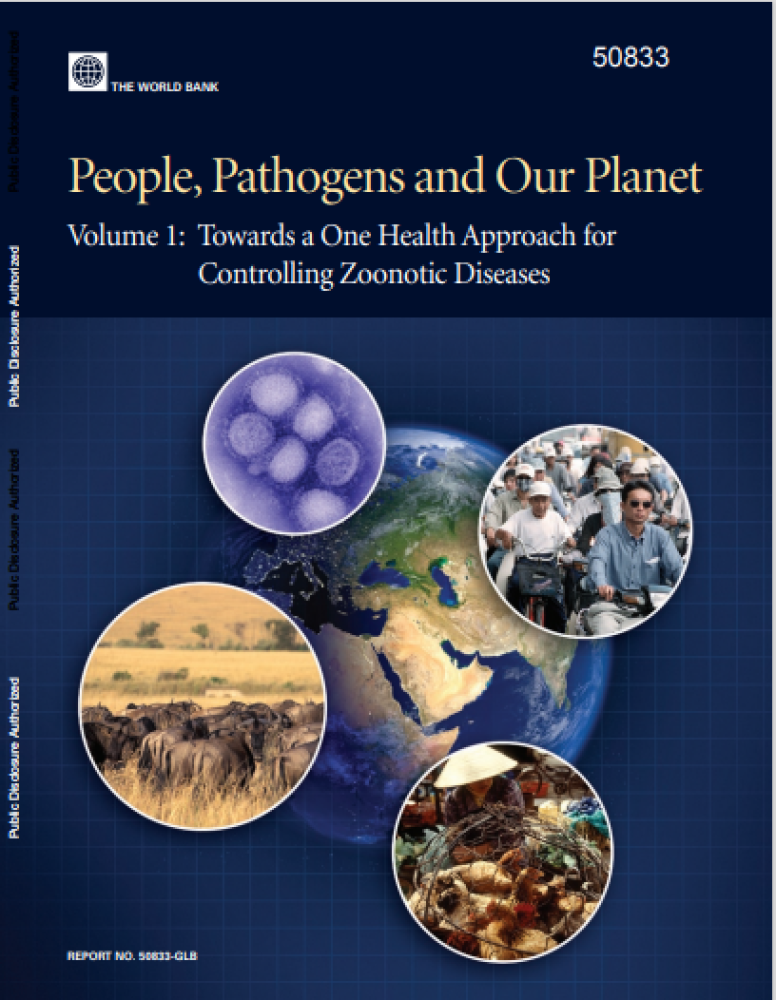
Emerging and re-emerging infectious diseases that have the potential to become pandemic occur with alarming regularity, and a substantial majority of these are zoonotic in origin—that is, transmissible from animals to humans. Developing preparedness through effective surveillance and control systems has been complicated for a number of reasons, not the least of which have been the difficulties of establishing reliable communications and consultation between public health and veterinary health agencies. Today we know that these channels of communication must be expanded to include monitoring of wild species and the health of ecosystems. Both natural habitats and those environments that are managed by humans, such as agricultural production systems and food supply chains, are habitats in which pathogens can emerge, circulate, change dynamics, and sometimes cross-host species. Recognition of the interrelatedness of the respective health domains and of the risks that zoonotic diseases represent to public health has led to appeals for more horizontal interaction among the disciplines and the sector agencies, departments, and ministries that are responsible for public health, medical professions, veterinary services, and the environment.
Institutions:
Authors:
- BM: Banco Mundial
Resultados:
Sectors:
Thematic Areas:
Languages:
- English
Beneficiaries:
Countries:
- World (aggregate)
ÚNETE A LA CONVERSACIÓN:
Si quieres unirte y participar presiona "Quiero Colaborar"; si aún no tienes tu cuenta presiona "Registrarme".