

Description
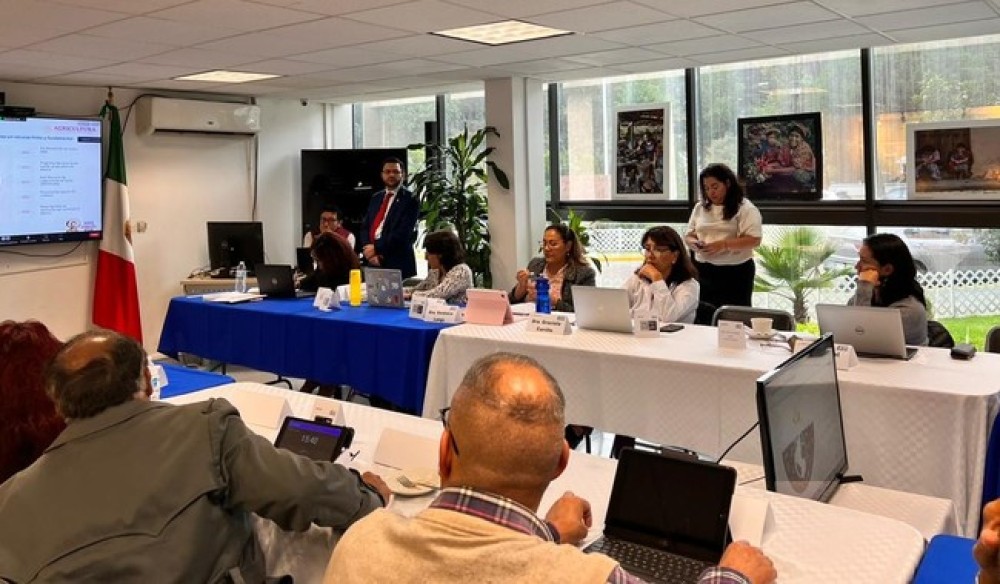
Experts representing the public and private sectors, as well as international organizations, have gathered at the first Sectoral Strategy Workshop on the Agricultural Bioeconomy, organized by the Inter-American Institute for Cooperation on Agriculture (IICA) of Mexico and the Ministry of Agriculture and Rural Development. The objective is to create a unified definition of the bioeconomy and explore its application in the Mexican agrifood sector. The workshop, which brought together more than 60 participants, highlighted the opportunity to take advantage of agricultural crop residues to promote the creation of bio-businesses. Mexico, with its megadiversity and strategic location in international trade, is in a favorable position for this initiative. Participants emphasized the need to use agricultural crops and their residues effectively, in addition to making consumers aware of the importance of investing in research, development and innovation (R&D&I) to promote Mexican technologies that favor the emergence of bio-businesses. During the workshop, key words were defined that should integrate the concept of Agricultural Bioeconomy in Mexico, how to contextualize it was analyzed and the barriers to overcome for its success in the country were identified. The advantages of its application in bioeconomic issues were also highlighted. Among the main barriers to the success of the bioeconomy in Mexico are the lack of enabling policies and regulations, the lack of collaboration between key actors in the value chains and the limited lines of research and technologies to valorize biological and natural resources in a sustainable and socially responsible manner. The Ministry of Agriculture, through the General Directorate of Added Value and Markets, considers this economic approach as an option to address the challenges of the Mexican agricultural sector and take full advantage of biomass, including agricultural crop residues, with a special focus on reducing food loss and waste in agri-food systems. During the inauguration of the workshop, the general coordinator of Agriculture of the Ministry of Agriculture, Santiago Arguello Campos, stressed that the bioeconomy has the potential to reduce poverty and inequality in the countryside by reducing pressure on biodiversity, soils and aquifers, among other aspects. Participants in the event stressed that the bioeconomy is a growing development paradigm in several countries, offering opportunities for rural areas in primary production, processing and consumption. IICA's representative in Mexico, Diego Montenegro, emphasized the importance of the bioeconomy as a driver of sustainable and equitable development, which requires the collaboration of multiple sectors and the formulation of inclusive public policies and innovative technologies. Hugo Chavarría Miranda, manager of IICA's Innovation and Bioeconomy Program, and José de Jesús Brambila Paz, leader of the Mexican Circular Bioeconomy Network, stressed the need to create a roadmap for making the most of the bioeconomy to transform agrifood systems, improve nutrition and health, and contribute to agrifood sustainability in Latin America and the Caribbean.
Institutions:
Authors:
- IICA: Instituto Interamericano de Cooperación para la agricultura
Resultados:
Thematic Areas:
Languages:
- Español
Beneficiaries:
- Family agriculture
- Producer organizations (cooperatives, etc.)
- Entrepreneurs
- Researchers
- Agro-industrial producers
- Agricultural producers
Countries:
- Mexico
ÚNETE A LA CONVERSACIÓN:
Si quieres unirte y participar presiona "Quiero Colaborar"; si aún no tienes tu cuenta presiona "Registrarme".