+506 2216 0222
opsaa@iica.int


DID YOU KNOW?
-
Heat stress
Brazil, Vietnam, Colombia, Ethiopia and Indonesia face an average of 144 days a year with heat that is harmful to coffee, almost four months under heat stress (El País, 2026). -
Coffee production
75% of the world's coffee is produced by just five countries: Brazil, Vietnam, Colombia, Ethiopia and Indonesia (El País, 2026). -
High levels of cadmium in avocado soils in Peru
This study evaluates the spatial distribution of cadmium (Cd) in soils cultivated with avocado (Persea americana) in different regions of Peru, identifying factors that influence its concentration, such as texture, pH, organic matter, and agricultura...
Tropical Agriculture
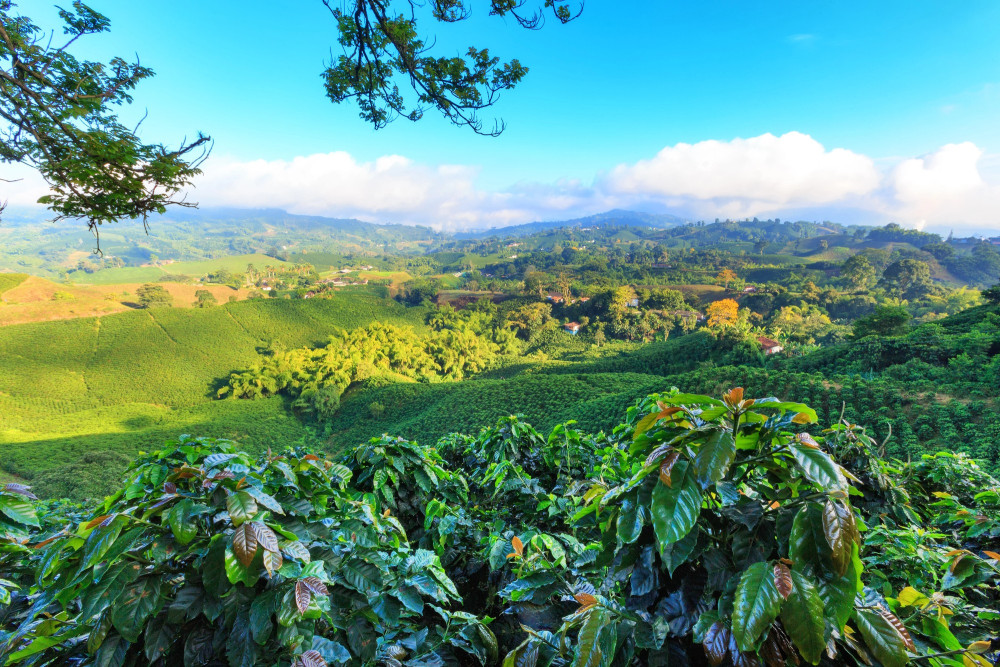
It comprises policies and strategies aimed at strengthening sustainable and resilient agricultural production in tropical regions. It considers the climatic, agroecological, and social specificities of these territories, promoting competitive and efficient production systems, along with the sustainable management of natural resources.
Resources
(64 records
)

Events
(7 records
)
Evidences
(15 records
)
Heat stress
Brazil, Vietnam, Colombia, Ethiopia and Indonesia face an average of 144 days a year with heat that is harmful to coffee, almost four months under heat stress (El País, 2026).
Coffee production
75% of the world's coffee is produced by just five countries: Brazil, Vietnam, Colombia, Ethiopia and Indonesia (El País, 2026).
High levels of cadmium in avocado soils in Peru
This study evaluates the spatial distribution of cadmium (Cd) in soils cultivated with avocado (Persea americana) in different regions of Peru, identifying factors that influence its concentration, such as texture, pH, organic matter, and agricultural practices. It was determined that several areas have elevated levels of Cd, which represents a risk to food safety and exports, especially given the European Union's international standards (Solórzano et al., 2025).
More recent in politics
Investments and Public Expenditure
(26 records
- USD 415,267,469.00
)
Support for conventional coffee production through the delivery of agricultural inputs and equipment in the Atenas–Palmares–San Ramón–Naranjo–Zarcero territory
Project implemented by Costa Rica's Rural Development Institute (Inder) to strengthen coffee production and improve the productive conditions of 97 coffee-producing families in Atenas, Palmares, San Ramón, Naranjo and Zarcero. The intervention provides agricultural inputs and equipment for the management, maintenance and strengthening of coffee plantations. It seeks to increase productivity, reduce costs, facilitate agricultural operations, promote more efficient and sustainable practices, and improve adaptation and resilience to climate change. The equipment also contributes to reducing dependence on herbicides, supporting soil conservation and water resource protection, and strengthening the competitiveness and economic sustainability of production units.
Program for Sustainable and Competitive Agriculture in Costa Rica
National program implemented by Costa Rica's Ministry of Agriculture and Livestock (MAG) to improve the sustainability, competitiveness and economic participation of small and medium agricultural producers. The operation uses a Program-for-Results (PforR) financing approach and has total financing of US$695 million: US$555 million in counterpart financing from the Government of Costa Rica, US$120 million from the International Bank for Reconstruction and Development (IBRD/World Bank), and US$20 million from the International Fund for Agricultural Development (IFAD). The Program includes modernization of public agricultural extension services, a digital producer information platform, agricultural traceability, productive and cold-chain infrastructure, technical assistance, access to financing for adoption of NAMA practices, and payments for environmental services related to carbon sequestration in agricultural soils. The Program will directly benefit 10,500 producers and reach 30,000 producers through direct and indirect benefits, equivalent to approximately 90,000 people when household members are included, with explicit attention to women and youth.
Programme for the Development of Sustainable and Resilient Agriculture: AGROSUSTENTAR
Rural investment programme designed to reduce rural poverty and promote sustainable local agrifood systems in Bolivian municipalities with high levels of poverty, food insecurity and climate vulnerability. AGROSUSTENTAR aims to strengthen the capacity of small-scale family, peasant and Indigenous farmers to transition towards agroecological production systems, adapt to the effects of climate change and improve food security in their communities. Its components cover sustainable agricultural production under a territorial approach, market development for sustainable and ecological products, technical assistance, productive infrastructure, value addition, certification, organizational strengthening, innovation, and support for the formulation and updating of policies and standards promoting agroecological production.
Policy frameworks
(30 records
)
Venezuelan Cocoa Development and Promotion Law
Law passed by the National Assembly of Venezuela to foster and promote the sustainable development of Venezuelan cocoa production and related activities under agroecological guidelines and with an emphasis on domestic value addition. The law addresses genetic quality preservation, particularly Venezuelan criollo cocoa; good practices throughout the value chain; social protection; scientific research; technical assistance, agricultural roads and public services; preferential credit for inputs and clean technologies; cocoa traceability; investment and processing incentives; updated labelling, denomination, composition and measurement criteria; a digital cocoa movement permit; an Agricultural Single Window; service offices in cocoa-producing municipalities; and a National Integrated Information and Data System for the cocoa sector.
Coffee Promotion and Development Law
Law passed by the National Assembly of Venezuela to promote coffee production, transformation, industrialization, marketing, exports, and sustainable and responsible consumption. The law provides for technical assistance and comprehensive training, innovation, international market prospecting, the Coffee of Venezuela country brand, sanitary and quality certifications, an Agricultural Single Window in coffee-producing municipalities, and germplasm banks for the conservation, characterization, and controlled reproduction of the crop's plant heritage. It also promotes the participation of farmers, women, youth, cooperatives, and socio-productive organizations in the design of agricultural policies.
National Climate Change Adaptation Plan for the Agricultural and Forestry Sector of Paraguay
National strategic framework of Paraguay aimed at strengthening adaptation of the agricultural and forestry sector to climate variability and climate change, promoting productive resilience, sustainable natural resource management, climate risk reduction and institutional strengthening.
Good practices
(3 records
)
Public Services Improvement Project for Sustainable Territorial Development in the Apurímac, Ene and Mantaro Rivers Area of Influence
Project aimed at reducing rural poverty through the social and productive inclusion of families in the VRAEM area. It seeks to increase beneficiaries' human, social, natural, physical, and financial assets. It combines strengthening of territorial governance, development of local economic initiatives, and improved connectivity and community infrastructure.
Semillas de Portal: Participatory agroforestry restoration for family farming in northern Mato Grosso, Brazil
A project supported by Fundo Amazônia, implemented by local organizations such as IOV (Instituto Ouro Verde), in partnership with peasant associations in northern Mato Grosso and Pará, focusing on agroforestry restoration and native seed management.
Special Trust for the Agricultural Sector - FIDEAGRO (ES)
FIDEAGRO is the Special Trust for the Agricultural Sector of the Ministry of Agriculture and Livestock, administered by the Agricultural Development Bank since 2012. It supports micro-producers through loans, guarantees, and interest rate subsidies, as part of the reengineering of state banking.
Dialogue rooms
(1 records
)