+506 2216 0222
opsaa@iica.int


DID YOU KNOW?
-
10 billion people will require more food
10 billion people will need to be fed through technologies that enable more food to be produced at a lower cost. -
US$9 billion for agricultural innovation
US$9 billion was allocated to new research aimed at increasing agricultural yields, compared with US$2.5 billion in 2016. -
Three benefits drive biostimulant use
3 strategic benefits, improved nutrient efficiency, tolerance to climate stress and commercial quality, drive the adoption of biostimulants in export-oriented agriculture.
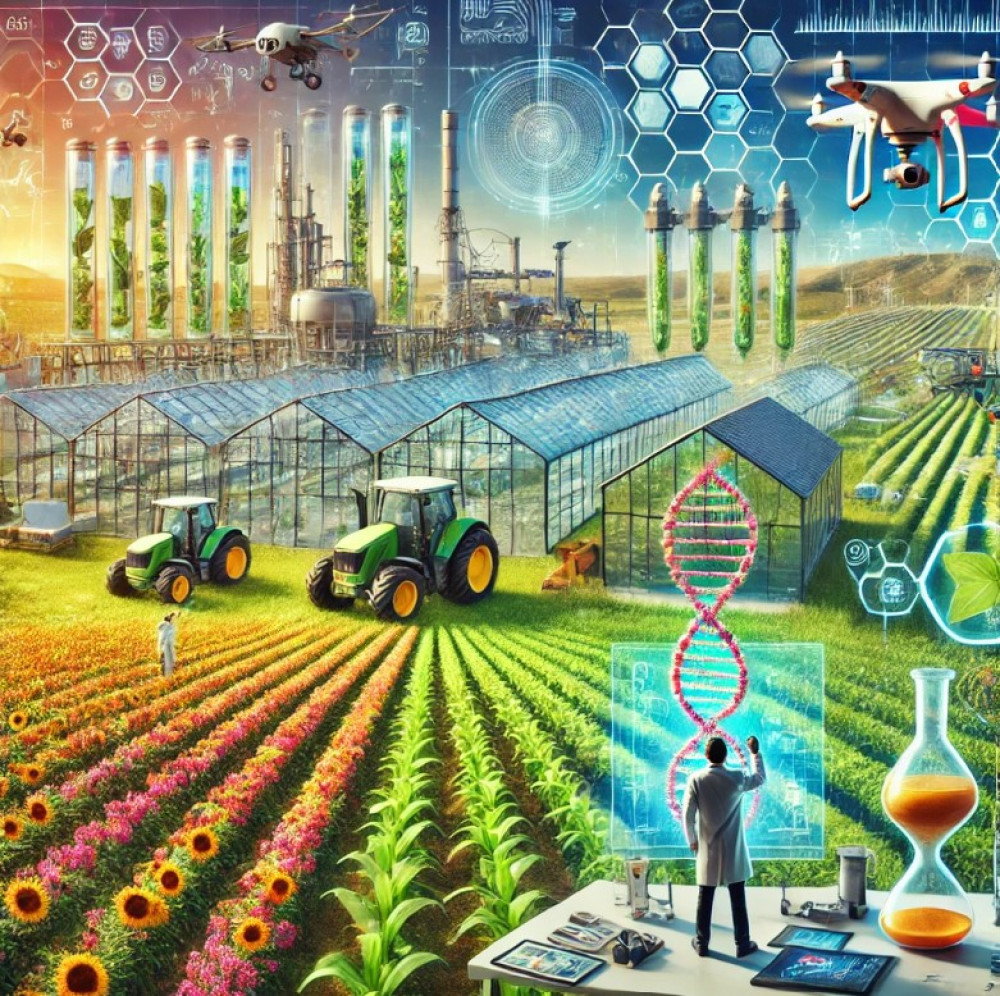
Agrobiotechnology
Agrobiotechnology is a discipline that utilizes biotechnology techniques and tools to enhance agriculture and food production. It focuses on the genetic modification of crops and the application of genetics and molecular biology in agriculture to develop crops that are more disease-resistant, nutritious, or adaptable to different environmental conditions. It also addresses biosecurity issues in agricultural production. In summary, agrobiotechnology aims to use scientific advances to improve the productivity and sustainability of agriculture.
Resources
(51 records
)
Events
(20 records
)


Evidences
(19 records
)
10 billion people will require more food
10 billion people will need to be fed through technologies that enable more food to be produced at a lower cost.
US$9 billion for agricultural innovation
US$9 billion was allocated to new research aimed at increasing agricultural yields, compared with US$2.5 billion in 2016.
Three benefits drive biostimulant use
3 strategic benefits, improved nutrient efficiency, tolerance to climate stress and commercial quality, drive the adoption of biostimulants in export-oriented agriculture.
More recent in politics
Investments and Public Expenditure
(39 records
- USD 10,261,997.00
)
Production of Biofertilizers and Insect-Based Protein Pellets for Sustainable Agrifood Systems in Arid Areas of Northern Chile
Innovation project aimed at developing and validating a pilot process for the bioconversion of organic waste through controlled insect farming to produce biofertilizers and protein pellets intended to improve agricultural productivity and animal nutrition. The initiative is implemented in the Tarapacá Region and seeks to promote sustainable agrifood systems in arid areas through waste valorization, the use of insect biomass, improved soil fertility, and the production of locally sourced agricultural and livestock inputs.
AGRAYU: PhyGital Platform for Rural Agriculture
A non-reimbursable technical cooperation aimed at improving agricultural profitability and environmental sustainability in the Peruvian Amazon through a PhyGital (physical and digital) platform that combines AI-based personalized agronomic advisory with traceable distribution of agricultural inputs for small cacao producers in the provinces of Juanjui and Tocache (San Martín). The initiative integrates blockchain-based digital identity, a decentralized network of local entrepreneurs called "Inges Agrayu" with a gender focus, and satellite deforestation monitoring, targeting a 19% productivity increase and a 17% reduction in the local deforestation rate. It was selected through the Amazonía BioBuilders call (RG-O1711) and is framed within the IDB Group's Amazonía Siempre Program, with a projected scale-up to over 20,000 producer families across the Amazon region.
Support for repositioning strategic, sustainable, and high-impact public agricultural services in Peru
This initiative is a Technical Cooperation (PE-T1615) aimed at repositioning Peru’s main public agricultural services to promote sustainable agricultural development. It will foster partnerships with the private sector and with regional and municipal authorities, and strengthen institutional coordination through public-private collaboration mechanisms and engagement with subnational governments, reinforcing cooperative models. The TC will finance consultancies and multi-stakeholder technical dialogue spaces organized into two components: technical support for repositioning agricultural services (including studies and designs of monitoring instruments, territorial approaches, and digital technologies for strategic resources such as seeds) and the development of institutional coordination mechanisms and capacity building (leadership, negotiation, and communication). It complements IDB operations in Peru’s agricultural sector, particularly PE-L1270 (innovation and extension services) and PE-L1280 (food safety), and seeks to strengthen MIDAGRI’s steering role alongside INIA and SENASA. The IDB will execute the TC, and monitoring will track planned vs. executed procurements and delivered outputs, with annual reporting through the TCM system.
Policy frameworks
(111 records
)
Resolution 698 of 2011 - Requirements for the Registration and Control of Agricultural Bioinputs
Resolution of the Colombian Agricultural Institute (ICA) establishing requirements for the registration of technical departments conducting efficacy trials, producers and importers of agricultural bioinputs, together with other provisions for their registration and control. It regulated requirements applicable to individuals and legal entities involved in the production, import and evaluation of bioinputs and established technical procedures concerning quality, efficacy, registration, labeling and control. Its relevant provisions were subsequently repealed by ICA Resolution 68370 of 27 May 2020.
Resolution 375 of 2004 - Registration and Control of Agricultural Bioinputs and Plant Extracts in Colombia
Resolution of the Colombian Agricultural Institute (ICA) establishing provisions for the registration and control of agricultural bioinputs and plant extracts in Colombia. It regulated their production, import, export, commercialization, use and management and established unified procedures harmonized with international regulations for their legal and technical registration and control, including classification, guaranteed composition, labeling, inspection, official control and conformity verification. It repealed the provisions on bioinputs and plant extracts contained in ICA Resolution 3079 of 1995 and was subsequently replaced by ICA Resolution 698 of 2011.
ICA Resolution 3079 of 1995 - Provisions on bioinputs and agricultural inputs
Resolution of the Colombian Agricultural Institute (ICA) establishing provisions on the industry, trade and application of bioinputs and other agricultural inputs. Regarding bioinputs, it incorporated the term into Colombian regulation and established provisions applicable to their production, trade, application and control. The provisions related to bioinputs and plant extracts were subsequently repealed by ICA Resolution 375 of 2004.