+506 2216 0222
opsaa@iica.int


DID YOU KNOW?
-
El Niño causes COP 47 billion in losses
COP 47 billion was the estimated loss to the Colombian livestock sector between June 1 and August 1: COP 27 billion from animal deaths, COP 11 billion from reduced production of meat, milk and dairy products, and COP 9 billion from animal relocation,... -
Mexico ranks among top 15 milk producers
Mexico ranks among the world's 15 leading milk-producing countries, according to The Food Tech infographic. -
Sector generates 1.6 million jobs
Mexico's dairy industry generates 1.6 million jobs, according to The Food Tech infographic.
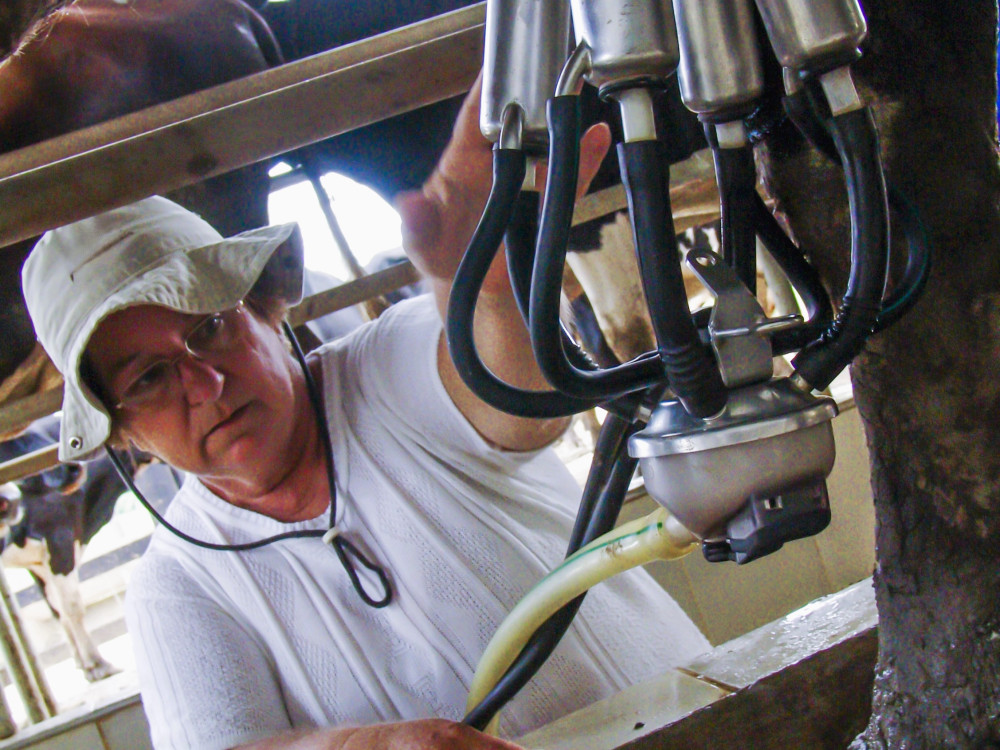
Dairy Value Chain
A space for reflection, analysis, and monitoring of policies, along with their national and regional contexts, as well as the exchange of perspectives and visions for the future to transform agri-food systems and the dairy sector in the region. Contact: Alejandra Díaz alejandra.diaz@iica.int
Resources
(61 records
)
Events
(21 records
)
Evidences
(45 records
)
El Niño causes COP 47 billion in losses
COP 47 billion was the estimated loss to the Colombian livestock sector between June 1 and August 1: COP 27 billion from animal deaths, COP 11 billion from reduced production of meat, milk and dairy products, and COP 9 billion from animal relocation, according to figures compiled by Fedegán.
Mexico ranks among top 15 milk producers
Mexico ranks among the world's 15 leading milk-producing countries, according to The Food Tech infographic.
Sector generates 1.6 million jobs
Mexico's dairy industry generates 1.6 million jobs, according to The Food Tech infographic.
More recent in politics
Investments and Public Expenditure
(52 records
- USD 2,077,531,301.00
)
Climate-Smart Livestock in Ecuador: A Strategic Partnership between FAO and the Private Sector
Pilot project implemented in Cayambe, Pichincha Province, to strengthen the capacities of technicians and family livestock producers in Climate-Smart Livestock. The intervention adapted and validated participatory tools, identified good livestock practices, improved digital data collection and analysis, and estimated greenhouse gas emissions using tools such as ODK and GLEAM-R. It was developed by Ecuadorian public institutions, FAO, GEF, and the company El Ordeño.
Reducing greenhouse gas emissions in potato-pasture systems in Ecuador and Peru
Regional technical cooperation project aimed at reducing greenhouse gas emissions in potato-pasture production systems in the Andean region of Ecuador and Peru through conservation agriculture practices. The project includes the characterization and typification of production systems, evaluation of conservation agriculture and conventional practices on productivity, soil conservation, nutrients, economic benefits and GHG emissions, comparison of measured emissions with IPCC estimates, integration of productive, socioeconomic and environmental information, and capacity development through knowledge management, cooperation and training.
Scaling innovation in pastoral systems
Regional technical cooperation project aimed at scaling the adoption of the 3RWeb digital tool to improve pasture and forage reserve management in pastoral systems in Latin America and the Caribbean. The project seeks to maximize forage harvest at farm level, improve self-sufficiency and economic and environmental sustainability of pastoral systems, reduce costs, increase resilience to climate variability, conserve biodiversity, and contribute to climate change mitigation.
Policy frameworks
(142 records
)
Decree No. 88/026: Prevention and Surveillance Measures for Biological and Veterinary Drug Residues
Uruguay's Decree No. 88/026 updates and strengthens prevention, surveillance, investigation and control measures applicable to residues of veterinary medicines, pesticides and environmental contaminants detected in products of animal origin and in animal tissues and fluids. The measure is adopted within the National Biological Residues Programme and assigns the General Directorate of Livestock Services (DGSG) of the Ministry of Livestock, Agriculture and Fisheries (MGAP) responsibility for investigating agricultural holdings, slaughter establishments and processing facilities for products of animal origin when non-compliant results are detected. DGSG may impose preventive sanitary restrictions, carry out inspections, collect and analyze samples from animals, products and by-products of animal origin, feed, forage and veterinary products, and seize unauthorized or unregistered veterinary products. Holdings of origin of animals with prohibited compounds or residues exceeding maximum permitted limits may be preventively restricted from moving animals to slaughter through the National Livestock Information System (SNIG). Establishments associated with non-compliant findings are subject to targeted controls and corrective and preventive actions under official supervision. The Decree provides for sanctions in cases of non-compliance, seeks to ensure food safety and preserve access to destination markets for products of animal origin, and repeals Decree No. 576/009 of December 15, 2009.
Decree No. 21/026: Regulation of the Agricultural Goods Disposal Tax (IMEBA)
Decree No. 21/026 comprehensively regulates Uruguay's Agricultural Goods Disposal Tax (IMEBA), established under Title 9 of the 2023 Consolidated Tax Code. The regulation defines taxable events, taxpayers and withholding agents, taxable amounts, product-specific tax rates, advances on imports, withholding procedures, tax assessment and payment, treatment of exports and the crediting of IMEBA against the Corporate Income Tax (IRAE). The Decree establishes differentiated rates for wool and hides, cattle, sheep and pigs, cereals and oilseeds, milk, poultry and apiculture products, flowers and seeds, horticultural, fruit and citrus products, forestry products, sugarcane and other agricultural goods. It also establishes a tax credit for agricultural holdings subject to IMEBA that invest in infrastructure facilitating access to water, including farm ponds, wells and boreholes, windmills, tanks, pumps, irrigation or livestock-watering dams, electrical infrastructure for irrigation and watering systems, water pipelines and drinking troughs. The tax credit is equivalent to ten percent of specified investments excluding VAT and may be supplemented by VAT credits under the conditions established by the regulation. The benefit is implemented through tax-credit certificates issued by the General Tax Directorate, with participation by the Ministry of Livestock, Agriculture and Fisheries. The Decree also regulates agricultural investment incentives and repeals Decrees No. 376/986, No. 294/011 and No. 14/015.
MAPA Ordinance No. 934/2026: Minimum Prices for Summer and Regional Products for the 2026/2027 and 2027 Harvests
MAPA Ordinance No. 934 of July 9, 2026 publishes the minimum reference prices for summer and regional agricultural products for Brazil's 2026/2027 and 2027 harvests, as established by the National Monetary Council (CMN) for use in operations under the Minimum Price Guarantee Policy (PGPM), implemented by the National Supply Company (Conab). Depending on product, type, region and effective period, the measure covers seed cotton and cotton lint, long-fine paddy rice, cultivated natural rubber, bulk virgin coagulum, field latex, cultivated cocoa beans, cottonseed, colored beans, black beans, jute and malva, milk, cassava, cassava root, starch, cassava gum, maize, soybeans and sorghum. It also establishes minimum prices for seeds of cotton, long-fine rice, beans, jute/malva, maize, soybeans and sorghum. The values serve as reference prices for PGPM marketing-support operations and are intended to provide a minimum remuneration benchmark for rural producers in the face of market-price fluctuations. Effective periods vary by product and region and collectively extend from July 2026 through June 2028.
Good practices
(7 records
)
Second Rural Productive Partnerships Project - Colombia
The project strengthened productive alliances between smallholder rural producer organizations and private agribusiness buyers through subproject financing combining technical assistance, productive asset investment, and business development training to improve market access. Its objective was to increase rural competitiveness and agricultural entrepreneurship in poor rural communities through a demand-driven scheme anchored in private sector engagement. The project incorporated explicit inclusion mechanisms targeting women, indigenous communities, and Afro-Colombians within agricultural value chains.
Food and Nutritional Security for Children and Salvadoran Households (SANNHOS)
The SANNHOS program is a joint United Nations initiative that seeks to strengthen food and nutritional security in El Salvador, focusing on three municipalities in the Chalatenango department. The program works with 600 vulnerable families to establish sustainable, inclusive and climate-resilient food systems. It strengthens the regulatory framework and governance in FNS at national and local levels with a gender and human rights approach. Interventions include improvements in feeding, nutrition and health practices, especially for children under 5 years old, pregnant women and women of reproductive age. The program promotes active participation of women in training processes and productive enterprises to improve decision-making about family health.
Strengthening dairy cattle production in the Municipality of Tiahuanacu - Bolivia
Increase milk production in the Municipality of Tiahuanacu by 20%, from 33,019.80 to 39,623.76 liters of milk per year, to ensure supply to the domestic market.
Partners