+506 2216 0222
opsaa@iica.int


DID YOU KNOW?
-
Impact of hurricanes Eta and Iota
16 of 22 departments in Guatemala had severe crop damage from hurricanes Eta and Iota in 2020 (World Bank, 2024). -
Banana exports by LAC
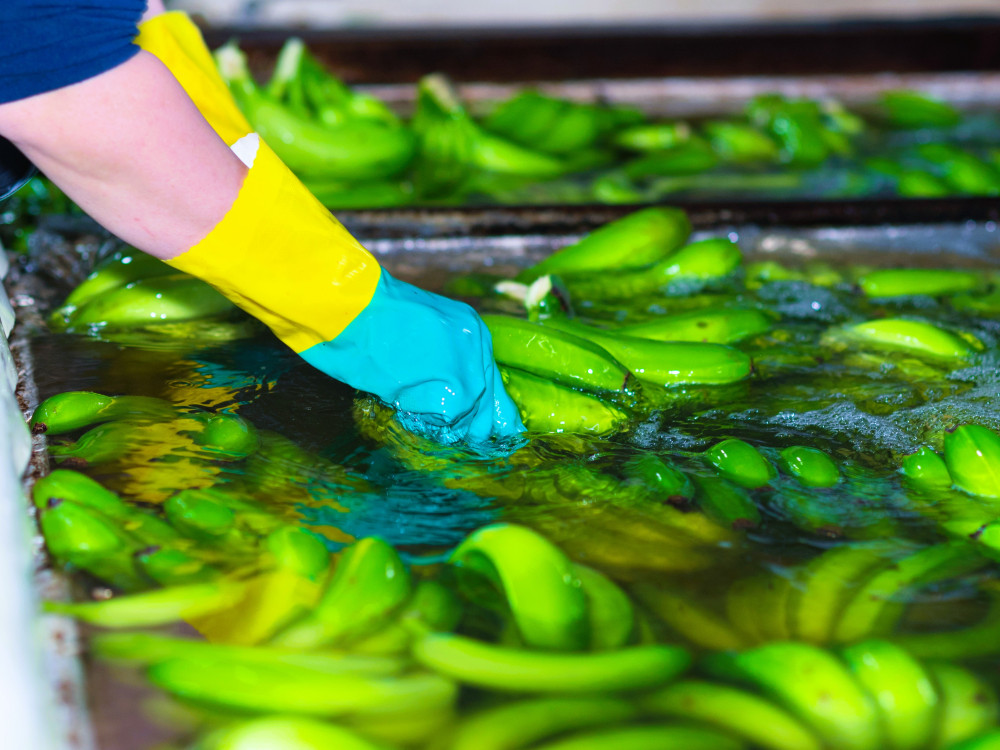
63% of world exports of fresh bananas and plantains in 2022 came from Latin America and the Caribbean, with Ecuador, Costa Rica, Guatemala and Honduras as the main exporters (IICA, Trade Data Monitor).
Musaceae
A cross-cutting perspective from the Musaceae sector to policies by components, policy areas, countries, sources of financing, beneficiaries, instruments and good practices. For more information about FocTR4 contact Musaceae Foc TR4 Network: red.musaceas.fusarium@iica.int
Resources
(13 records
)
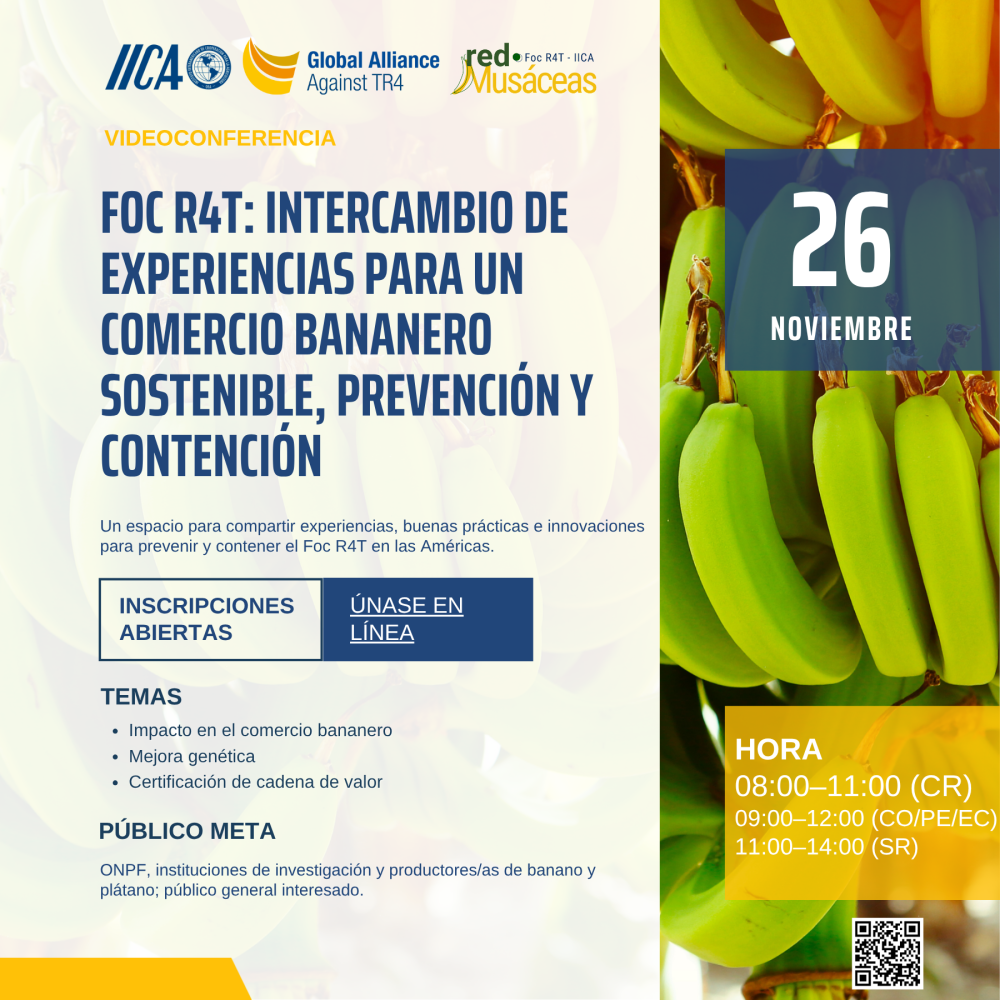
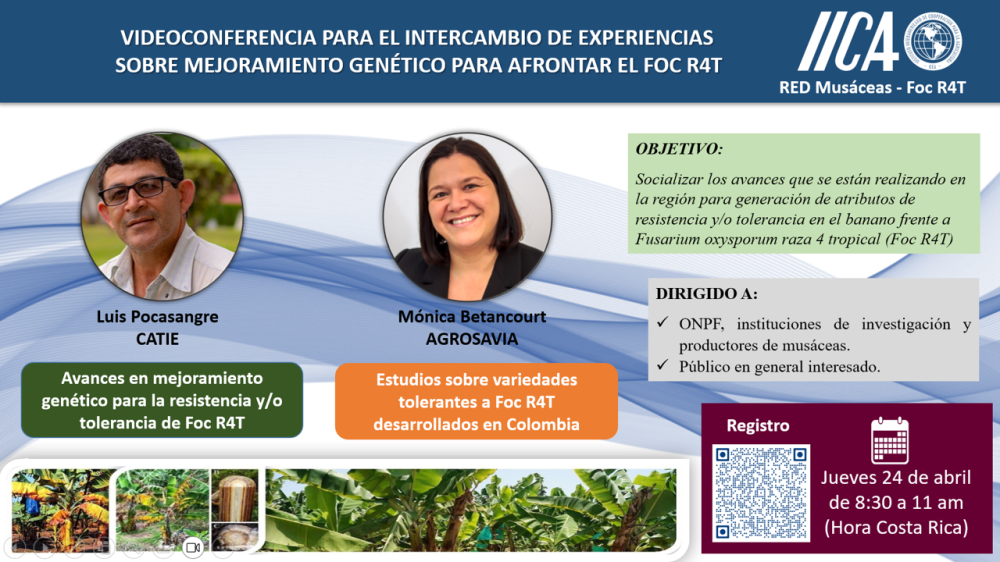
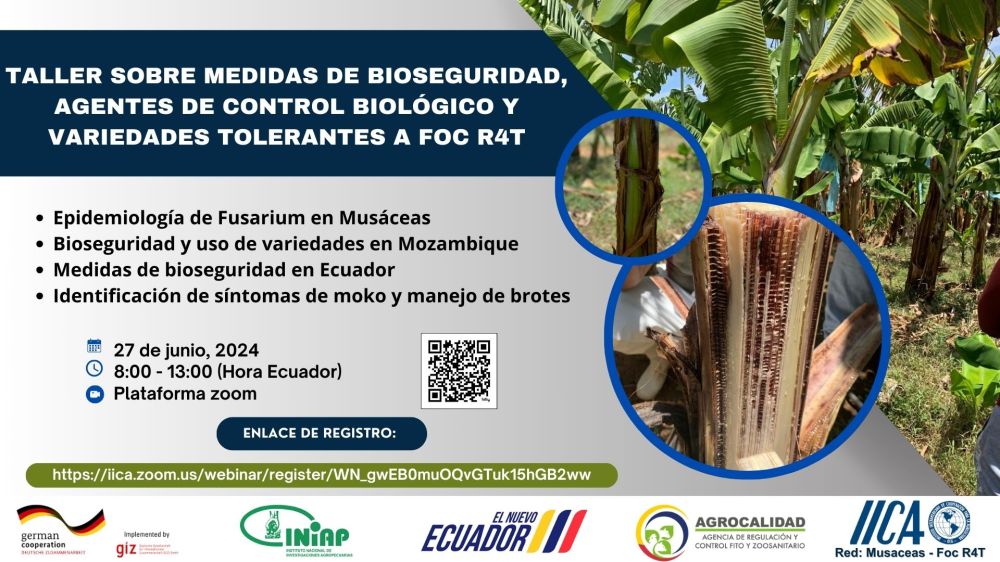
Events
(6 records
)
Evidences
(2 records
)
Impact of hurricanes Eta and Iota
16 of 22 departments in Guatemala had severe crop damage from hurricanes Eta and Iota in 2020 (World Bank, 2024).
Banana exports by LAC
63% of world exports of fresh bananas and plantains in 2022 came from Latin America and the Caribbean, with Ecuador, Costa Rica, Guatemala and Honduras as the main exporters (IICA, Trade Data Monitor).
More recent in politics
Investments and Public Expenditure
(27 records
- USD 1,558,285,870.00
)
Scaling up technological innovations in family organic banana farming to reduce packaging losses and increase productivity by improving soil health – a test of continuous improvement and benchmarking for sustainable intensification
The project strengthens the competitiveness of family-based organic banana production in the Dominican Republic, Peru, and Ecuador by scaling technological innovations, promoting agronomic practices that reduce pest-related losses and improve soil health, and introducing the Ma$ Banano digital tool for farm management. It builds technical capacity and organizational strength in 12 small-producer associations, directly benefiting 2,400 family farmers involved in organic export markets.
Improvement of the Competitiveness of the Organic Banana Value Chain in the Regions of Piura and La Libertad
The project aimed to enhance the competitiveness of the organic banana value chain in Piura and La Libertad by promoting technological innovations, organizational strengthening, and institutional coordination.
It targeted small-scale producers, supporting productivity improvements through the introduction of in-vitro seedling (meristem) propagation, improved agronomic practices, and quality enhancement via ozone technology for post-harvest phytosanitary control.
The intervention also strengthened business and managerial capacities, supported organic and Fairtrade certification, reinforced the Regional Organic Banana Technical Boards, and enabled the installation of more than 200 new hectares under improved technology. Ultimately, the project contributed to better incomes, stronger organizations, and sustainable value chain development.
Improving the Quality of Life of Rural Communities in Four Latin American and Caribbean Countries Through Technological Innovations in Plantain Production, Agro-industrial Processing, and Marketing
The project aimed to improve the living conditions of plantain-producing rural communities in four Latin American and Caribbean countries through the introduction, validation, and adoption of technological innovations in primary production, agro-industrial processing, and plantain marketing.
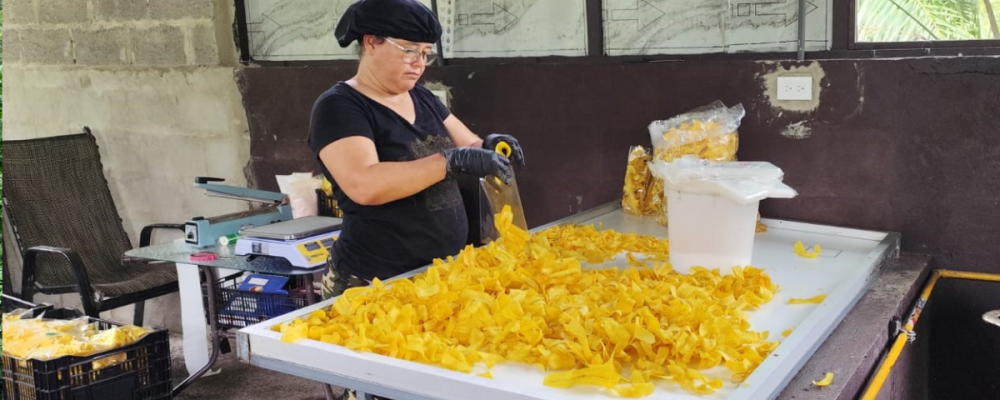
The initiative promoted the modernization of production systems by implementing technologies to increase productivity, reduce post-harvest losses, strengthen local capacities in agro-industrial processing (chips, flours, dehydrated products), and reinforce value chains through business organization, marketing strategies, and improved access to markets.
Policy frameworks
(66 records
)
Administrative Resolution SENASAG No. 248/2022 – Phytosanitary Surveillance System Manual of the Plurinational State of Bolivia
This resolution approves Bolivia’s updated Phytosanitary Surveillance System Manual, which sets out the technical procedures, responsibilities, and operational guidelines for general and specific pest surveillance in crops, forests, wild flora, and regulated articles. The Manual aligns with International Standards for Phytosanitary Measures (ISPM), particularly ISPM No. 6, and establishes protocols for early pest detection, systematic monitoring, official reporting, laboratory confirmation, risk analysis support, and the establishment and verification of pest-free areas, reinforcing Bolivia’s national phytosanitary capacity and its ability to support safe international trade.
Administrative Resolution SENASAG No. 147/2022 – Extension of the Validity of National Registrations of Agricultural Chemical Pesticides for Agropecuaria Agrinovel S.A. - Bolivia
This Resolution is part of Bolivia’s national system for the registration and control of agricultural pesticides. It exceptionally extends the validity period of the national registration of the pesticide EXIREL, produced by Agropecuaria Agrinovel S.A., based on technical assessment and legal review. The measure, adopted under the national Sanitary and Food Safety Law and Andean Community guidelines on pesticides, seeks to ensure the availability of agricultural inputs while preserving regulatory oversight and plant health protection.
Administrative Resolution No. 0178/2015 – Regulation for Phytosanitary Emergency Response and Contingency Plan Design - Bolivia
This Resolution approves Bolivia’s Regulation for Phytosanitary Emergency Response and the Procedure for Designing Contingency Plans. It strengthens SENASAG’s authority as the NPPO to respond rapidly to quarantine pest detections or outbreaks of endemic pests, implementing coordinated actions, emergency procedures, surveillance measures, and harmonized phytosanitary protocols aligned with IPPC standards.
Dialogue rooms
(1 records
)
Indicators