Blog IICA

CARICOM: Caribbean Community (regional grouping)

0

PAÍSES MIEMBROS

More recent in resources


Resources
(7 records )
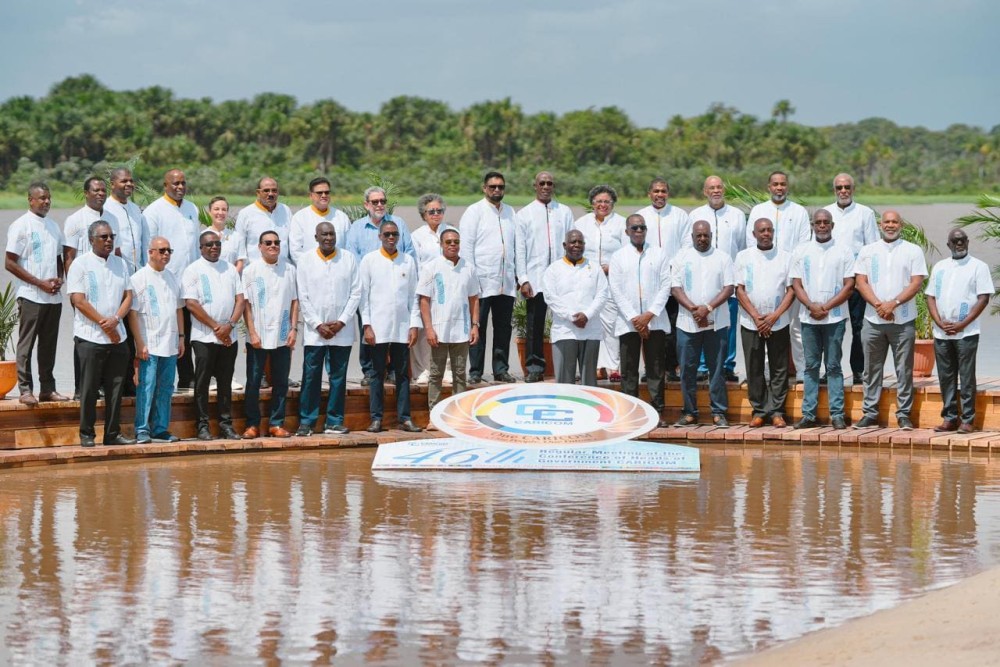
Official Communique of the 46th Ordinary Meeting of the CARICOM Heads of Government Conference on the Agenda of Agri-Food Systems, Food Security, and Nutrition.

Official Communique of the 46th Ordinary Meeting of the CARICOM Heads of Government Conference on the Agenda of Agri-Food Systems, Food Security, and Nutrition.

The meeting provided updates on efforts to achieve the 25 for 2025 Food and Nutrition Security Initiative, including policy approvals; the removal of intra-regional trade barriers; promotion of agricultural trade; cross-border investments; human resource development and capacity building; increased production and productivity; and transportation and logistics. There has been heightened awareness and acceptance in recent years to enhance Food and Nutrition Security in the Region, with more than 73 projects and programs supporting the 25 for 2025 initiative being implemented by over 13 regional partners and donors. Another 20 initiatives are in various stages of formulation. Member States were encouraged to take advantage of the agricultural insurance products offered to the sector and promote greater collaboration among member states. Cooperation projects with external partners of the Community, including Cuba, the Food and Agriculture Organization, and the Kingdom of Saudi Arabia, were highlighted. The Conference also noted that the upcoming regional ferry pilot service would be a key component of the Region's food security efforts. They agreed that Member States would develop a pre-clearance/regional export trade mechanism for agricultural products for approval at the 47th Ordinary Meeting in July 2024, and requested the MTF to expedite the identification of additional investor-friendly policies and programs for implementation under the 25 for 2025 food security initiative. Heads of Government strongly encouraged the regional private sector to take advantage of Suriname's proposal, which is making available 300,000 hectares of land for regional agricultural development. They emphasized the role of the private sector in taking urgent steps to invest in the production of agricultural items for which frequent CET suspensions are granted.
Resource type:News
.


Events
(2 records )
.


Evidences
(2 records )


More recent in politics
Investments and Public Expenditure
(8 records - USD 613,472,143.00 )
CARICOM Boost: Women and youth in agriculture
The CARICOM BOOST: Women and Youth in Agriculture project has been boosted by a $1.6 million grant from the New Zealand government, with the aim of reducing food imports into the Caribbean Community (CARICOM) by 25% to 2025. The focus of the project is to promote climate-smart agriculture practices through the use of advanced technologies such as protected structures and cold storage units, specifically in women and youth-led agricultural production.
Development-design
Caribbean Regional Conservation Sustainable Financing Project
The project aims to ensure that biodiversity and priority ecosystems in the Caribbean region are protected through effective financing. This project seeks to strengthen and improve technical and institutional capacities to increase innovation and achieve sustainable financing for biodiversity conservation. The program will establish a Project Steering Committee with key members from the 11 participating National Conservation Funds and other stakeholders. An evaluation of these trust funds will be carried out, and action plans will be developed to catalyze their consolidation, thus supporting their sustainability. Additionally, the CBF will provide institutional and regional support, including training for grantees, trust funds and their beneficiaries. Assessments and mapping of the financing landscape for conservation in the Caribbean will also be implemented, supporting the design of financial mechanisms for conservation. This effort will contribute to the mobilization of resources for biodiversity, protected areas and environmental management priorities in the region.
Implementation- Ongoing
Energy Decarbonization Pathways in the Caribbean
The overall objective of this Technical Cooperation (TC) is to assist Caribbean countries in progressing towards a more resilient, affordable, and sustainable energy sector by promoting economic integration, Renewable Energies (RE), Energy Efficiency (EE), Energy Conservation, cleaner fuels, and storage technologies. The TC has the following specific objectives: (i) to develop a common strategy for the expansion of the energy sector, considering low-carbon emissions, climate change through resilient infrastructure, standards and regulations, and opportunities for economic integration; (ii) to enhance local capacity in planning, considering the benefits of economic integration, RE expansion, and distributed generation; and (iii) to train and certify energy experts, creating mechanisms for knowledge exchange and dissemination. The beneficiary countries of CARICOM are: Barbados, Guyana, Jamaica, Suriname, Bahamas, and Trinidad and Tobago.
Implementation- Ongoing


Policy frameworks
(8 records )
CARICOM Vision 25% by 2025
The main objective of the strategy is to reduce the region's food import bill by 25% by 2025. This initiative responds to the need to strengthen food and nutritional security in the Caribbean, in an effort to increase local production of food, improve intra-regional trade and promote the creation of wealth and economic opportunities in the agricultural sector of the CARICOM Member States. The strategy's focus includes specific actions such as the removal of trade barriers to facilitate the more efficient and economical movement of food between CARICOM countries. This also implies significant efforts in agro-industrial processing to increase the shelf life of agricultural products and reduce transportation costs. Additionally, cooperation with insurance companies is sought to improve insurance arrangements for the transportation of agricultural goods, in order to manage the risks associated with the activity.
CARICOM Statement on Climate Change
CARICOM country parties at their last regular meeting in February 2024 in Guyana raised the importance of emphasizing that CARICOM country parties remain at the forefront of the global climate crisis, an issue for which the Region has been a strong advocate for the past thirty years.
CARICOM: Agri-Foof Strategy
This is to enhance production and trade of regional agricultural products, enable greater access to a supply of nutritious foods, and reduce reliance on the importation of extra-regional foods. Heads of Government of CARICOM have committed to reducing the Region’s large food import bill by 25% by 2025. The implementation of the CARICOM Agri-Food Systems Strategy in the Member States, is expected to help achieve this target, by giving special attention to priority crops and products such as poultry, corn, soya, meat (Goat, Sheep, Beef), rice and niche vegetables which are highly imported products in the region.


Good practices
(1 records )

View more CARICOM: Caribbean Community (regional grouping)

Forthcoming

The digital platform of the Observatory of Public Policies for Agrifood Systems (OPSAa) is at the service of the countries of the Americas as a meeting point for the exchange of knowledge and to promote the new generation of public policies that transform the agrifood systems of the hemisphere.

Contact us

Contact

Sede Central. 600 m. noreste del Cruce Ipís-Coronado

Vásquez de Coronado, San Isidro 11101 - Costa Rica. San José, Costa Rica

(+506) 2216 0222
Fax (+506) 2216 0233

opsaa@iica.int