+506 2216 0222
opsaa@iica.int


DID YOU KNOW?
-
Costa Rica: Four Weeks of Rainfall Deficits
During the four weeks from September 14 to October 11, 2026, the IMN forecasts below-normal rainfall in Costa Rica's Pacific region, Central Valley, and Western Northern Zone. The pattern is expected to be associated with El Niño and stronger-than-u... -
Costa Rica: Northern Zone Could Receive 155 mm
Between 30 and 155 mm of rain could accumulate in Costa Rica's Northern Zone from September 14 to 20, 2026, the highest forecast range among the country's regions. The probability of an extreme event is low, at about 25%, and forecast uncertainty is ... -
Costa Rica Forecasts a Dry Week Nationwide
From October 5 to 11, 2026, every region of Costa Rica is forecast to receive below-normal rainfall. The IMN estimates an extreme-event probability of about 20%, although it reports high uncertainty for this final week of the outlook.
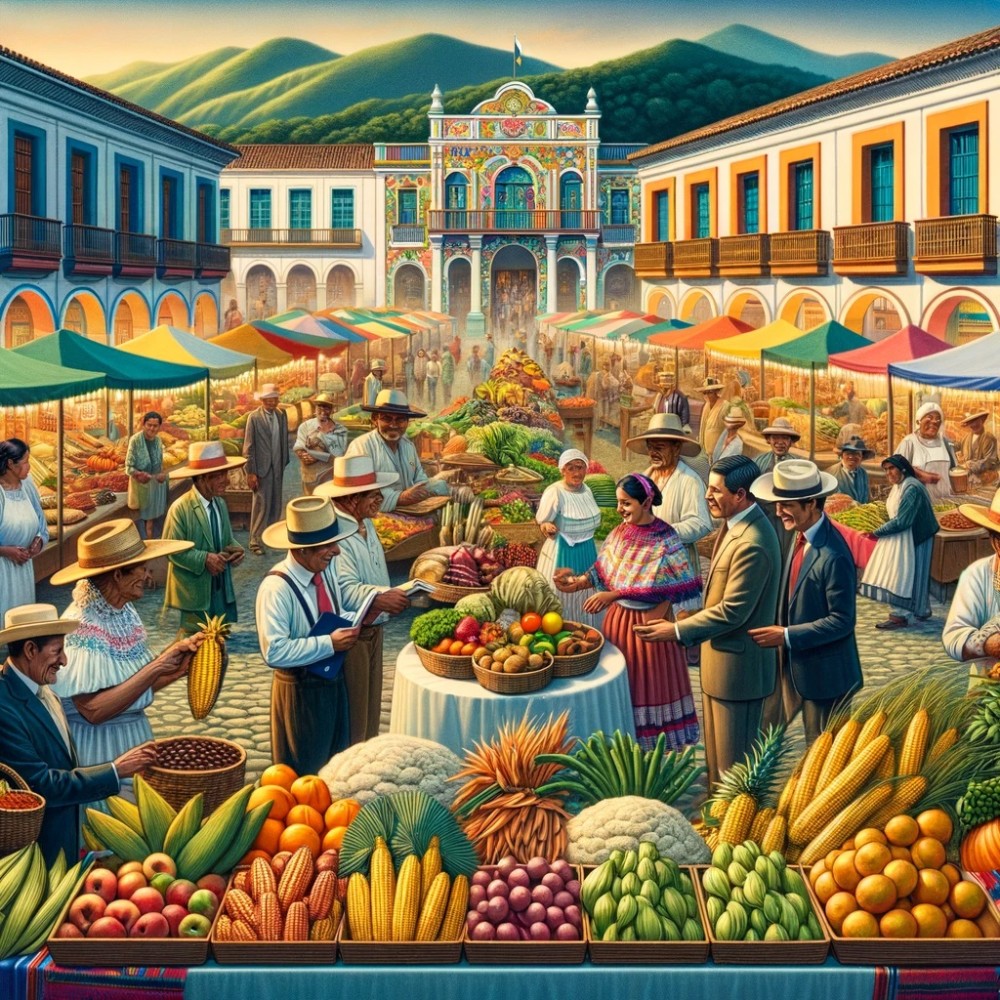
Public or institutional purchases or procurement of food
Public food purchases are a policy instrument used in several countries in the Americas. These purchases aim to link the demand for food from public institutions with small local farmers and small and medium-sized food businesses. This is done to move towards achieving social, economic and environmental goals, as part of a broader strategy to achieve sustainable food systems and healthy diets.
Resources
(16 records
)
Evidences
(2474 records
)
Costa Rica: Four Weeks of Rainfall Deficits
During the four weeks from September 14 to October 11, 2026, the IMN forecasts below-normal rainfall in Costa Rica's Pacific region, Central Valley, and Western Northern Zone. The pattern is expected to be associated with El Niño and stronger-than-usual trade winds.
Costa Rica: Northern Zone Could Receive 155 mm
Between 30 and 155 mm of rain could accumulate in Costa Rica's Northern Zone from September 14 to 20, 2026, the highest forecast range among the country's regions. The probability of an extreme event is low, at about 25%, and forecast uncertainty is also low.
Costa Rica Forecasts a Dry Week Nationwide
From October 5 to 11, 2026, every region of Costa Rica is forecast to receive below-normal rainfall. The IMN estimates an extreme-event probability of about 20%, although it reports high uncertainty for this final week of the outlook.
More recent in politics
Investments and Public Expenditure
(20 records
- USD 24,187,682,001.00
)
Brazil: Extraordinary credit for food supply and food security in response to El Niño 2026-2027
Public expenditure intervention financed through an extraordinary credit of BRL 924,985,960 to strengthen food supply and food security in response to risks associated with El Niño in 2026-2027. Resources finance public food stocks managed by Conab, emergency food distribution, and the acquisition and distribution of products from family farming through the Food Acquisition Program.
NutriHarvest Project: Nourishing and Resilient Communities
The NutriHarvest project is a 36-month initiative supported by Cargill and executed by HarvestPlus to improve access to nutritious food and strengthen farmers’ livelihoods in India, Kenya, Tanzania, and Guatemala. It aims to increase the production and consumption of biofortified and opportunity crops, as well as enhance backyard poultry production, particularly among women. Through school feeding programs and strengthened local value chains, NutriHarvest promotes food and nutrition security and dietary diversity. The initiative will deliver over 17 million nutritious meals and directly benefit more than 119,000 farmers. It adopts an ecosystem approach to build sustainable livelihoods and food system resilience.
Solidarity Communities
Solidarity Communities is an intervention that seeks to provide comprehensive care to families and people facing higher levels of poverty and social exclusion in urban and rural areas of the country. It is a government program that seeks to materialize the effective exercise of population rights and is contained within the Universal Social Protection System. It comprises non-contributory interventions that allow expanding basic capacities and promoting equal opportunities for people, communities and households in conditions of extreme poverty and social exclusion. It is developed through four strategic axes: human capital, basic social infrastructure, income generation and territorial management.
Policy frameworks
(49 records
)
Brazil: Provisional Measure No. 1,384 of 2026 - Extraordinary credit for food supply and food security
Provisional Measure No. 1,384 of 2026 opens an extraordinary credit of BRL 924,985,960 for the Ministry of Agrarian Development and Family Farming and the Ministry of Development and Social Assistance, Family and Fight against Hunger. Of the total, BRL 849,786,560 is allocated to public food stock formation through the National Supply Company (Conab); BRL 61,969,400 to food distribution for traditional and specific population groups and families experiencing food insecurity due to emergencies or public calamities; and BRL 13,230,000 to the acquisition and distribution of food from family farming to promote food and nutrition security.
Brazil Family Farming Harvest Plan 2025-2026
Brazil's 2025-2026 Family Farming Harvest Plan allocates 89 billion Brazilian reais to rural credit, public procurement, agricultural insurance, technical assistance, and minimum price guarantees to strengthen family farming, food security, and local economies. Of the total amount announced, 78.2 billion reais are allocated through the National Program for Strengthening Family Farming, Pronaf. The Plan maintains preferential financing rates of 3 percent for the production of essential foods and 2 percent for organic or ecological production, while introducing credit lines for ecological agriculture, sustainable irrigation, and climate change adaptation. It also includes rural connectivity and accessibility measures and the National Program for the Reduction of Pesticides, focused on research, residue monitoring, technical assistance, and the expanded use of biological inputs.
Farmers First: Small Family Farms Policy Agenda
The U.S. Department of Agriculture released Farmers First: Small Family Farms Policy Agenda, a policy agenda aimed at improving the viability and long-term sustainability of small family farms. The agenda proposes streamlining and digitizing USDA processes, improving access to credit, farmland, markets and infrastructure, supporting generational farm transitions, strengthening access to risk management and business planning tools, and expanding educational resources for small farmers and ranchers.
Good practices
(2 records
)
Solidarity Communities
Solidarity Communities is an intervention that seeks to provide comprehensive care to families and people facing higher levels of poverty and social exclusion in urban and rural areas of the country. It is a government program that seeks to materialize the effective exercise of population rights and is contained within the Universal Social Protection System. It comprises non-contributory interventions that allow expanding basic capacities and promoting equal opportunities for people, communities and households in conditions of extreme poverty and social exclusion. It is developed through four strategic axes: human capital, basic social infrastructure, income generation and territorial management.
Design and Implementation of National Food and Nutrition Education Strategy to Improve Healthy School Environments and Support Regulatory Frameworks Related to El Salvador's School Feeding and Health Program
The TCP/ELS/3802 project developed a national food and nutrition education strategy to address the triple burden of malnutrition in El Salvador, including micronutrient deficiencies, chronic and acute malnutrition, as well as overweight and obesity. The initiative strengthened technical capacities of MINEDUCYT and the educational community through virtual diplomas that trained 2,650 teachers across the country's 14 departments. A draft School Feeding Law and the Healthy and Sustainable School Feeding Strategy (EAESS) were developed to institutionalize the right to adequate food for children and adolescents. The project promoted healthy school environments by integrating food and nutrition education, school gardens, diversified menus, and linkages with local markets to improve sustainable eating behaviors.