+506 2216 0222
opsaa@iica.int


DID YOU KNOW?
-
Southern Hemisphere leads freight gains
The steepest year-on-year freight rate gains were recorded in Southern Hemisphere origins—Australia, Argentina and Brazil—in September 2026, partly reflecting plentiful grains and oilseeds exports. -
Freight rises across all 7 key origins
7 of 7 key origins recorded year-on-year increases in grains and oilseeds freight rates in September 2026: Argentina, Australia, Brazil, Canada, the United States, the European Union and the Black Sea. -
Soy up 7% and wheat down 15.8%
7% is the projected increase in soybean output to 53.6 million tonnes; wheat would fall 15.8% to 23.4 million tonnes and barley 7.4% to 5 million tonnes.

Argentina
0
Resources
(152 records
)
Events
(19 records
)
Evidences
(186 records
)
Southern Hemisphere leads freight gains
The steepest year-on-year freight rate gains were recorded in Southern Hemisphere origins—Australia, Argentina and Brazil—in September 2026, partly reflecting plentiful grains and oilseeds exports.
Freight rises across all 7 key origins
7 of 7 key origins recorded year-on-year increases in grains and oilseeds freight rates in September 2026: Argentina, Australia, Brazil, Canada, the United States, the European Union and the Black Sea.
Soy up 7% and wheat down 15.8%
7% is the projected increase in soybean output to 53.6 million tonnes; wheat would fall 15.8% to 23.4 million tonnes and barley 7.4% to 5 million tonnes.
More recent in politics
Investments and Public Expenditure
(132 records
- USD 6,928,550,004.00
)
Provincial Agricultural Services Program V - PROSAP V
Investment program aimed at improving productivity, marketing and value added in Argentina's agro-industrial production, with a focus on climate change adaptation. The operation seeks to increase the coverage and quality of public rural infrastructure services in intervention areas and increase adoption of technologies that improve economic profitability, environmental sustainability and product differentiation. The program includes investments in irrigation infrastructure, rural roads, electrification, digital connectivity, fire management and productive and commercial infrastructure, together with training, technical assistance, technology adoption and institutional strengthening for small and medium-sized agricultural producers, agro-industrial MSMEs, rural associations and cooperatives.
Support for sustainable agricultural development, with emphasis on agricultural innovation and biodiversity
Technical cooperation aimed at supporting the mainstreaming of sustainability and biodiversity considerations into public policies and investment loans in Argentina's agricultural sector. The initiative seeks to strengthen the systematic incorporation of environmental sustainability, biodiversity conservation and sustainable use, and agricultural innovation criteria into the design and implementation of sector policies, programs and investments, generating information, studies, technical tools and institutional capacities to improve planning and decision-making for sustainable agricultural development.
Adoption of agricultural technologies in Argentina: Evaluation of Results, Operational Efficiency, and New Public-Private Collaboration Schemes
Technical cooperation aimed at supporting the development of new agricultural technologies and their adoption by producers in Argentina, as well as generating strategic information to prioritize international negotiations and enhance exports of innovative and value-added agro-industrial products. The initiative combines agricultural research and innovation, evaluation of results and operational efficiency, technology adoption, and analysis of new public-private collaboration schemes.
Policy frameworks
(253 records
)
Temporary Suspension of Tariffs on Beef Imports from Argentina and Brazil
United States President Donald Trump announced a measure allowing tariff-free beef imports from Argentina and Brazil. According to the source, the United States would suspend tariffs for 90 days on 300,000 metric tons of beef to be marketed at a 25 percent discount from the market price. The stated objective is to reduce costs for United States consumers. Imported beef will be subject to inspection before entering the United States market.
Decree No. 697/2026: Reorganization of Food Control and Inspection Responsibilities
Argentina's Executive Decree No. 697/2026 reorganizes the National Food Control System and modifies the allocation of responsibilities for food registration, sanitary control and inspection. The reform concentrates operational food registration, control and inspection functions, including food import controls, within the National Service for Agrifood Health and Quality (SENASA), with the objective of reducing institutional overlaps, simplifying procedures and making use of SENASA's nationwide inspection infrastructure, laboratories and technical personnel. The Decree modifies provisions governing the National Food Control System, expands recognition by equivalence of certifications covering food additives, processing aids, ingredients and other inputs used in food manufacturing when originating in countries with recognized food-control systems or evaluated in accordance with Codex Alimentarius standards, and establishes simplified import procedures. It also strengthens the Single Database of food establishments and products, to be administered by SENASA and updated by competent sanitary authorities, and modifies procedures related to updating the Argentine Food Code. The reform further seeks to facilitate food trade by introducing post-entry controls for certain imported foods packaged for direct retail sale and by simplifying export certification while maintaining applicable sanitary and food-safety requirements. The Ministry of Health retains sanitary-policy leadership and participation in updating the Argentine Food Code, while SENASA assumes broader operational inspection responsibilities.
Joint Resolution 7/2026: MERCOSUR Technical Regulation on Identity and Quality of UHT Milk
Joint Resolution 7/2026 of Argentina's Secretariat of Agriculture, Livestock and Fisheries and the National Administration of Medicines, Food and Medical Technology (ANMAT) incorporates MERCOSUR Common Market Group Resolution No. 13/23, approving the MERCOSUR Technical Regulation on Identity and Quality of UHT Milk, into Argentina's national legal framework and replaces Article 560 bis of the Argentine Food Code. The regulation updates the definition and technical requirements applicable to Ultra-High-Temperature milk, including classification according to fat content, sales denomination, ingredients, sensory characteristics, physicochemical and microbiological parameters, contaminants, hygiene requirements, labeling, analytical methods and sampling procedures. The measure replaces the technical framework derived from GMC Resolutions No. 78/94 and 135/96 and harmonizes Argentine regulation with the updated MERCOSUR standard in order to facilitate the safe circulation and commercialization of UHT milk among Member States and in extra-zone imports.
Good practices
(5 records
)
Integrating sorghum cultivation into agricultural systems in the Central American Dry Corridor
The project establishes a regional partnership for the sustainable intensification of the Dry Corridor through the integration of climate-resilient sorghum and forage crop genotypes. Through soil characterization and a digital recommendation platform, the project aims to increase productivity and water availability in vulnerable agricultural systems. The initiative, funded by the Government of New Zealand (GRA), will transfer technical knowledge and precision technology to producers, advisors, and students in the region.
ImpactCAF: Towards a resilient, sustainable, and regenerative agricultural sector
Institutional program of the Development Bank of Latin America and the Caribbean (CAF) aimed at evaluating, highlighting, and strengthening the impact of its financing and technical cooperation operations in the agricultural sector of Latin America and the Caribbean.
The initiative promotes a model of sustainable, inclusive, and regenerative agriculture, integrating climate resilience, technological innovation, efficient management of natural resources, and the inclusion of small producers in sustainable value chains.
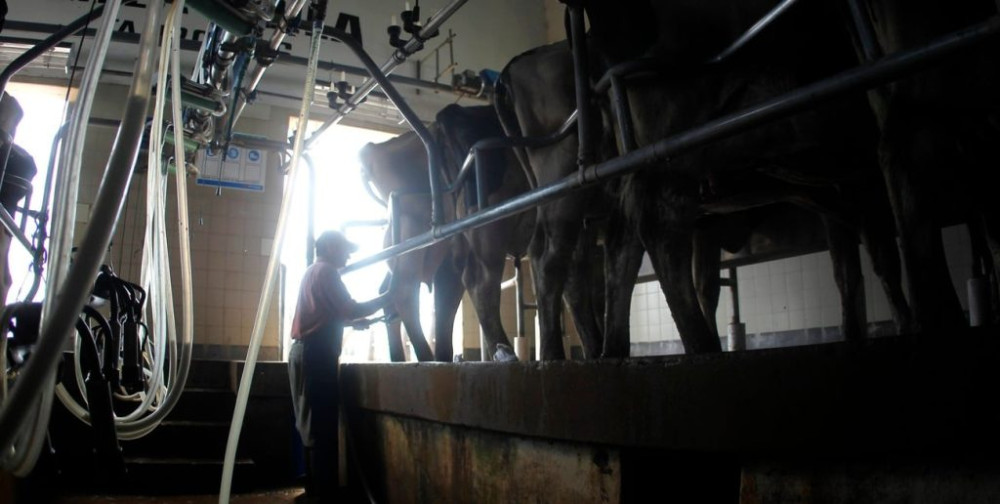
Sustainable Intensification of Dairy Farming
Regional applied research project to establish a baseline of dairy production systems in Latin America and the Caribbean and to develop physical, economic, social and environmental performance indicators. It models and validates sustainable intensification strategies on pilot farms using simulation models and monitoring tools, strengthens the capacities of technicians, researchers and producers, and generates inputs for policies promoting sustainable dairy farming.
Dialogue rooms
(3 records
)