+506 2216 0222
opsaa@iica.int


DID YOU KNOW?
-
Four countries exposed in the Dry Corridor
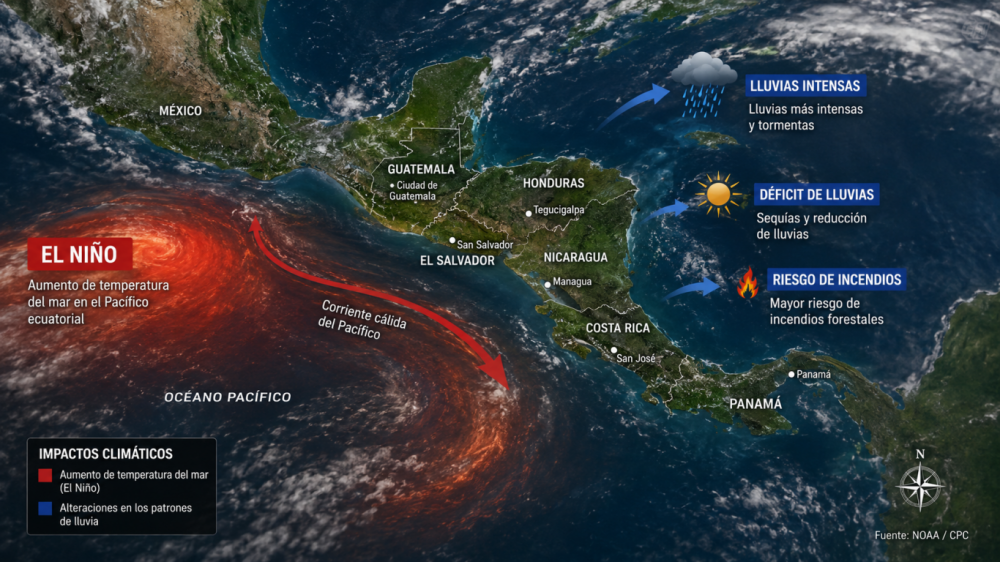
4 Central American countries, Guatemala, El Salvador, Honduras and Nicaragua, contain extensive areas of the Dry Corridor exposed to prolonged droughts and extreme rainfall associated with El Niño. -
Four rainless weeks destroy crops
4 weeks without rainfall were enough to destroy staple crop plantings in agricultural communities in Guatemala and El Salvador, worsening food insecurity risks. -
10.5 million exposed in the Dry Corridor
10.5 million people live in the Central American Dry Corridor and depend mainly on subsistence maize and bean farming, which is highly vulnerable to El Niño.
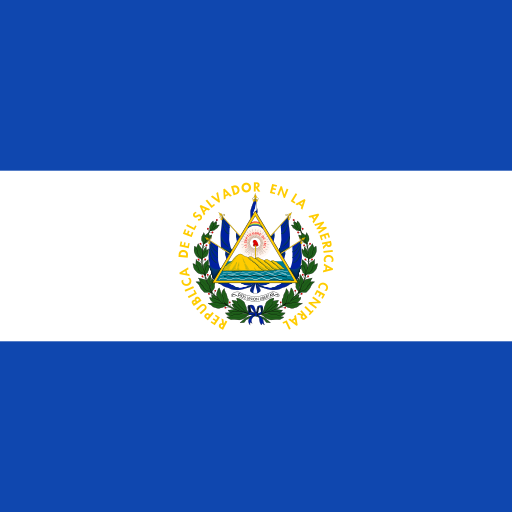
El Salvador
0
Resources
(92 records
)
Events
(3 records
)

Evidences
(91 records
)
Four countries exposed in the Dry Corridor
4 Central American countries, Guatemala, El Salvador, Honduras and Nicaragua, contain extensive areas of the Dry Corridor exposed to prolonged droughts and extreme rainfall associated with El Niño.
Four rainless weeks destroy crops
4 weeks without rainfall were enough to destroy staple crop plantings in agricultural communities in Guatemala and El Salvador, worsening food insecurity risks.
10.5 million exposed in the Dry Corridor
10.5 million people live in the Central American Dry Corridor and depend mainly on subsistence maize and bean farming, which is highly vulnerable to El Niño.
More recent in politics
Investments and Public Expenditure
(107 records
- USD 38,431,878,652.00
)
Sustainable, Inclusive and Nutritional Economic Development Programme for Rural Areas – PROGRESAR Rural
The Sustainable, Inclusive and Nutritional Economic Development Programme for Rural Areas (PROGRESAR Rural) aims to strengthen the economic and productive development of rural families in vulnerable situations in El Salvador. The initiative includes international financing to promote sustainable production systems, improve productive and commercial inclusion, strengthen the capacities of rural communities, and contribute to food and nutrition security. It also prioritizes producers affected by climatic conditions and women heads of household.
Strengthening Strategic Capacities for Water Security in Prioritized Watersheds of the SICA Region
The project aims to contribute to water security in prioritized watershed territories of the SICA region by producing technical diagnostic studies, cost-of-inaction/benefit-of-action analyses (BACI), and strategic water investment plans with bankable project profiles per watershed. It operates in 8 watersheds across 8 countries —Belize, Guatemala, Honduras, El Salvador, Nicaragua, Costa Rica, Panama, and the Dominican Republic— incorporating gender, intercultural, and climate risk perspectives
Strategy for Technological Innovation to Improve the Productivity and Competitiveness of Supply Chains in Central America and the Dominican Republic
PRESICA developed a regional agricultural innovation model based on Local Innovation Consortia, which bring together producers, research institutes, universities, NGOs, and the private sector around value chains for corn, beans, cassava, and sweet peppers. The strategy was grounded in producers’ technological needs to drive research, technology validation, technology transfer, and extension services with a territorial focus. The project operated in eight Central American countries and the Dominican Republic, forming 22 local consortia. It contributed to strengthening national and regional agricultural innovation systems as a public good.
Policy frameworks
(189 records
)
Legislative Decree No. 605: Amendment to the Law Promoting Hygienic Production of Milk and Dairy Products and Regulating Their Sale
Legislative Decree No. 605 amends Article 21 of El Salvador's Law Promoting Hygienic Production of Milk and Dairy Products and Regulating Their Sale. The amendment updates the rules governing the commercialization of milk, cream, cheese and other dairy products, maintains the prohibition on products made with adulterants or substances that alter their composition, and removes the previous prohibition on the sale of milk, cream and cheese produced through reconstitution or recombination of powdered milk. Such products may therefore be marketed when they comply with applicable sanitary, quality and food-safety requirements. The measure seeks to strengthen food security and dairy-product safety, harmonize national legislation with Central American technical regulations, remove barriers to commercialization and improve the competitiveness and supply conditions of El Salvador's dairy value chain.
Law Creating the Salvadoran Blue Economy Authority
Legislative Decree No. 510 creates the Salvadoran Blue Economy Authority (ASEA) and establishes the legal and institutional framework for the design, implementation and execution of public policies on fisheries, aquaculture and related activities in El Salvador under a blue economy approach. ASEA is an autonomous public-law technical institution with legal personality and its own assets, attached to the Ministry of Economy, and serves as the governing authority for the fisheries and aquaculture sector. Its responsibilities include regulating the sustainable use of hydrobiological resources, authorizing, monitoring and inspecting fisheries and aquaculture activities, granting, suspending and revoking authorizations and licenses, applying preventive measures and sanctions, strengthening product traceability, quality and safety, and promoting sustainable value-chain development, innovation, scientific research, technology transfer, market access and coordination with public institutions, the private sector and international organizations. The framework seeks to contribute to food and nutrition security, economic growth, employment and income generation and the rational use of marine and freshwater resources without compromising environmental conservation.
Legislative Decree No. 577: Amendments to the Law on Plant Health, Animal Health and Food Safety of Unprocessed Plant or Animal-Origin Foods
Legislative Decree No. 577 amends El Salvador's Law on Plant Health, Animal Health and Food Safety of Unprocessed Plant or Animal-Origin Foods in order to clarify the authority of the Ministry of Agriculture and Livestock regarding certification, control, validation, verification and surveillance of animal-origin, aquaculture and fishery foods and products. The amendment authorizes the Ministry to certify production processes and domestic and foreign establishments producing poultry, pork and beef products, dairy products and dairy mixtures, honey, egg products, aquaculture products and fishery products. Certification may apply equivalence measures based on international best-practice standards and trade agreements signed and ratified by El Salvador. For dairy products and dairy mixtures, the regulation expressly applies Central American Technical Regulation RTCA 67.04.65:12 on the Use of Dairy Terms. The Decree amends Article 4, replaces Article 79 and repeals Article 80 of the Law.
Good practices
(12 records
)
Strengthening Strategic Capacities for Water Security in Prioritized Watersheds of the SICA Region
The project aims to contribute to water security in prioritized watershed territories of the SICA region by producing technical diagnostic studies, cost-of-inaction/benefit-of-action analyses (BACI), and strategic water investment plans with bankable project profiles per watershed. It operates in 8 watersheds across 8 countries —Belize, Guatemala, Honduras, El Salvador, Nicaragua, Costa Rica, Panama, and the Dominican Republic— incorporating gender, intercultural, and climate risk perspectives
Strategy for Technological Innovation to Improve the Productivity and Competitiveness of Supply Chains in Central America and the Dominican Republic
PRESICA developed a regional agricultural innovation model based on Local Innovation Consortia, which bring together producers, research institutes, universities, NGOs, and the private sector around value chains for corn, beans, cassava, and sweet peppers. The strategy was grounded in producers’ technological needs to drive research, technology validation, technology transfer, and extension services with a territorial focus. The project operated in eight Central American countries and the Dominican Republic, forming 22 local consortia. It contributed to strengthening national and regional agricultural innovation systems as a public good.
Capacity Building and Development of Implementation Strategy for Agro-environmental Policy Guidelines in El Salvador, within the Framework of Climate Change and Disaster Risk Management
The project established the incorporation of an approach on voluntary guidelines for agro-environmental policies, through a public management process oriented to facilitate sustainable development based on FAO's strategic objectives. The project contributed to a change in public management related to agricultural issues, moving from a sectoral and productivist vision to a more holistic one, oriented to strengthen livelihoods and food security of the population. A Technical Committee was created and five regulatory frameworks were prioritized: irrigation law, drainage law, forest law, national environmental policy, and climate-adapted sustainable agriculture policy. The sustainability of natural resources was strengthened and the impact of climate change and natural disasters on the livelihoods of rural population was reduced. Agro-environmental policies, plans and programs were strengthened through knowledge acquired on agro-environmental policy guidelines and the exchange of lessons learned among actors from other countries in Latin America and the Caribbean.
Dialogue rooms
(3 records
)