+506 2216 0222
opsaa@iica.int


DID YOU KNOW?
-
National reservoirs at 66.57%
66.57% was represented by the 1,343.89 million cubic meters of water stored in Dominican Republic reservoirs on August 21, 2026, according to INDRHI data. -
Rainfall deficit exceeds 54%
54.5% was the rainfall deficit recorded in the Dominican Republic in June 2026; the deficit was 46.0% in May and 45.3% in July, according to an Indomet report. -
Aqueduct output falls by up to 68%
68% was the reduction in output from the Haina-Manoguayabo aqueduct; output from the Isabela aqueduct fell 65%, while the Isa-Mana and Duey systems fell by more than 60%.

Dominican Republic
0
Resources
(46 records
)
Events
(9 records
)
Evidences
(46 records
)
National reservoirs at 66.57%
66.57% was represented by the 1,343.89 million cubic meters of water stored in Dominican Republic reservoirs on August 21, 2026, according to INDRHI data.
Rainfall deficit exceeds 54%
54.5% was the rainfall deficit recorded in the Dominican Republic in June 2026; the deficit was 46.0% in May and 45.3% in July, according to an Indomet report.
Aqueduct output falls by up to 68%
68% was the reduction in output from the Haina-Manoguayabo aqueduct; output from the Isabela aqueduct fell 65%, while the Isa-Mana and Duey systems fell by more than 60%.
More recent in politics
Investments and Public Expenditure
(52 records
- USD 4,712,639,739.00
)
Nitrogen optimization: Strategies to address the climate crisis in food production
Regional technical cooperation project aimed at optimizing nitrogen fertilizer use and reducing nitrous oxide emissions in agricultural systems in Chile, Argentina, Peru, Panama, and the Dominican Republic. The project seeks to generate specific emission factors, evaluate nitrogen sources, rates, and application timing, develop mitigation strategies, maintain yields, strengthen national greenhouse gas inventories, and generate best-practice recommendations for efficient nitrogen use.
Sustainable intensification of production in Central America
Regional technical cooperation project focused on the sustainable intensification of agricultural systems in the Central American Dry Corridor through the incorporation of sorghum genotypes and other forage cereals adapted to different environments. The project aims to increase productivity, sustainability, and resilience of production systems through climate and soil characterization, genotype evaluation, development of an online platform with recommendations, and knowledge transfer to farmers, agricultural technicians, advisors, and students.
Integration of production systems as a strategy for climate change mitigation and adaptation
Regional technical cooperation project aimed at strengthening the resilience and climate change mitigation capacity of livestock systems in Latin America and the Caribbean. It evaluates integration practices with forest systems and silvopastoral systems to increase carbon stocks, productive diversification, environmental sustainability, soil health, productivity, and greenhouse gas mitigation. Argentina, Brazil, Chile, Uruguay, and the Dominican Republic participate in the project.
Policy frameworks
(74 records
)
Resolution No. 0017-2026: Urgent Environmental and Hydrological Intervention of the Nizao River
Resolution No. 0017-2026 of the Ministry of Environment and Natural Resources of the Dominican Republic declares an urgent environmental and hydrological intervention along the Nizao River, covering the section from the Las Barias counter-reservoir wall to the river's mouth in the Caribbean Sea. The measure orders river-channel rehabilitation, environmental restoration and remediation works to recover the river's geomorphological stability and hydraulic capacity, reduce flood risks, protect vulnerable communities and infrastructure, and strengthen resilience to extreme climatic events. It also establishes mandatory revegetation programmes, restoration of riparian strips and environmental recovery activities in the middle and upper Nizao basin under permanent technical supervision. The Resolution reaffirms the prohibition of mining operations in floodplain areas near water bodies and provides for the participation of SENPA, Proedemaren, local governments, communities and territorial stakeholders in environmental monitoring and enforcement activities.
Youth Field 2.0.
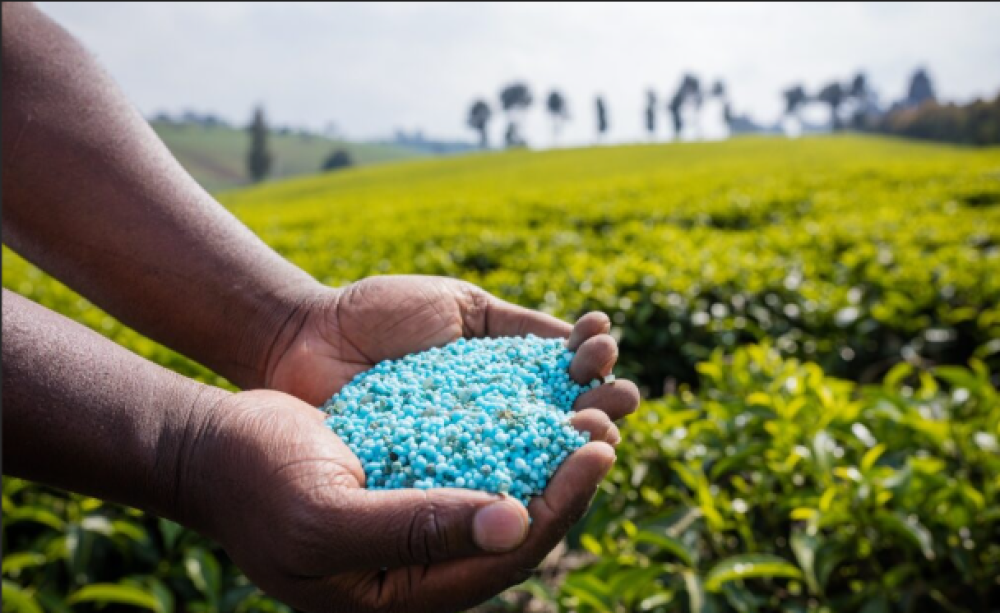
Extension of the temporary fertilizer subsidy in the Dominican Republic
The Dominican Government extended the fertilizer subsidy program through an additional investment of more than RD$1,090 million, bringing total resources allocated to this initiative to RD$2,151 million. The new allocation will remain in force until August 31, 2026 and aims to ensure the availability of fertilizers at affordable prices, stabilize agricultural production costs, avoid pressure on food prices and protect food security. The measure was formalized through agreements between the Ministry of Agriculture and companies that import raw materials for fertilizers and soil amendments, both large and small, in order to strengthen the supply and distribution of these inputs across the national territory.
Good practices
(11 records
)
Strengthening Strategic Capacities for Water Security in Prioritized Watersheds of the SICA Region
The project aims to contribute to water security in prioritized watershed territories of the SICA region by producing technical diagnostic studies, cost-of-inaction/benefit-of-action analyses (BACI), and strategic water investment plans with bankable project profiles per watershed. It operates in 8 watersheds across 8 countries —Belize, Guatemala, Honduras, El Salvador, Nicaragua, Costa Rica, Panama, and the Dominican Republic— incorporating gender, intercultural, and climate risk perspectives
Design of the Resilient Development Project for the Yuna River Basin
A non-reimbursable IDB technical cooperation supporting the Dominican Republic's National Institute of Hydraulic Resources (INDRHI) to design a program for irrigation improvement and climate change adaptation in the Yuna River Basin. It comprises pre-feasibility studies for irrigation infrastructure, ex-ante economic analysis, environmental and social assessment, gender gap analysis, and specialized engineering technical assistance.
Strategy for Technological Innovation to Improve the Productivity and Competitiveness of Supply Chains in Central America and the Dominican Republic
PRESICA developed a regional agricultural innovation model based on Local Innovation Consortia, which bring together producers, research institutes, universities, NGOs, and the private sector around value chains for corn, beans, cassava, and sweet peppers. The strategy was grounded in producers’ technological needs to drive research, technology validation, technology transfer, and extension services with a territorial focus. The project operated in eight Central American countries and the Dominican Republic, forming 22 local consortia. It contributed to strengthening national and regional agricultural innovation systems as a public good.
Dialogue rooms
(4 records
)

Partners