+506 2216 0222
opsaa@iica.int


DID YOU KNOW?
-
Four countries exposed in the Dry Corridor
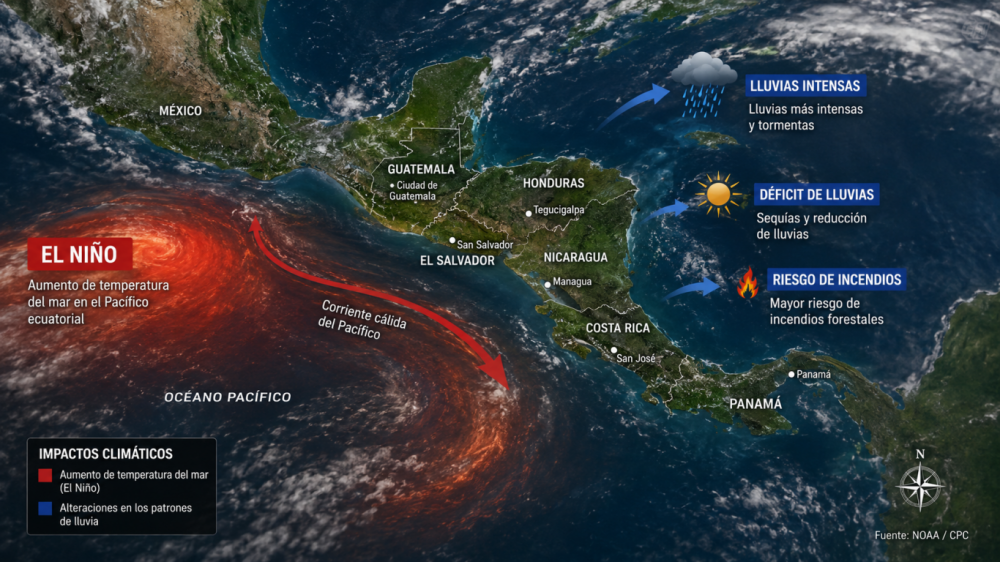
4 Central American countries, Guatemala, El Salvador, Honduras and Nicaragua, contain extensive areas of the Dry Corridor exposed to prolonged droughts and extreme rainfall associated with El Niño. -
Four rainless weeks destroy crops
4 weeks without rainfall were enough to destroy staple crop plantings in agricultural communities in Guatemala and El Salvador, worsening food insecurity risks. -
10.5 million exposed in the Dry Corridor
10.5 million people live in the Central American Dry Corridor and depend mainly on subsistence maize and bean farming, which is highly vulnerable to El Niño.
Guatemala
Transforming knowledge into evidence for a new generation of public policies to transform Guatemala's agrifood systems.
Resources
(88 records
)
Events
(16 records
)
Evidences
(54 records
)
Four countries exposed in the Dry Corridor
4 Central American countries, Guatemala, El Salvador, Honduras and Nicaragua, contain extensive areas of the Dry Corridor exposed to prolonged droughts and extreme rainfall associated with El Niño.
Four rainless weeks destroy crops
4 weeks without rainfall were enough to destroy staple crop plantings in agricultural communities in Guatemala and El Salvador, worsening food insecurity risks.
10.5 million exposed in the Dry Corridor
10.5 million people live in the Central American Dry Corridor and depend mainly on subsistence maize and bean farming, which is highly vulnerable to El Niño.
More recent in politics
Investments and Public Expenditure
(112 records
- USD 7,760,590,293.00
)
Bill No. 6789: Act to Promote Shrimp and Tilapia Production for Food and Nutrition Security in Guatemala.
Legislative initiative in Guatemala proposing a long-term national policy to promote the production, processing, marketing and export of shrimp and tilapia in order to strengthen food and nutrition security, generate employment and foster sustainable rural development. The proposal provides for five-year national plans, the creation of a National Aquaculture Council and a National Fund for the Promotion of Shrimp and Tilapia Production, with a proposed initial endowment of GTQ 800 million. It includes preferential financing, productive infrastructure, technical assistance, research, aquatic animal health and food safety, public procurement, school feeding, renewable energy, climate adaptation and aquaculture insurance. The bill was presented to the Plenary on 29 July 2026 and referred to the Agriculture, Livestock and Fisheries Committee for review and an opinion.
Bill No. 6801: Temporary Emergency Support Act for Diesel and Regular Gasoline Consumers
Legislative initiative submitted to the Congress of the Republic of Guatemala proposing temporary emergency support to reduce the retail price of diesel and regular gasoline for final consumers within the national territory. The proposal provides support of GTQ 12.00 per gallon of diesel and GTQ 3.00 per gallon of regular gasoline, applied at the import stage and transferred through the fuel marketing chain. It provides for funding of up to GTQ 3.48 billion through budget increases, reductions and reallocations, as well as price reference and containment mechanisms, interinstitutional supervision, auditing, tax control and sanctions.
Strengthening Strategic Capacities for Water Security in Prioritized Watersheds of the SICA Region
The project aims to contribute to water security in prioritized watershed territories of the SICA region by producing technical diagnostic studies, cost-of-inaction/benefit-of-action analyses (BACI), and strategic water investment plans with bankable project profiles per watershed. It operates in 8 watersheds across 8 countries —Belize, Guatemala, Honduras, El Salvador, Nicaragua, Costa Rica, Panama, and the Dominican Republic— incorporating gender, intercultural, and climate risk perspectives
Policy frameworks
(109 records
)
Approval of Financing for the Sustainable Rural Development Programme for the Northern Region
Decree of the Congress of the Republic of Guatemala approving the negotiations and authorizing the execution of loan agreements with the International Fund for Agricultural Development and the OPEC Fund for International Development to finance the Sustainable Rural Development Programme for the Northern Region. The financing supports a programme designed to reduce poverty, prevent discrimination and exclusion among the poorest rural, Indigenous and non-Indigenous populations, increase and diversify national production, and promote environmentally sustainable rural socioeconomic development with gender equality. The Decree establishes the main financial conditions of the loans, assigns the Executive Branch, through the Ministry of Public Finance, responsibility for meeting the financial obligations, and provides that the procurement of goods, works and services financed with these resources shall be governed by the respective agreements.
Technical Cooperation for the Recovery and Competitiveness of Guatemala’s Dairy Subsector
'Technical cooperation agreement between Guatemala’s Ministry of Agriculture, Livestock and Food and the Guatemalan Chamber of Milk Producers to primarily support small and medium-sized milk producers and contribute to the recovery and competitiveness of the dairy subsector. The agreement provides for business organization and training, competitive and sustainable production systems, animal health protection, milk safety, decentralized supply of molasses and other strategic inputs, dairy value-chain assessments, epidemiological and animal health surveillance, and institutional coordination. It also provides for the promotion of international technical and financial cooperation to support implementation.
National Plan for Comprehensive Disaster Risk Reduction Management 2024–2034
Guatemala’s national plan establishing strategic guidelines for incorporating comprehensive disaster risk reduction management into the institutional processes of the CONRED System. The plan seeks to reduce vulnerabilities and promote safe and sustainable development by strengthening prevention, mitigation, preparedness, response, recovery and rehabilitation. It coordinates actions involving the public sector, academia and the scientific community, the private sector, international cooperation and civil society, and includes interventions related to understanding risk, governance, investment for resilience, disaster preparedness, data and information generation, and results monitoring and evaluation.
Good practices
(6 records
)
Strengthening Strategic Capacities for Water Security in Prioritized Watersheds of the SICA Region
The project aims to contribute to water security in prioritized watershed territories of the SICA region by producing technical diagnostic studies, cost-of-inaction/benefit-of-action analyses (BACI), and strategic water investment plans with bankable project profiles per watershed. It operates in 8 watersheds across 8 countries —Belize, Guatemala, Honduras, El Salvador, Nicaragua, Costa Rica, Panama, and the Dominican Republic— incorporating gender, intercultural, and climate risk perspectives
GreenWatersheds: resilient forests and financing options for sustainable water supplies in the tropics
Regional project implemented in Cuba, Guatemala, Mexico, and the Dominican Republic that develops ecosystem-based adaptation (EbA) measures and innovative governance and financing mechanisms in priority watersheds, aimed at reducing community vulnerability to extreme climate events. The project combines forest restoration and the establishment of agroforestry systems with economic assessments of ecosystem services, the strengthening of participatory governance bodies, and the engagement of private sector actors in sustainable financing schemes.
Strategy for Technological Innovation to Improve the Productivity and Competitiveness of Supply Chains in Central America and the Dominican Republic
PRESICA developed a regional agricultural innovation model based on Local Innovation Consortia, which bring together producers, research institutes, universities, NGOs, and the private sector around value chains for corn, beans, cassava, and sweet peppers. The strategy was grounded in producers’ technological needs to drive research, technology validation, technology transfer, and extension services with a territorial focus. The project operated in eight Central American countries and the Dominican Republic, forming 22 local consortia. It contributed to strengthening national and regional agricultural innovation systems as a public good.
Dialogue rooms
(4 records
)