+506 2216 0222
opsaa@iica.int


DID YOU KNOW?
-
Niño3.4 Exceeds +2°C
In July 2026, the Niño3.4 index exceeded a +2°C sea-surface temperature anomaly in the equatorial Pacific, a threshold that Météo-France classifies as strong El Niño intensity. -
El Niño 2026 Among Strongest Since 1950
Among the most intense episodes observed since 1950 could be the 2026 El Niño: six-month seasonal forecasts indicate that the Niño3.4 index will continue rising and peak in late 2026, potentially reaching very strong intensity. -
El Niño Limits Atlantic Cyclone Activity
4 low-intensity, short-lived tropical systems had been observed in the 2026 Atlantic season by August 28; only Tropical Storm Dolly occurred in the main development region. Météo-France links this historically low activity to the strong El Niño an...
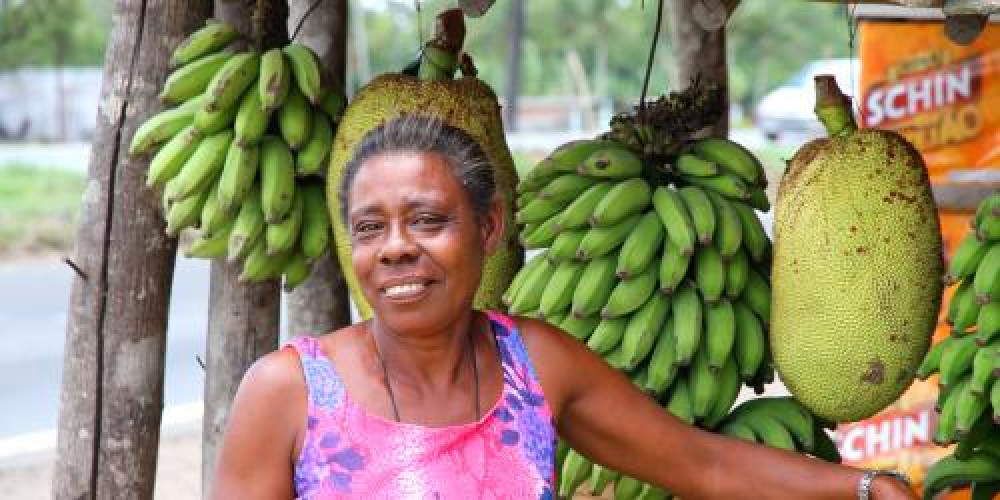
Women
Women as beneficiaries of policy: Inclusion of women as recipients of public policies, ensuring equity, access to resources, and improvement of their living conditions.
Resources
(98 records
)
Events
(28 records
)
Evidences
(2468 records
)
Niño3.4 Exceeds +2°C
In July 2026, the Niño3.4 index exceeded a +2°C sea-surface temperature anomaly in the equatorial Pacific, a threshold that Météo-France classifies as strong El Niño intensity.
El Niño 2026 Among Strongest Since 1950
Among the most intense episodes observed since 1950 could be the 2026 El Niño: six-month seasonal forecasts indicate that the Niño3.4 index will continue rising and peak in late 2026, potentially reaching very strong intensity.
El Niño Limits Atlantic Cyclone Activity
4 low-intensity, short-lived tropical systems had been observed in the 2026 Atlantic season by August 28; only Tropical Storm Dolly occurred in the main development region. Météo-France links this historically low activity to the strong El Niño and high wind shear.
More recent in politics
Investments and Public Expenditure
(231 records
- USD 48,789,610,912.00
)
Scaling-up regenerative practices for the recovery and improvement of soils, biodiversity and associated ecosystem services in the Chilean agricultural sector
GEF project led by Chile's Ministry of Agriculture through ODEPA and INDAP, with technical assistance from the Food and Agriculture Organization of the United Nations (FAO) and financing from the Global Environment Facility (GEF). The initiative seeks to accelerate the transition of Chile's agricultural sector toward regenerative, competitive, resilient and sustainable production models by strengthening public policies and governance, developing innovative financing mechanisms, generating evidence through productive pilots, and improving information and local capacities. Pilots cover olive production, vineyards, fruit production, cereals, vegetables, dairy farming, beef cattle and sheep production on at least 40 farms across nine regions between Coquimbo and Aysén, covering 26,509 hectares.
Sustainable Regenerative Livestock in the Arenal-Huetar Norte Conservation Area (ACAHN)
Project aimed at transforming livestock production in the Arenal-Huetar Norte Conservation Area of Costa Rica through sustainable and regenerative practices, stronger governance and capacity building for producers and institutions, access to incentives and finance, silvopastoral systems, improved grazing, soil and water management, restoration of riparian forests and wetlands, digital monitoring, traceability and deforestation-free production. The intervention seeks to strengthen rural livelihoods, reduce greenhouse gas emissions, conserve biodiversity and restore ecosystems, with attention to women, youth and the Maleku Indigenous people.
Program for Sustainable and Competitive Agriculture in Costa Rica
National program implemented by Costa Rica's Ministry of Agriculture and Livestock (MAG) to improve the sustainability, competitiveness and economic participation of small and medium agricultural producers. The operation uses a Program-for-Results (PforR) financing approach and has total financing of US$695 million: US$555 million in counterpart financing from the Government of Costa Rica, US$120 million from the International Bank for Reconstruction and Development (IBRD/World Bank), and US$20 million from the International Fund for Agricultural Development (IFAD). The Program includes modernization of public agricultural extension services, a digital producer information platform, agricultural traceability, productive and cold-chain infrastructure, technical assistance, access to financing for adoption of NAMA practices, and payments for environmental services related to carbon sequestration in agricultural soils. The Program will directly benefit 10,500 producers and reach 30,000 producers through direct and indirect benefits, equivalent to approximately 90,000 people when household members are included, with explicit attention to women and youth.
Policy frameworks
(349 records
)
Costa Rica Nationally Determined Contribution 2025-2035
Costa Rica's Nationally Determined Contribution 2025-2035 updates the country's climate commitments through an integrated vision linking mitigation and adaptation under the principles of progression, environmental integrity, transparency and social justice. The framework consolidates and raises climate ambition through a multisectoral portfolio of actions aimed at decarbonization, climate resilience and nature-based solutions. It includes mitigation targets, ecosystem protection and restoration, stronger territorial resilience, institutional arrangements for implementation, and commitments related to gender equality, youth participation and recognition of Indigenous Peoples.
United Nations Sustainable Development Cooperation Framework with the Bolivarian Republic of Venezuela 2023-2026
The United Nations Sustainable Development Cooperation Framework 2023-2026 agreed between the Government of the Bolivarian Republic of Venezuela and the United Nations system establishes the strategic framework for supporting national efforts towards the 2030 Agenda. Its priorities focus on strengthening population resilience; fostering sustainable, resilient and innovative productive development aligned with environmental management and climate action; and promoting sustainable, inclusive and equitable social cohesion. The Framework incorporates the Humanitarian-Development-Peace Nexus and includes a result aimed at achieving a sustainable food system and healthy nutrition with the inclusion of agricultural producers and the development of family, urban and peri-urban agriculture.
Brazil Family Farming Harvest Plan 2025-2026
Brazil's 2025-2026 Family Farming Harvest Plan allocates 89 billion Brazilian reais to rural credit, public procurement, agricultural insurance, technical assistance, and minimum price guarantees to strengthen family farming, food security, and local economies. Of the total amount announced, 78.2 billion reais are allocated through the National Program for Strengthening Family Farming, Pronaf. The Plan maintains preferential financing rates of 3 percent for the production of essential foods and 2 percent for organic or ecological production, while introducing credit lines for ecological agriculture, sustainable irrigation, and climate change adaptation. It also includes rural connectivity and accessibility measures and the National Program for the Reduction of Pesticides, focused on research, residue monitoring, technical assistance, and the expanded use of biological inputs.
Good practices
(25 records
)
Rural Enterprise and Agricultural Development Project (READ)
Project implemented in six regions of Guyana to improve the social and economic conditions of poor rural households, especially small-scale producers and vulnerable groups. READ expanded access to financial services and strengthened enterprise and market development, technical assistance, extension and training. The target group comprised 5,200 rural households, equivalent to about 20,800 people, with particular attention to woman-headed households, youth, Amerindian communities, non-traditional crop farmers and operators of rural micro and small enterprises. The Ministry of Agriculture was the executing agency and IFAD provided both loan and grant financing.
Strengthening Assets, Markets and Policies for Rural Development in the Highlands and High Rainforest Areas Project (PSSA)
The initiative aimed to reduce rural poverty in the highland and high rainforest areas of Peru by strengthening the productive, human, social, and natural assets of organized smallholder farmers. The project supported the formation and consolidation of rural producer organizations to implement co-financed business plans, combined with technical assistance, training, and competitive funding mechanisms. It also promoted sustainable territorial management and strengthened local government capacities, enhancing market access, financial inclusion, and income generation among vulnerable rural populations.
Sustainable artisanal fisheries and bio-businesses for food security with market access in the Peru–Colombia Border Integration Zone
Sustainable artisanal fisheries and bio-businesses for food security with market access in the Peru–Colombia Border Integration Zone is a binational technical cooperation initiative in the Putumayo River basin aimed at strengthening sustainable artisanal fishing and food security. It promotes cross-border governance through a binational roundtable, diagnostics and monitoring campaigns focused on water quality and fish species of commercial interest. It supports fisheries value-chain bio-businesses through awareness and technical training, financial education, technical assistance, formulation of business models and non-reimbursable equipment support, plus binational fairs and strategic commercial alliances. It also includes community food security plans, training in good food practices, field schools and collective solutions for access to safe water such as collection, filtration and storage. The initiative is implemented in Peru and Colombia over 24 months, financed by the Colombia–Peru Border Integration Zone Development Fund, with a required start in September 2025.