+506 2216 0222
opsaa@iica.int


DID YOU KNOW?
-
Niño3.4 Exceeds +2°C
In July 2026, the Niño3.4 index exceeded a +2°C sea-surface temperature anomaly in the equatorial Pacific, a threshold that Météo-France classifies as strong El Niño intensity. -
El Niño 2026 Among Strongest Since 1950
Among the most intense episodes observed since 1950 could be the 2026 El Niño: six-month seasonal forecasts indicate that the Niño3.4 index will continue rising and peak in late 2026, potentially reaching very strong intensity. -
El Niño Limits Atlantic Cyclone Activity
4 low-intensity, short-lived tropical systems had been observed in the 2026 Atlantic season by August 28; only Tropical Storm Dolly occurred in the main development region. Météo-France links this historically low activity to the strong El Niño an...
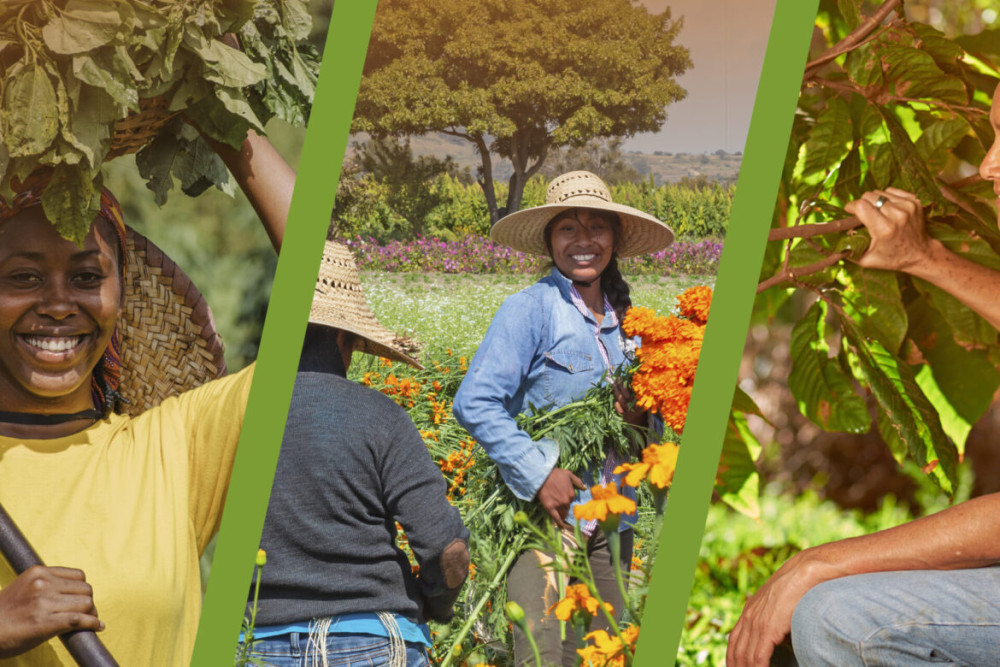
Youth
Youth as beneficiaries of policy: Inclusion of youth in public policies to ensure equity, access to opportunities, and improvement of their living conditions.
Resources
(96 records
)
Events
(29 records
)
Evidences
(2468 records
)
Niño3.4 Exceeds +2°C
In July 2026, the Niño3.4 index exceeded a +2°C sea-surface temperature anomaly in the equatorial Pacific, a threshold that Météo-France classifies as strong El Niño intensity.
El Niño 2026 Among Strongest Since 1950
Among the most intense episodes observed since 1950 could be the 2026 El Niño: six-month seasonal forecasts indicate that the Niño3.4 index will continue rising and peak in late 2026, potentially reaching very strong intensity.
El Niño Limits Atlantic Cyclone Activity
4 low-intensity, short-lived tropical systems had been observed in the 2026 Atlantic season by August 28; only Tropical Storm Dolly occurred in the main development region. Météo-France links this historically low activity to the strong El Niño and high wind shear.
More recent in politics
Investments and Public Expenditure
(167 records
- USD 37,462,660,375.00
)
Sustainable Regenerative Livestock in the Arenal-Huetar Norte Conservation Area (ACAHN)
Project aimed at transforming livestock production in the Arenal-Huetar Norte Conservation Area of Costa Rica through sustainable and regenerative practices, stronger governance and capacity building for producers and institutions, access to incentives and finance, silvopastoral systems, improved grazing, soil and water management, restoration of riparian forests and wetlands, digital monitoring, traceability and deforestation-free production. The intervention seeks to strengthen rural livelihoods, reduce greenhouse gas emissions, conserve biodiversity and restore ecosystems, with attention to women, youth and the Maleku Indigenous people.
Program for Sustainable and Competitive Agriculture in Costa Rica
National program implemented by Costa Rica's Ministry of Agriculture and Livestock (MAG) to improve the sustainability, competitiveness and economic participation of small and medium agricultural producers. The operation uses a Program-for-Results (PforR) financing approach and has total financing of US$695 million: US$555 million in counterpart financing from the Government of Costa Rica, US$120 million from the International Bank for Reconstruction and Development (IBRD/World Bank), and US$20 million from the International Fund for Agricultural Development (IFAD). The Program includes modernization of public agricultural extension services, a digital producer information platform, agricultural traceability, productive and cold-chain infrastructure, technical assistance, access to financing for adoption of NAMA practices, and payments for environmental services related to carbon sequestration in agricultural soils. The Program will directly benefit 10,500 producers and reach 30,000 producers through direct and indirect benefits, equivalent to approximately 90,000 people when household members are included, with explicit attention to women and youth.
Strengthening Innovation, Resilience and Sustainability of Agrifood Systems in North Central Honduras (INNOVASAN)
Investment project aimed at improving the income, food and nutrition security, and climate resilience of poor small-scale rural producer families and vulnerable rural populations in North Central Honduras. The initiative promotes sustainable, climate-resilient and nutrition-sensitive agrifood systems through investments in production, value addition and marketing; access to water for production and human consumption; watershed management and green and grey infrastructure; technical assistance, financial services and digital tools; strengthened producer organisations; and improved capacity and coordination among public and private institutions in the territory.
Policy frameworks
(299 records
)
Costa Rica Nationally Determined Contribution 2025-2035
Costa Rica's Nationally Determined Contribution 2025-2035 updates the country's climate commitments through an integrated vision linking mitigation and adaptation under the principles of progression, environmental integrity, transparency and social justice. The framework consolidates and raises climate ambition through a multisectoral portfolio of actions aimed at decarbonization, climate resilience and nature-based solutions. It includes mitigation targets, ecosystem protection and restoration, stronger territorial resilience, institutional arrangements for implementation, and commitments related to gender equality, youth participation and recognition of Indigenous Peoples.
Belize National Rural Development Strategy 2026-2030
Belize's National Rural Development Strategy (NRDS) 2026-2030 establishes a coordinated, evidence-based national framework to advance inclusive, resilient and sustainable rural transformation. The Strategy is structured around four strategic axes: Partnership, Prosperity, People and Places, and integrates two cross-cutting approaches: inclusion, with a focus on gender, youth and culture, and climate change resilience. Its roadmap comprises 14 lines of action and 32 flagship initiatives designed to address structural constraints to rural development, including land insecurity, high financial costs, market failures and infrastructure gaps in roads and basic services. The preparation process included a strategic diagnosis, more than 40 expert interviews, eight community dialogues across all six districts involving more than 190 rural stakeholders, and technical consultations leading to final validation of the roadmap.
Initiative to Connect Local Farmers with Hotels and Expand Guyana's Fresh Produce Market
The Government of Guyana, through the Ministry of Agriculture, announced an initiative to bring together hotel owners, local farmers and producer groups to establish direct supply chains for fresh produce to the hospitality industry. The measure aims to create new market opportunities for farmers, particularly young entrepreneurs participating in government-supported agricultural programmes, while reducing Guyana's reliance on imported vegetables. The initiative builds on progress made through the Agriculture Innovation and Entrepreneurship Programme (AIEP), under which young producers are growing high-value crops using shade houses and hydroponic systems and are already supplying part of the hospitality industry's demand.
Good practices
(17 records
)
Rural Enterprise and Agricultural Development Project (READ)
Project implemented in six regions of Guyana to improve the social and economic conditions of poor rural households, especially small-scale producers and vulnerable groups. READ expanded access to financial services and strengthened enterprise and market development, technical assistance, extension and training. The target group comprised 5,200 rural households, equivalent to about 20,800 people, with particular attention to woman-headed households, youth, Amerindian communities, non-traditional crop farmers and operators of rural micro and small enterprises. The Ministry of Agriculture was the executing agency and IFAD provided both loan and grant financing.
Strengthening Assets, Markets and Policies for Rural Development in the Highlands and High Rainforest Areas Project (PSSA)
The initiative aimed to reduce rural poverty in the highland and high rainforest areas of Peru by strengthening the productive, human, social, and natural assets of organized smallholder farmers. The project supported the formation and consolidation of rural producer organizations to implement co-financed business plans, combined with technical assistance, training, and competitive funding mechanisms. It also promoted sustainable territorial management and strengthened local government capacities, enhancing market access, financial inclusion, and income generation among vulnerable rural populations.
Support to Sustainable Rural and Agricultural Development
This initiative is a Technical Cooperation (HA-T1341) in Haiti to support sustainable rural and agricultural development, focusing on strengthening implementation of the PAPAIR operation (HA-J0002) and identifying new investment opportunities to improve productivity, food security, and climate resilience in the country’s northern region. The TC responds to delays and limited operational capacity within MARNDR to implement PAPAIR (low disbursement rate and challenges in procurement, operational management, and planning), compounded by political, institutional, and security instability. Its specific objectives are to: (i) strengthen the Ministry’s capacity to implement PAPAIR, (ii) extract lessons learned from past and ongoing operations (including incentive mechanisms, subsidies, and technical assistance instruments, as well as private-sector experiences), and (iii) support the design of new strategies and investments (including sustainable value chains and a feasibility study for rehabilitating irrigation infrastructure). The TC is structured into three components: implementation support to PAPAIR through consultancies (procurement/contract management, rural infrastructure, M&E, gender and diversity), lessons learned, and identification/design of new strategies and investments; with outputs shared with public authorities, private-sector actors, and development partners. It will be executed by the IDB at the request of the Government of Haiti, in close coordination with MARNDR (monthly meetings and a designated focal point), funded by OC-SDP resources from W1D and W2A/W2B windows totaling US$300,000 over 24 months, starting on September 1, 2025.