+506 2216 0222
opsaa@iica.int


DID YOU KNOW?
-
Niño3.4 Exceeds +2°C
In July 2026, the Niño3.4 index exceeded a +2°C sea-surface temperature anomaly in the equatorial Pacific, a threshold that Météo-France classifies as strong El Niño intensity. -
El Niño 2026 Among Strongest Since 1950
Among the most intense episodes observed since 1950 could be the 2026 El Niño: six-month seasonal forecasts indicate that the Niño3.4 index will continue rising and peak in late 2026, potentially reaching very strong intensity. -
El Niño Limits Atlantic Cyclone Activity
4 low-intensity, short-lived tropical systems had been observed in the 2026 Atlantic season by August 28; only Tropical Storm Dolly occurred in the main development region. Météo-France links this historically low activity to the strong El Niño an...
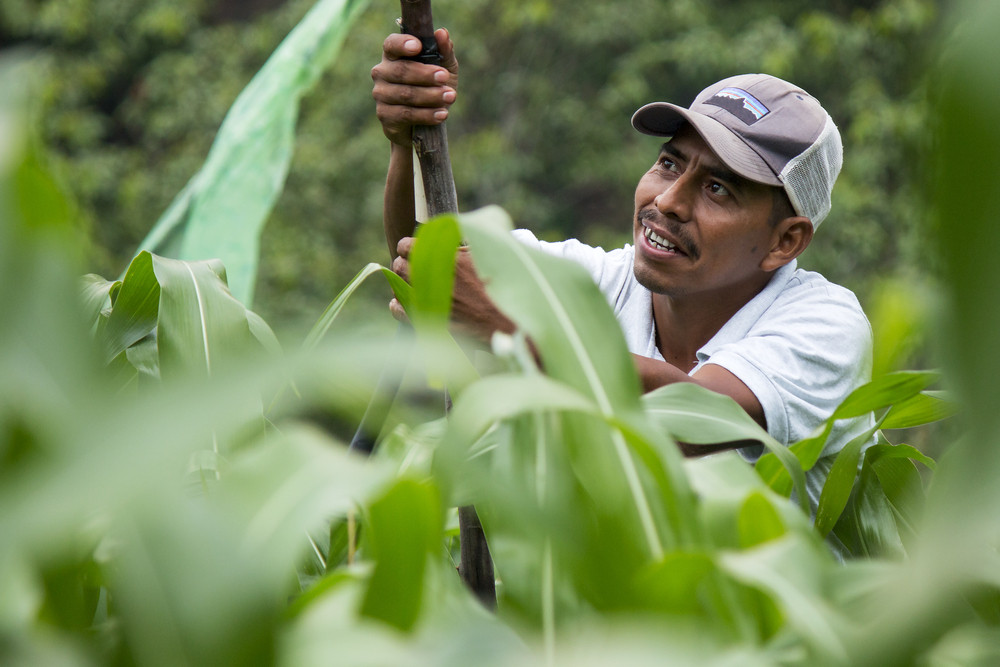
Agricultural producers
Agricultural producers are people dedicated to the production of agricultural and livestock goods, such as crops, livestock, poultry, among others, in order to sell these products in the market. These producers can have different production sizes, from small family farms to large agro-industrial companies.
Resources
(553 records
)
Events
(130 records
)
Evidences
(2468 records
)
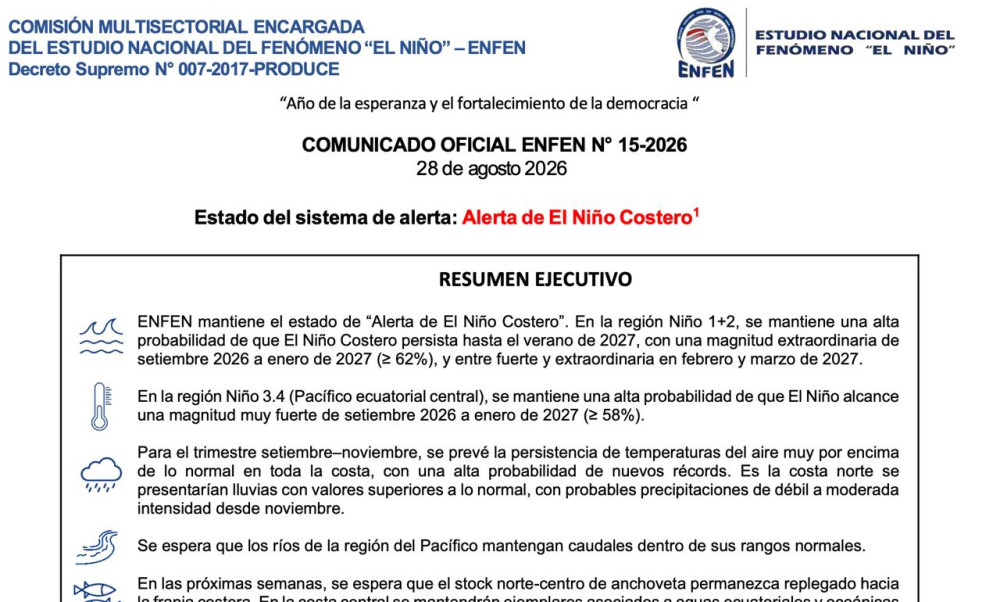
Niño3.4 Exceeds +2°C
In July 2026, the Niño3.4 index exceeded a +2°C sea-surface temperature anomaly in the equatorial Pacific, a threshold that Météo-France classifies as strong El Niño intensity.
El Niño 2026 Among Strongest Since 1950
Among the most intense episodes observed since 1950 could be the 2026 El Niño: six-month seasonal forecasts indicate that the Niño3.4 index will continue rising and peak in late 2026, potentially reaching very strong intensity.
El Niño Limits Atlantic Cyclone Activity
4 low-intensity, short-lived tropical systems had been observed in the 2026 Atlantic season by August 28; only Tropical Storm Dolly occurred in the main development region. Météo-France links this historically low activity to the strong El Niño and high wind shear.
More recent in politics
Investments and Public Expenditure
(642 records
- USD 131,459,828,110.00
)
Climate-Smart Livestock in Ecuador: A Strategic Partnership between FAO and the Private Sector
Pilot project implemented in Cayambe, Pichincha Province, to strengthen the capacities of technicians and family livestock producers in Climate-Smart Livestock. The intervention adapted and validated participatory tools, identified good livestock practices, improved digital data collection and analysis, and estimated greenhouse gas emissions using tools such as ODK and GLEAM-R. It was developed by Ecuadorian public institutions, FAO, GEF, and the company El Ordeño.
Peru: Budget Program 0121 - Improving Small Agricultural Producers' Access to Markets
Budget Program 0121 seeks to improve the integration of small and medium-sized agricultural producers into markets and address their limited market access. Created in 2014, it contributes to productivity, competitiveness, sustainability, inclusion, and food security in Peru. MIDAGRI's General Directorate for Agricultural and Agroecological Development is the technical entity responsible for the program.
Policy frameworks
(1275 records
)
Bolivia: Law No. 938 on Sustainable Fishing and Aquaculture
Law No. 938 regulates, promotes, encourages, and administers the use of fisheries and aquaculture resources within Bolivia, with the purpose of supporting the comprehensive and sustainable development of fisheries and aquaculture. The law declares these activities to be of social and strategic interest for food security and food sovereignty, defines the responsibilities of the competent institutions, and provides for regulation, licensing, supervision, institutional coordination, training, technical assistance, technology transfer, and research.
Sustainable Canadian Agricultural Partnership 2023-2028
The Sustainable Canadian Agricultural Partnership is a five-year agreement among Canada's federal, provincial, and territorial governments, running from April 1, 2023, to March 31, 2028. The agreement provides CAD 3.5 billion to strengthen the competitiveness, innovation, and resiliency of the agriculture, agri-food, and agri-based products sectors. It includes CAD 1 billion in federal programs and activities and CAD 2.5 billion in cost-shared programs, funded 60 percent by the federal government and 40 percent by provincial and territorial governments. Its priorities are sector capacity, growth and competitiveness; climate change and environment; science, research and innovation; market development and trade; and resiliency and public trust. The framework includes marketing, competitiveness, innovation, science, diversity, and assurance programs, as well as business risk management programs such as AgriStability, AgriInsurance, AgriInvest, and AgriRecovery and the Resilient Agricultural Landscape Program.
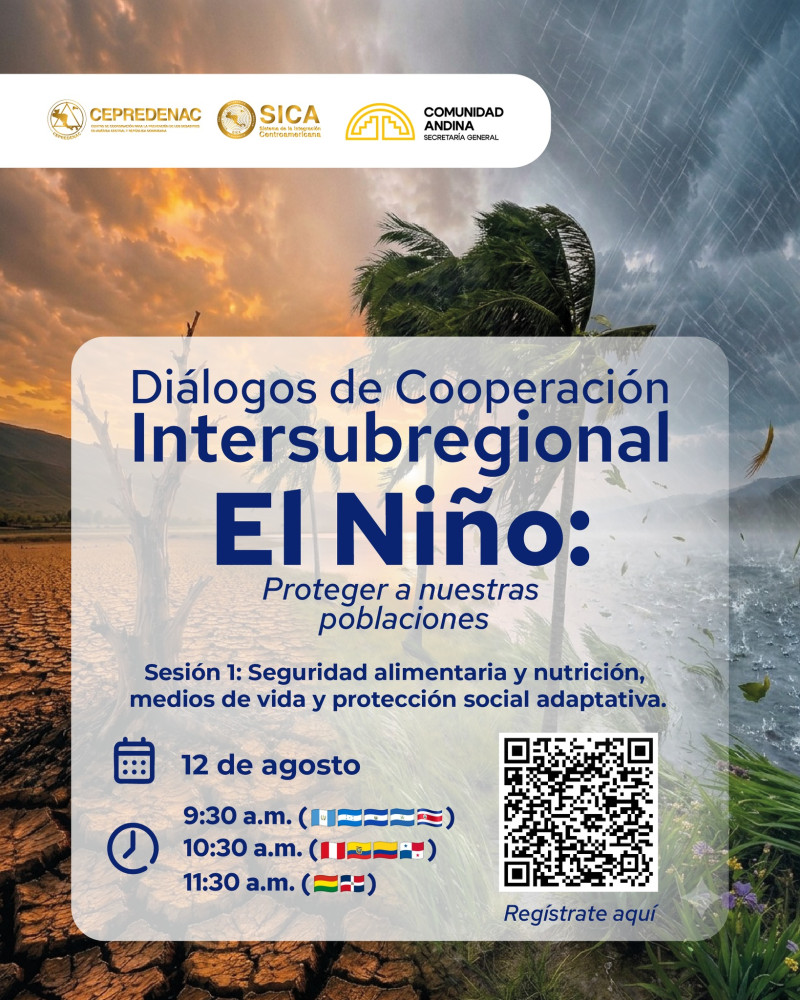
Supreme Decree No. 012-2026-PRODUCE: Emergency Declaration for the Fisheries and Aquaculture Subsectors in Response to the 2026-2027 El Niño Event
Peru's Supreme Decree No. 012-2026-PRODUCE declares the Fisheries and Aquaculture subsectors under emergency for a period of one hundred and twenty calendar days due to the effects generated by the 2026-2027 El Niño event. The measure allows exceptional, immediate and necessary response and economic-reactivation actions to protect the continuity of fisheries and aquaculture activities and strengthen their value chains. The Decree requires the Ministry of Production to approve, by Ministerial Resolution and within fifteen working days following publication, an Emergency Plan for the Fisheries and Aquaculture Subsectors. The Plan is intended to ensure an efficient State response to potential impacts from El Niño and create conditions for strengthening, responding to and recovering fisheries and aquaculture value chains and their associated actors. Its lines of action include scientific research for the sustainable use of hydrobiological resources, fisheries-management measures for taking advantage of resource opportunities, administrative and sanitary facilitation to ensure continuity of processing activities, payment facilities for fisheries, aquaculture and sanitary administrative fines, promotion of commercialization and market development for hydrobiological products, and access to financing. The Ministry of Production, through the Monitoring and Evaluation Directorate of the General Directorate for Fisheries and Aquaculture Policy and Regulatory Analysis, is responsible for monitoring and evaluating the measures implemented under the Emergency Plan. The Decree also authorizes PRODUCE to adopt complementary measures and modify or expand the Plan's lines of action according to the evolution of the emergency.
Good practices
(49 records
)
Rural Enterprise and Agricultural Development Project (READ)
Project implemented in six regions of Guyana to improve the social and economic conditions of poor rural households, especially small-scale producers and vulnerable groups. READ expanded access to financial services and strengthened enterprise and market development, technical assistance, extension and training. The target group comprised 5,200 rural households, equivalent to about 20,800 people, with particular attention to woman-headed households, youth, Amerindian communities, non-traditional crop farmers and operators of rural micro and small enterprises. The Ministry of Agriculture was the executing agency and IFAD provided both loan and grant financing.
Conservation and Sustainable Use of Agro-biodiversity to Improve Human Nutrition in Five Macro Eco-regions (Bolivia)
Project aimed at conserving agro-biodiversity in situ across five macro eco-regions and improving the livelihoods of local populations. It seeks to mainstream the valuation, conservation and sustainable use of agro-biodiversity into national policies, regulatory frameworks, and health, education, rural development and food security programmes. It includes the generation of market incentives and awareness-raising and training processes for the sustainable management of natural resources.
National Agricultural Innovation System Support Project (PNIA)
The project supports the establishment and consolidation of the National Agricultural Innovation System by strengthening the institutional capacity of the lead public agency, building decentralized innovation networks with public and private stakeholders, and administering competitive grant funds for subprojects in strategic research, adaptive research, agricultural extension, seed enterprise development, and capacity building. It includes a national and international scholarship program for researchers and extension professionals, as well as the design of a monitoring and evaluation system for the agricultural innovation system. Its objective is to create the conditions for member organizations of the national innovation system to improve their effectiveness in developing and delivering improved agricultural technologies to rural producers.
Dialogue rooms
(4 records
)