+506 2216 0222
opsaa@iica.int


DID YOU KNOW?
-
Ten years of CSA: 229 t C/ha
229.4 t/ha was the soil carbon stock observed after ten years of CSA practices in cropland, with values higher than business-as-usual management. -
Agroforestry: 312 t C/ha
312.1 t/ha was the mean soil carbon stock under agroforestry, the highest among the land uses assessed in Tula-Jana, Doyogena, Ethiopia. -
CSA cropland: 229 t C/ha
229.4 t/ha was the soil carbon stock in cropland under CSA practices, the second-highest value among the land uses assessed.
Regenerative and Resilient Agriculture
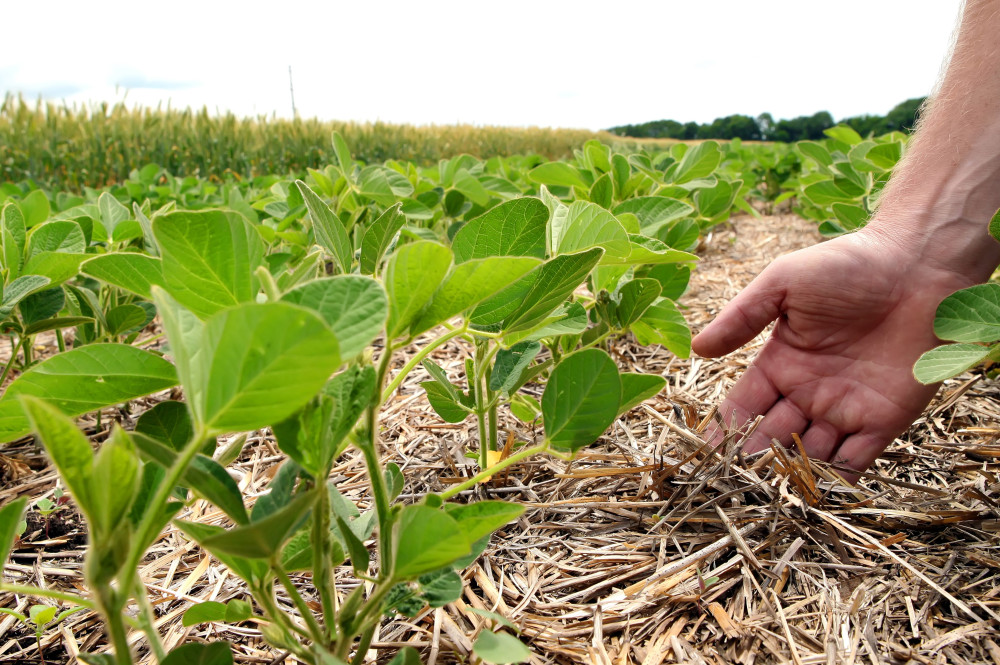
The area of Regenerative and Resilient Agriculture encompasses policies, programs, and investments aimed at restoring ecosystem health, enhancing the adaptive capacity of agrifood systems, and strengthening their resilience to climate challenges through sustainable production practices, technological and institutional innovations.
Resources
(479 records
)
Events
(125 records
)
Evidences
(504 records
)
Ten years of CSA: 229 t C/ha
229.4 t/ha was the soil carbon stock observed after ten years of CSA practices in cropland, with values higher than business-as-usual management.
Agroforestry: 312 t C/ha
312.1 t/ha was the mean soil carbon stock under agroforestry, the highest among the land uses assessed in Tula-Jana, Doyogena, Ethiopia.
CSA cropland: 229 t C/ha
229.4 t/ha was the soil carbon stock in cropland under CSA practices, the second-highest value among the land uses assessed.
More recent in politics
Investments and Public Expenditure
(505 records
- USD 119,405,147,367.00
)
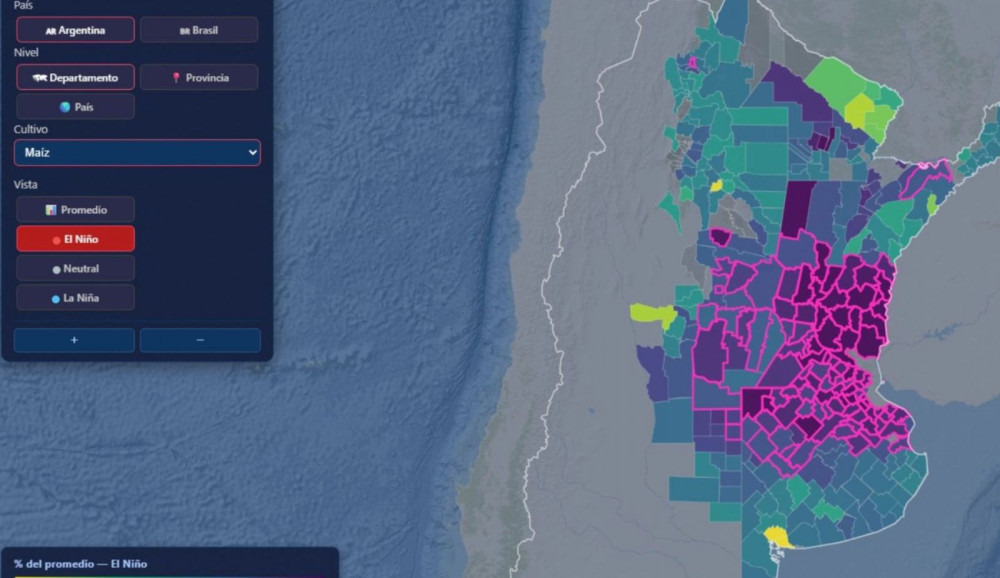
Expansion of agricultural mitigation measures in Panama's Dry Arc under the El Niño climate emergency (2026-2027)
Public funding package of B/. 8.21 million to expand prevention and mitigation measures addressing the effects of El Niño on the agricultural sector in the most vulnerable areas of Panama's Dry Arc, specifically Los Santos, Herrera, Coclé and parts of Veraguas. Measures presented by MIDA prioritize water security and include well inventories and flow measurements, rehabilitation and construction of livestock watering facilities, reservoirs and pumping systems, assessment of small dams, strategic forage reserves, distribution of productive inputs, and strengthened animal and plant health control and pest and disease monitoring.
MIDA acquisition of machinery, veterinary medicines, livestock supplements and spare parts to mitigate El Niño impacts (2026)
Intervention by Panama's Ministry of Agricultural Development (MIDA) to support agricultural producers facing the effects of El Niño through the acquisition of machinery, veterinary medicines, livestock supplements and spare parts. As of September 3, 2026, MIDA reported approximately B/. 1.2 million in executed expenditure. Documented livestock inputs include multivitamins, vitamins, protein-enriched mineral salts and medicines intended to support producers and reduce the effects of drought and heat stress on livestock.
Climate-Smart Livestock in Ecuador: A Strategic Partnership between FAO and the Private Sector
Pilot project implemented in Cayambe, Pichincha Province, to strengthen the capacities of technicians and family livestock producers in Climate-Smart Livestock. The intervention adapted and validated participatory tools, identified good livestock practices, improved digital data collection and analysis, and estimated greenhouse gas emissions using tools such as ODK and GLEAM-R. It was developed by Ecuadorian public institutions, FAO, GEF, and the company El Ordeño.
Policy frameworks
(953 records
)
Sustainable Canadian Agricultural Partnership 2023-2028
The Sustainable Canadian Agricultural Partnership is a five-year agreement among Canada's federal, provincial, and territorial governments, running from April 1, 2023, to March 31, 2028. The agreement provides CAD 3.5 billion to strengthen the competitiveness, innovation, and resiliency of the agriculture, agri-food, and agri-based products sectors. It includes CAD 1 billion in federal programs and activities and CAD 2.5 billion in cost-shared programs, funded 60 percent by the federal government and 40 percent by provincial and territorial governments. Its priorities are sector capacity, growth and competitiveness; climate change and environment; science, research and innovation; market development and trade; and resiliency and public trust. The framework includes marketing, competitiveness, innovation, science, diversity, and assurance programs, as well as business risk management programs such as AgriStability, AgriInsurance, AgriInvest, and AgriRecovery and the Resilient Agricultural Landscape Program.
Executive Decree No. PCM-016-2026: Declaration of a State of Emergency Due to Meteorological Drought in 75 Municipalities
Honduran Executive Decree declaring a 120-day state of emergency in 75 municipalities of Choluteca, Comayagua, El Paraíso, Francisco Morazán, La Paz and Valle affected by El Niño, meteorological drought and water deficits. It orders COPECO, SAG and the institutions of the Interinstitutional Technical Committee to implement the Comprehensive Drought Management Plan through prevention, mitigation, preparedness, response and capacity-building measures. It authorizes the reallocation of public resources, the mobilization of international cooperation and direct contracting to address water, sanitation, agricultural production, food security, health and nutrition needs.
Development National Plan (Mexico) 2025-20230
The National Development Plan (NDP) serves as the roadmap for the objectives and actions of the Government of Mexico in the coming years. These objectives aim to consolidate the country’s transformation under a development model centered on well-being, social justice, and sustainability.
Good practices
(28 records
)
Public Services Improvement Project for Sustainable Territorial Development in the Apurímac, Ene and Mantaro Rivers Area of Influence
Project aimed at reducing rural poverty through the social and productive inclusion of families in the VRAEM area. It seeks to increase beneficiaries' human, social, natural, physical, and financial assets. It combines strengthening of territorial governance, development of local economic initiatives, and improved connectivity and community infrastructure.
National Agricultural Innovation System Support Project (PNIA)
The project supports the establishment and consolidation of the National Agricultural Innovation System by strengthening the institutional capacity of the lead public agency, building decentralized innovation networks with public and private stakeholders, and administering competitive grant funds for subprojects in strategic research, adaptive research, agricultural extension, seed enterprise development, and capacity building. It includes a national and international scholarship program for researchers and extension professionals, as well as the design of a monitoring and evaluation system for the agricultural innovation system. Its objective is to create the conditions for member organizations of the national innovation system to improve their effectiveness in developing and delivering improved agricultural technologies to rural producers.
Buen Vivir in Rural Territories Programme
The programme aims to improve food security and livelihoods of food-insecure rural households in poverty, largely dependent on small-scale agriculture and vulnerable to climate change. It promotes an endogenous territorial development model centred on family-scale agroecological production, organizational and community capacity strengthening, and investment in territorial economic initiatives. It supports the implementation of national food sovereignty policy within a complementarity framework across government levels, with attention to sustainable water and natural resource management.
Dialogue rooms
(2 records
)