+506 2216 0222
opsaa@iica.int


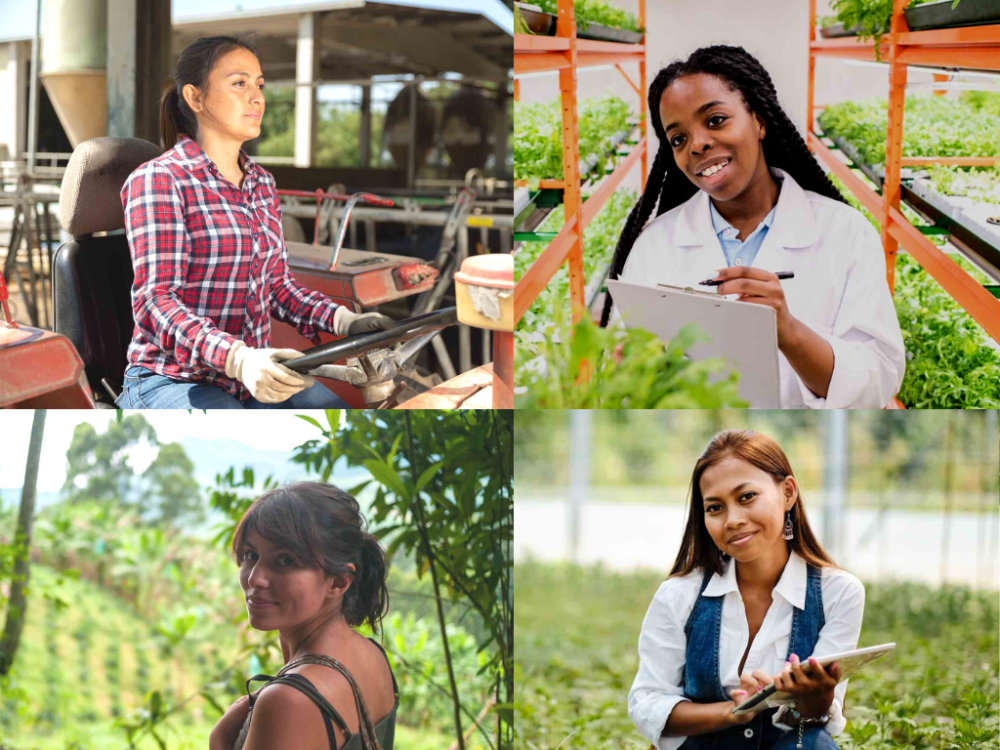
Women and Rural Youth
A cross-cutting perspective with an intersectional approach from the area of Women and Rural Youth policies, according to components, countries, funding sources, beneficiaries, instruments, economic sectors and good practices
Resources
(184 records
)
Events
(30 records
)
Evidences
(73 records
)
More recent in politics
Investments and Public Expenditure
(155 records
- USD 12,676,936,396.00
)
Program for Sustainable and Competitive Agriculture in Costa Rica
National program implemented by Costa Rica's Ministry of Agriculture and Livestock (MAG) to improve the sustainability, competitiveness and economic participation of small and medium agricultural producers. The operation uses a Program-for-Results (PforR) financing approach and has total financing of US$695 million: US$555 million in counterpart financing from the Government of Costa Rica, US$120 million from the International Bank for Reconstruction and Development (IBRD/World Bank), and US$20 million from the International Fund for Agricultural Development (IFAD). The Program includes modernization of public agricultural extension services, a digital producer information platform, agricultural traceability, productive and cold-chain infrastructure, technical assistance, access to financing for adoption of NAMA practices, and payments for environmental services related to carbon sequestration in agricultural soils. The Program will directly benefit 10,500 producers and reach 30,000 producers through direct and indirect benefits, equivalent to approximately 90,000 people when household members are included, with explicit attention to women and youth.
Early Recovery of Food Security and Emergency Livelihoods for Women Affected by the Earthquakes
Food and Agriculture Organization of the United Nations (FAO) project aimed at the early recovery of food security and emergency livelihoods of women affected by the earthquakes in Venezuela. OCHA Financial Tracking Service records a USD 500,000 commitment from the Government of Belgium to FAO, classified under the Food Security sector.
Sustainable and Inclusive Belize
Public investment initiative aimed at increasing income and promoting sustainable livelihoods in Belize’s agriculture and tourism sectors. The program seeks to improve the competitiveness, climate resilience and environmental sustainability of micro, small and medium-sized enterprises through financing, technical assistance, business capacity development and support for sustainable productive investments. The operation is financed by the Inter-American Development Bank through a USD 15 million loan
Policy frameworks
(379 records
)
Development National Plan (Mexico) 2025-20230
The National Development Plan (NDP) serves as the roadmap for the objectives and actions of the Government of Mexico in the coming years. These objectives aim to consolidate the country’s transformation under a development model centered on well-being, social justice, and sustainability.
Adaptation for Smallholder Agriculture Programme (ASAP)
The Adaptation for Smallholder Agriculture Programme (ASAP) is the International Fund for Agricultural Development’s main mechanism for channelling climate and environmental finance to smallholder farmers. Since 2012, the programme has integrated grant resources into IFAD’s regular investment operations to scale up climate change adaptation in rural development and strengthen the resilience of agricultural livelihoods. ASAP supports climate risk assessments, climate information services, sustainable natural resource management, women’s empowerment, access to finance and incentives for climate-smart investments, knowledge management, and institutional capacity-building. Its expanded phase, ASAP+, places a stronger emphasis on food security and on supporting fragile and conflict-affected areas.
Approval of Financing for the Sustainable Rural Development Programme for the Northern Region
Decree of the Congress of the Republic of Guatemala approving the negotiations and authorizing the execution of loan agreements with the International Fund for Agricultural Development and the OPEC Fund for International Development to finance the Sustainable Rural Development Programme for the Northern Region. The financing supports a programme designed to reduce poverty, prevent discrimination and exclusion among the poorest rural, Indigenous and non-Indigenous populations, increase and diversify national production, and promote environmentally sustainable rural socioeconomic development with gender equality. The Decree establishes the main financial conditions of the loans, assigns the Executive Branch, through the Ministry of Public Finance, responsibility for meeting the financial obligations, and provides that the procurement of goods, works and services financed with these resources shall be governed by the respective agreements.
Good practices
(14 records
)
Rural Enterprise and Agricultural Development Project (READ)
Project implemented in six regions of Guyana to improve the social and economic conditions of poor rural households, especially small-scale producers and vulnerable groups. READ expanded access to financial services and strengthened enterprise and market development, technical assistance, extension and training. The target group comprised 5,200 rural households, equivalent to about 20,800 people, with particular attention to woman-headed households, youth, Amerindian communities, non-traditional crop farmers and operators of rural micro and small enterprises. The Ministry of Agriculture was the executing agency and IFAD provided both loan and grant financing.
Sustainable and Resilient Agroforestry
This initiative is a Specific Investment Loan operation (HO-L1259) in Honduras, to be executed by ICF, aimed at conserving and restoring forest cover and associated ecosystem services in prioritized areas. Its overall objective is to conserve and restore forest cover, with specific objectives to: (i) increase adoption of forest and agroforestry practices (AFS/SPS) that expand forest cover, (ii) diversify livelihoods in community forestry, and (iii) strengthen ICF’s institutional capacity for forest conservation and management. The project targets selected municipalities in Olancho, Yoro, Atlántida, Colón and El Paraíso, prioritized through environmental and social criteria related to restoration, hydrology and climate vulnerability, among others. The components include: (I) implementation of agroforestry and silvopastoral systems through technical assistance and technology packages, (II) community forest management via business plans, integrated technical assistance and knowledge exchanges, and (III) institutional strengthening of ICF (forest registry/monitoring, wildfire risk prevention/management, regulatory updates, and land tenure-related aspects). Total financing is US$25 million (60% regular and 40% concessional ordinary capital), with Category B environmental and social classification and Substantial E&S risk, supported by required E&S management instruments (ESA/ESMP/SEP) and applicable Environmental and Social Performance Standards.
Implementation of sustainable agroforestry systems in coffee farms for agricultural frontier closure
This initiative seeks to strengthen sustainable agroforestry productive systems in coffee farms that contribute to the closure of the agricultural frontier for deforestation reduction and income generation for small rural producers. The project includes the establishment of approximately 2,000 hectares of agroforestry systems through planting 500,000 forest trees, strengthening 600 hectares of existing coffee plantations, and strengthening the productive process for environmental impact reduction. A gender-focused agroforestry extension program will be implemented including technical training, commercial plans and voluntary zero deforestation agreements. The initiative will benefit small coffee producers in the departments of Cesar, Magdalena, Santander and Norte de Santander, prioritizing vulnerable populations, indigenous, Afro-Colombian and peasant communities with a minimum of 25% women participation.